About Raycus Laser
Raycus Laser works with fibre laser sources, machine spares and service support for cutting, welding and cleaning equipment used in South African factories. From our Alrode base, we help workshops diagnose faults, match source options to the job, and keep production moving with practical repair work.
Work centred on keeping machines productive
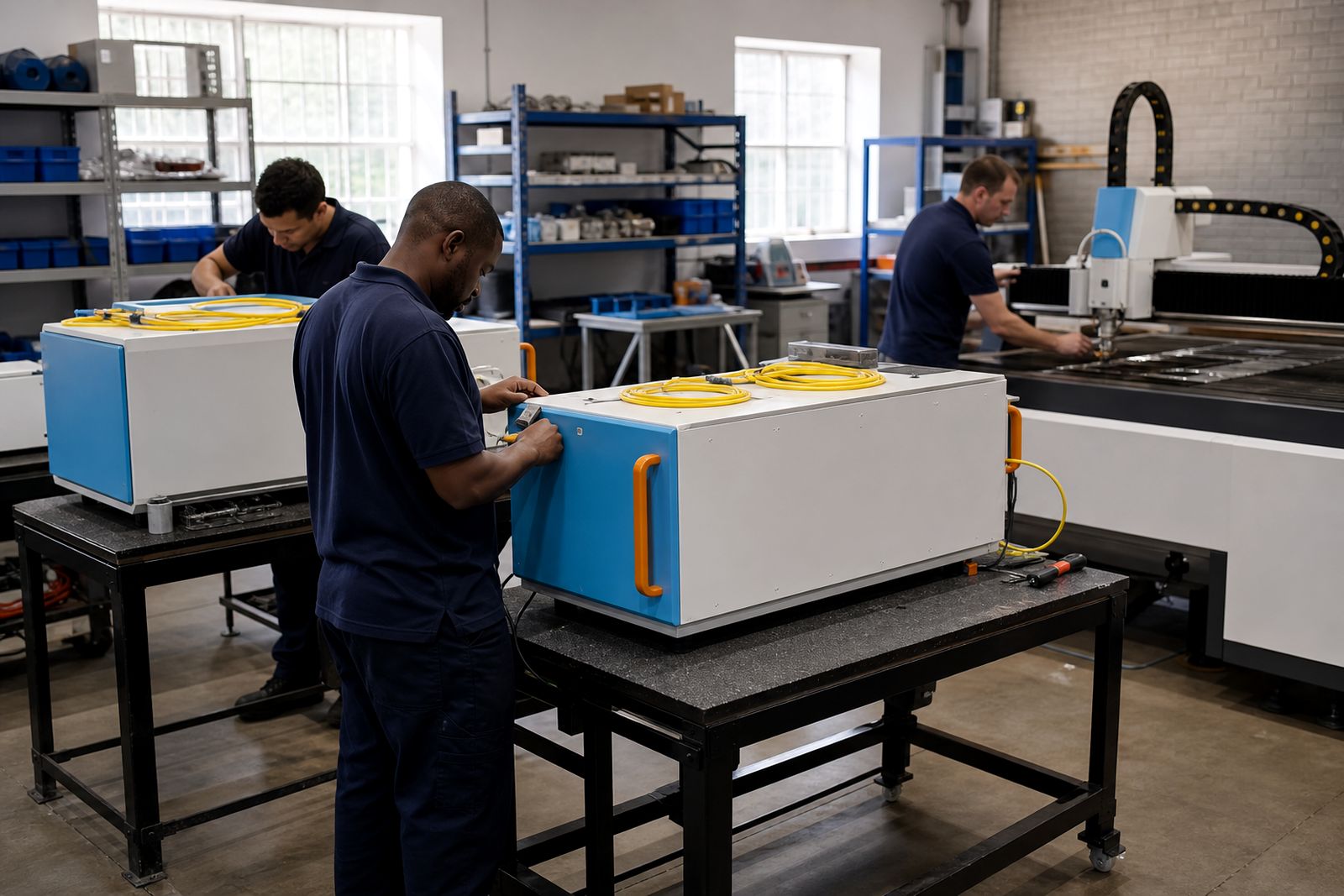
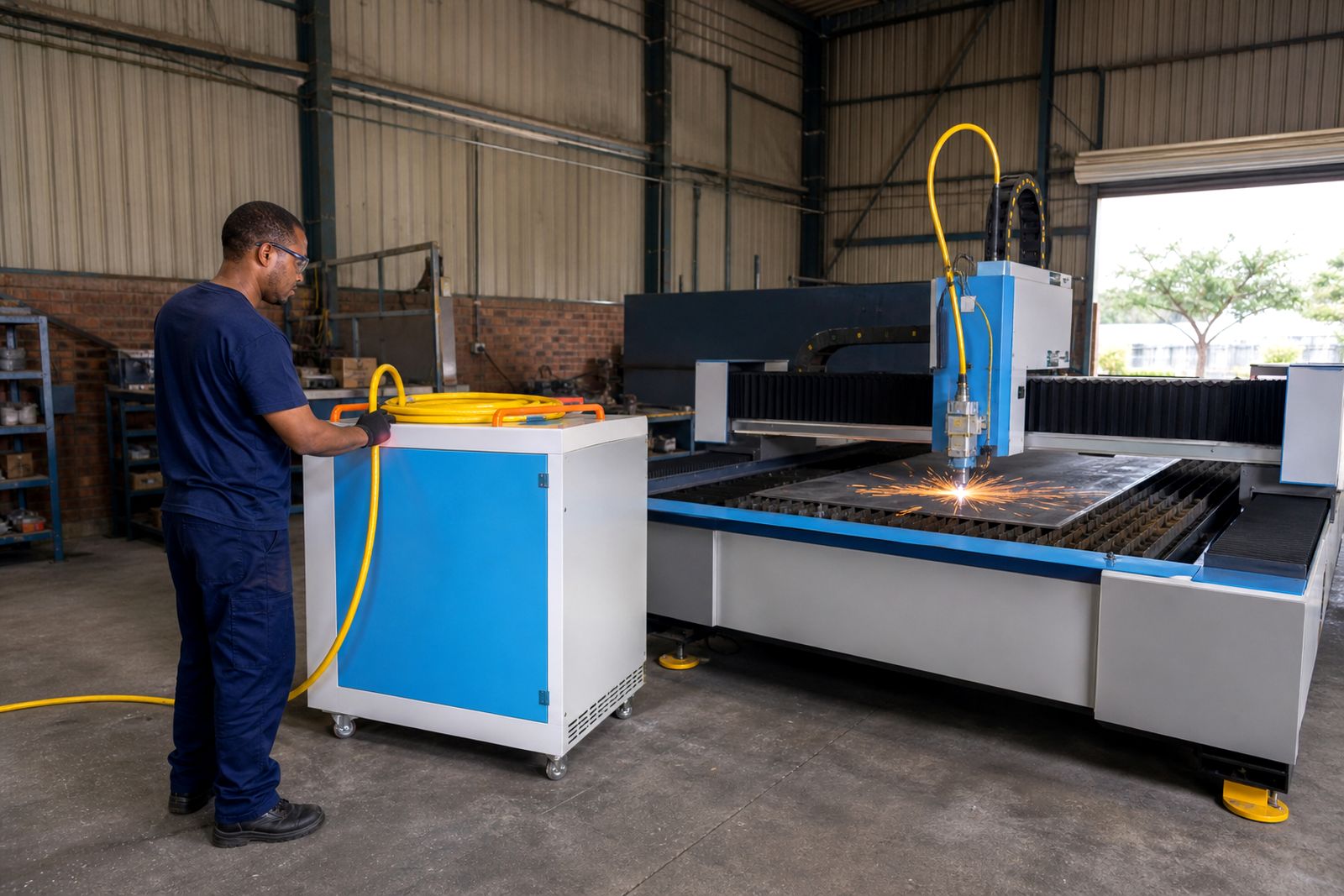
Our team focuses on fibre laser sources, laser modules, spares and repair work for metalworking businesses that rely on laser cutting and welding equipment during the normal production week. We do not build complete cutting machines and we do not take in contract cutting jobs. The work here stays on the source side, the service side and the parts that affect stable beam delivery, cooling and head condition.
Most enquiries come from workshops that already know the effect a stopped laser has on output. A source alarm, unstable cut edge, poor pierce performance or overheating chiller can stop a shift quickly, so our role is to trace the fault carefully and help the customer decide whether the next step is a spare, a repair, a workshop inspection or an on-site visit.
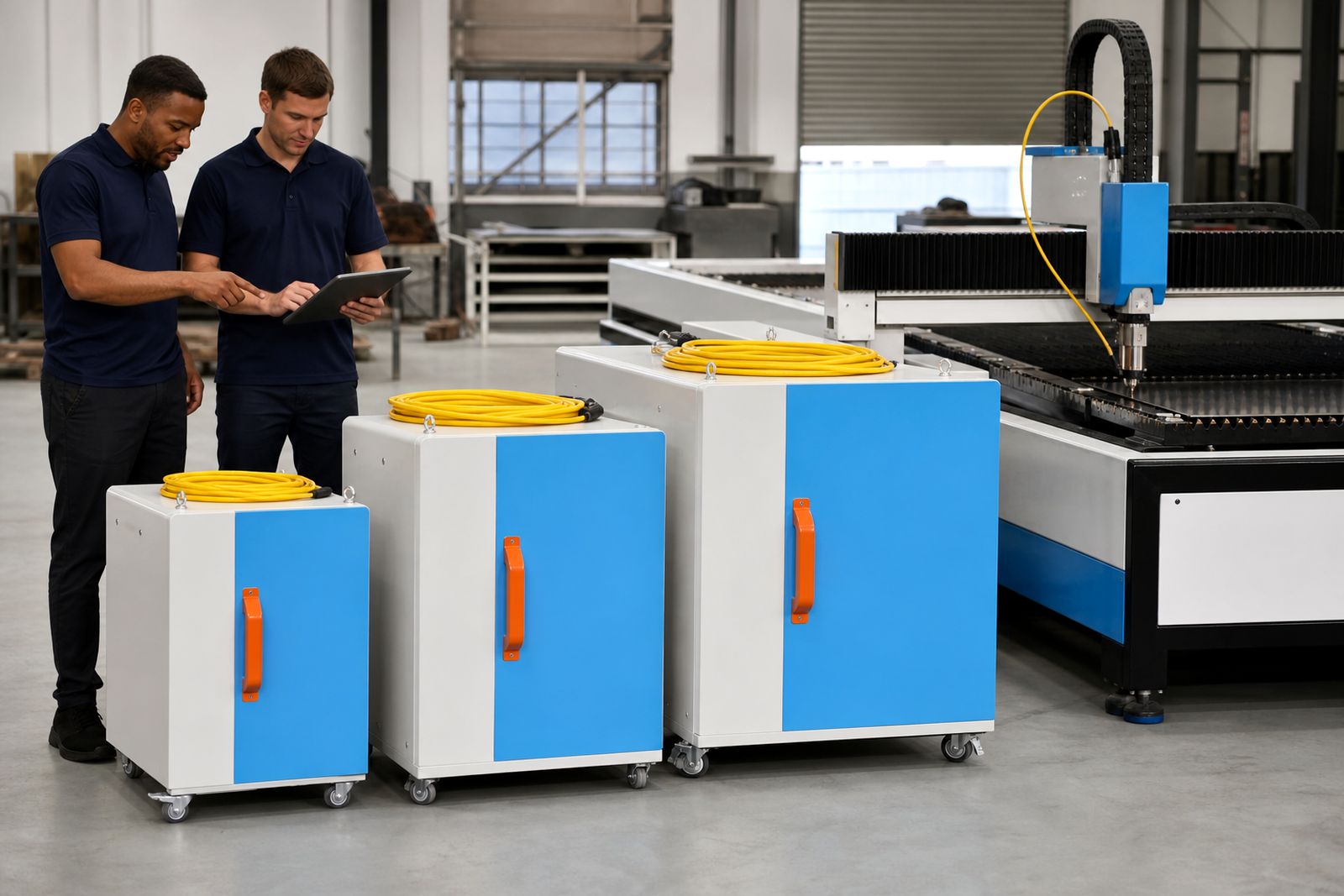
- Continuous-wave fibre laser sources for cutting applications
- QCW and pulsed modules for suitable industrial laser work
- Delivery fibres, QBH connectors and related source parts
- Protective windows, nozzles, ceramics and head consumables
- Chillers and cooling-system related parts for laser machines
- Service work on sources and cutting or welding machines
The kind of factories and workshops we deal with
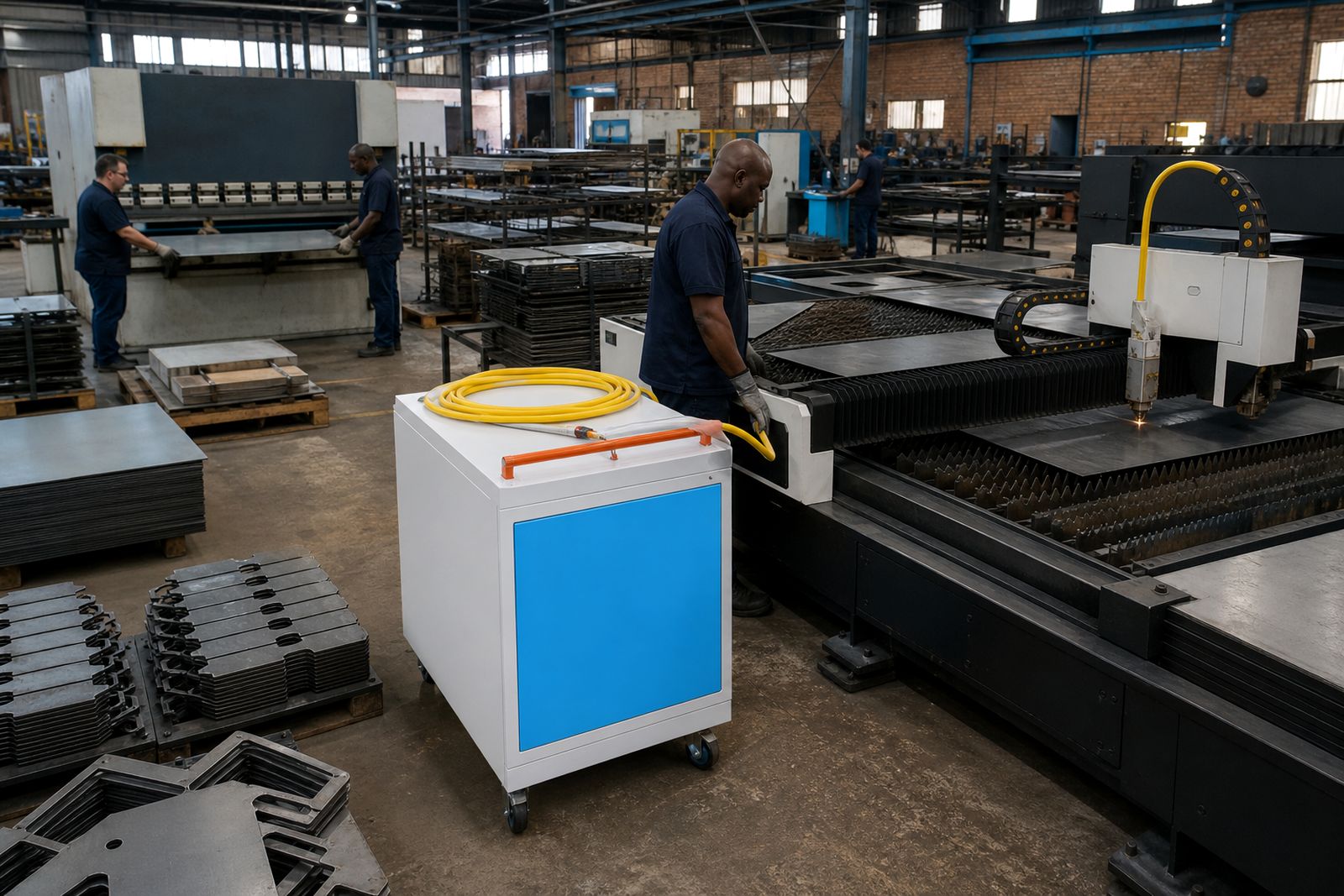
Many of our customers are sheet metal fabricators, general engineering shops, enclosure makers and production plants running laser equipment as one part of a larger manufacturing line. Some are small owner-run workshops with one machine on the floor. Others have several stations and need a steadier plan for spares, inspection and fault tracing across the month.
Because South African factory conditions vary a lot, the job is rarely only about fitting a part. Gauteng dust, shop-floor heat, long production runs, cooling-water quality and operator changes all affect how a source and head behave over time. A fabricator in Alrode may have very different working conditions from a coastal plant where humidity adds its own problems, so the advice has to stay practicaly tied to the actual site.
- Fabricators cutting mild steel, stainless steel and aluminium
- Workshops using laser welding for assembly and repair work
- Plants running laser cleaning on selected maintenance tasks
- Maintenance teams needing help with alarms and source faults
- Owners and production managers planning spares before a stoppage
How the team is set up
The work moves between technical roles rather than one person trying to carry the full job. An enquiries coordinator gathers the basics from our contact form so the workshop knows what machine is involved, what alarm is showing and whether the issue sits with the source, the chiller, the cutting head or the beam path. From there the service technician or workshop lead steps in to narrow the problem down.
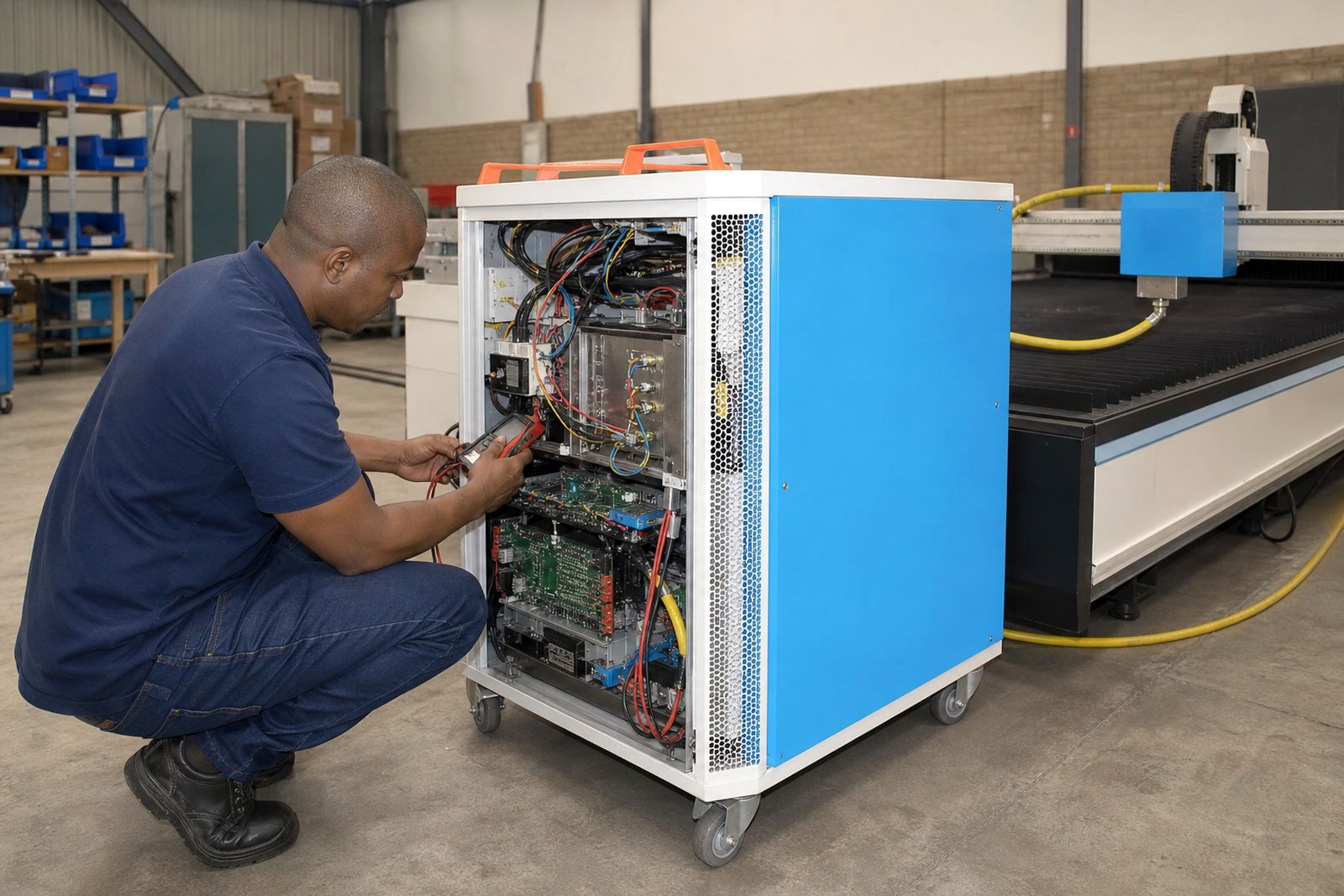
For workshop repairs, the diagnostic side checks operating behaviour, connectors, cooling condition and visible damage before recommending a repair route. For on-site work, the field technician looks at machine condition, service history, consumable wear and alarm patterns on the customer floor. Where a source needs matching to the application, the technical sales role helps compare the type of work being cut or welded against the source range being considered, without guessing or overstating what one unit will do.
This split keeps the process orderly and avoids mixed messages when a machine is down and production staff are under pressure.
Our Alrode office and workshop setup
We operate from Alrode near Alberton, close to the industrial areas where many Gauteng fabricators run daily production. That location makes practical sense for source checks, parts handling and workshop-based repair work, while still supporting customers elsewhere in the country who need spares sent out or a service plan discussed before a technician travels.
The office handles enquiries and job logging, while the workshop is arranged for inspection, bench testing and parts assessment on laser-related components. Machines and sources do not all fail in neat ways, and sometimes the fault that appears to be in the source turns out to be cooling, contamination or wear in another section of the machine. Having workshop space for a closer check helps us separate those issues properly.
- Office support for job intake and parts coordination
- Workshop area for diagnostics and repair assessment
- Access for Gauteng site visits where machine condition needs to be seen in place
- National support for customers needing spares and technical guidance
From first enquiry to the work on the floor
A job usually starts when a customer sends the machine details, fault description and any alarm information through our contact form. If there are photos of the source label, connector condition, chiller status or the cut result, that gives the technician a cleaner starting point. We then decide whether the likely fix is a spare part, a workshop inspection or a site call where the machine has to be seen under operating conditions.
Once the path is clear, the team records the machine type, the application and the symptoms reported by the operator or maintenance staff. On site, the technician works through the likely fault points in a practical order rather than replacing parts blindly. In the workshop, stripped components are checked for wear, contamination, connection damage and cooling-related issues before the customer is advised on the sensible next step.
When a source replacement or module change is being considered, we also help the customer avoid a mismatch between the intended work and the source being fitted. That matters because too little output can limit production, but overspecifying can push a budget in the wrong direction with no real benefit on the floor.
Aftercare that stays grounded in the job
After the immediate fault is sorted out, our support does not end with a part leaving the workshop or a technician walking off site. Customers often need guidance on alarm patterns, connector care, cooling checks and the consumable items that affect cut quality over time. That sort of aftercare is less dramatic than a breakdown call, but it saves money and stoppages when done properly.
We also help customers plan around the recurring items that wear in normal service, especially where cutting heads and beam delivery parts are exposed to heavy production. If a workshop has repeated contamination or heat-related faults, we point that out plainly so the next stoppage is not treated as a surprise. The aim is steady production with fewer avoidable interruptions, not big talk.
For businesses running laser equipment in demanding factory conditions, that steady support is often what keeps the week on track.
Questions we get asked
Do you build complete laser cutting machines?
No. Our work covers fibre laser sources, modules, spares, diagnostics, repair and machine service support. We do not build complete cutting machines or take on contract cutting work.
Can you help if the machine is showing a source alarm?
Yes. We help customers read alarm conditions, narrow down likely causes and decide whether the issue points to the source, cooling system, beam delivery parts or another machine component.
Do you only work in Gauteng?
Our base is in Alrode near Alberton, with regular support for Gauteng fabricators, and we also assist customers nationwide with fibre laser sources, spares and service arrangements.
Also worth a look
Tell us about the job
Send sizes, materials and where you are through our contact form, and we will come back with the practical options.
Open the contact form