
Laser service and repair
Raycus Laser handles fault finding, repairs and preventive work for fibre laser sources and the cutting or welding machines built around them. From Alrode near Alberton, we assist Gauteng workshops on site and support factories nationwide with workshop repairs and parts-led service.
Service work built around the source and the machine
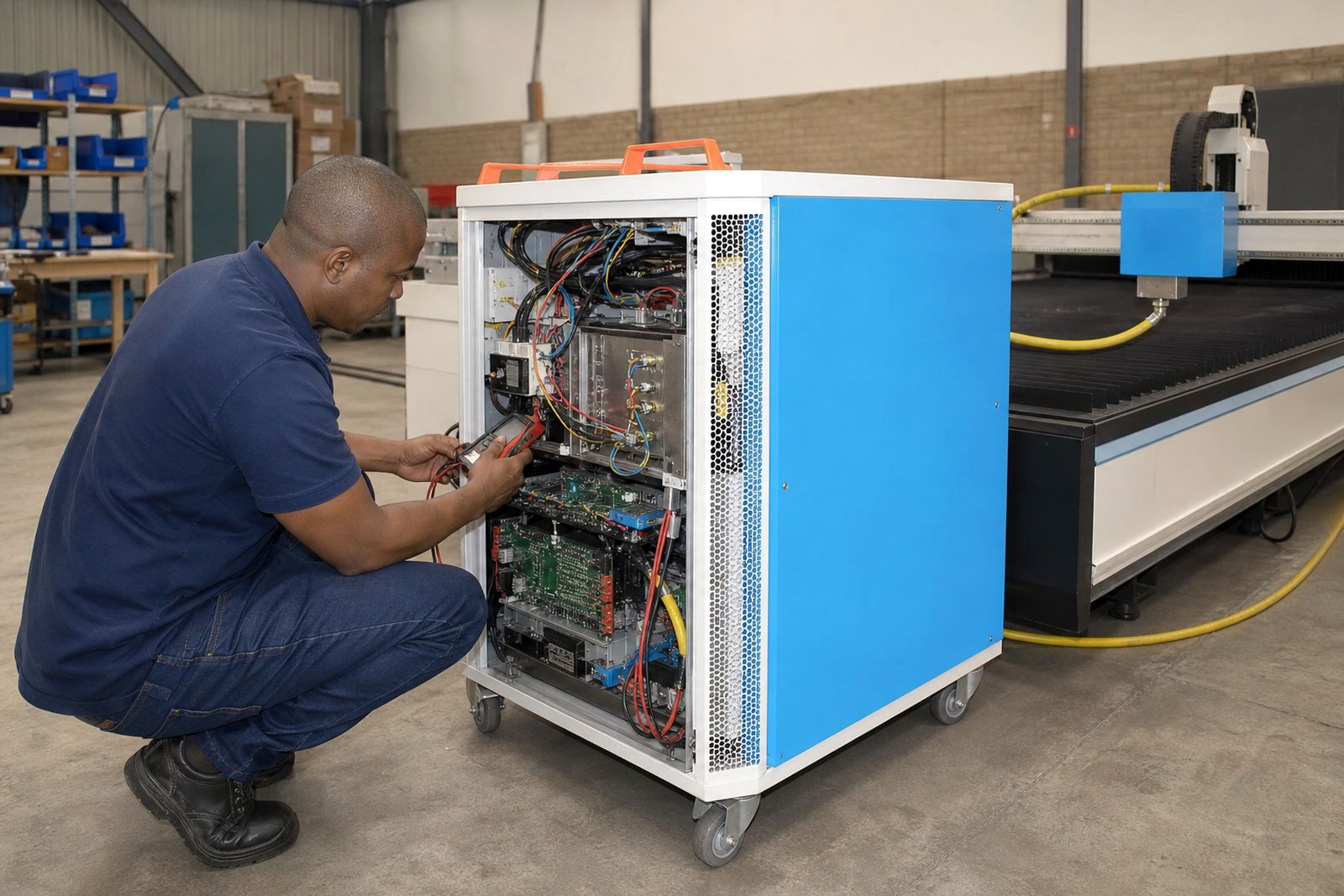
This section covers the practical side of keeping a fibre laser system running: source diagnostics, machine maintenance, replacement of worn laser-path parts and checks on the support equipment that affects beam stability. Some faults sit inside the source itself, while others start with cooling, contamination, cable strain, head alignment or poor consumable condition. We work across cutting and welding setups, and we help customers separate a source problem from a machine problem before money goes the wrong way.
Our service work includes visits to customer sites and repairs in our Alrode workshop. If the fault can be isolated safely on the machine, an on-site visit often makes sense. If deeper bench testing, strip-down work or repeated running tests are needed, workshop repair is normally the cleaner route.
When an on-site visit makes more sense
Site service suits faults where the machine, cooling circuit and operating conditions need to be seen together. It is also useful where the issue appears only under production load, or where alarms are linked to interlocks, gas, head setup or cable routing. A technician can check the whole chain instead of one component in isolation.
- Intermittent alarms that appear during cutting or welding cycles.
- Beam delivery issues linked to head spares, protective windows or contamination.
- Cooling and flow faults involving the chiller, hoses or temperature drift.
- Preventive inspections before a busy production run, shutdown or shift change.
On-site work can reduce unnecessary removals, but not every repair belongs on a factory floor. If the source needs extended testing, controlled cleaning or internal module work, the workshop is usually the better option, and that saves a lot of back and forth later.
Workshop repair for deeper diagnostics
Workshop repairs are best when a source needs careful electrical and optical checks away from dust, vibration and shop-floor pressure. This route also helps when a machine has had more than one recent fault and the source must be tested independently from the rest of the system. In the workshop we can inspect connection points, check delivery fibre condition, review alarm history and replace failed parts where practical.
- Source faults that persist after basic machine-side checks.
- Damage to delivery fibres, QBH connections or related fittings.
- Cooling-related stress that needs repeated test runs to confirm.
- Repairs where several spares may need to be compared and fitted.
Before a unit leaves site, it helps if the customer notes the alarm wording, operating pattern and recent changes to gas, materials or settings. Those small details often shorten diagnosis, even when the fault looked random on the day.
A practical way to choose between service options
If the machine stopped after a visible event, such as a water fault, a crash, a broken ceramic, a heavily contaminated window or a damaged fibre lead, start with the machine and head side. If the machine hardware checks out but the source still throws alarms or output stays unstable, move toward source diagnostics and workshop testing.
- Choose on-site service when the full machine condition matters as much as the source.
- Choose workshop repair when bench testing and controlled inspection are needed.
- Choose preventive maintenance when output is still acceptable but consumables, cooling or alignment are drifting.
- Choose source diagnostics first when alarms point to internal source conditions rather than wear parts.
For many factories the right path is not one or the other. A short site visit may confirm whether the source should be removed, and that avoids replacing parts just to see if the fault moves. It sounds obvious, but this step is often where costs are kept under control.
Preventive checks that save avoidable stoppages
Preventive service is not only for large plants. Smaller fabricators around Alberton, Wadeville and the wider Gauteng belt often get the most value from a scheduled check because one machine can carry most of the week’s output. We inspect the wear points that tend to trigger poor cut quality, unstable welding or nuisance alarms before they become a full stop.
Typical checks include protective windows, nozzles, ceramics, cooling condition, fibre and connector handling, basic head condition, cable strain, air paths and visible contamination around optical areas. On coastal sites, humidity and salt-laden air can add to corrosion and connector care issues, so handling and storage matter more than many shops expect.
What to have ready before service starts
A good service visit starts with clear operating information rather than guesswork. Even a brief note from the operator can help pin down whether the problem follows a certain material thickness, a specific welding cycle, a warm-up period or a chiller temperature swing. That gives the technician a better place to start and it can stop two faults being mixed into one story.
- The machine type and whether it is used for cutting, welding or cleaning.
- The source type fitted, plus any recent source or chiller changes.
- Alarm messages, photos of the screen and when the fault occurs.
- Recent consumable changes, crashes, leaks or unusual noise.
If you need site service or want a source assessed in our workshop, send the machine details through our contact form and note whether the fault is constant or intermittent. We can then direct the job toward source diagnostics, machine maintenance or the spares likely to be involved.
Explore the range
Source diagnostics and repair
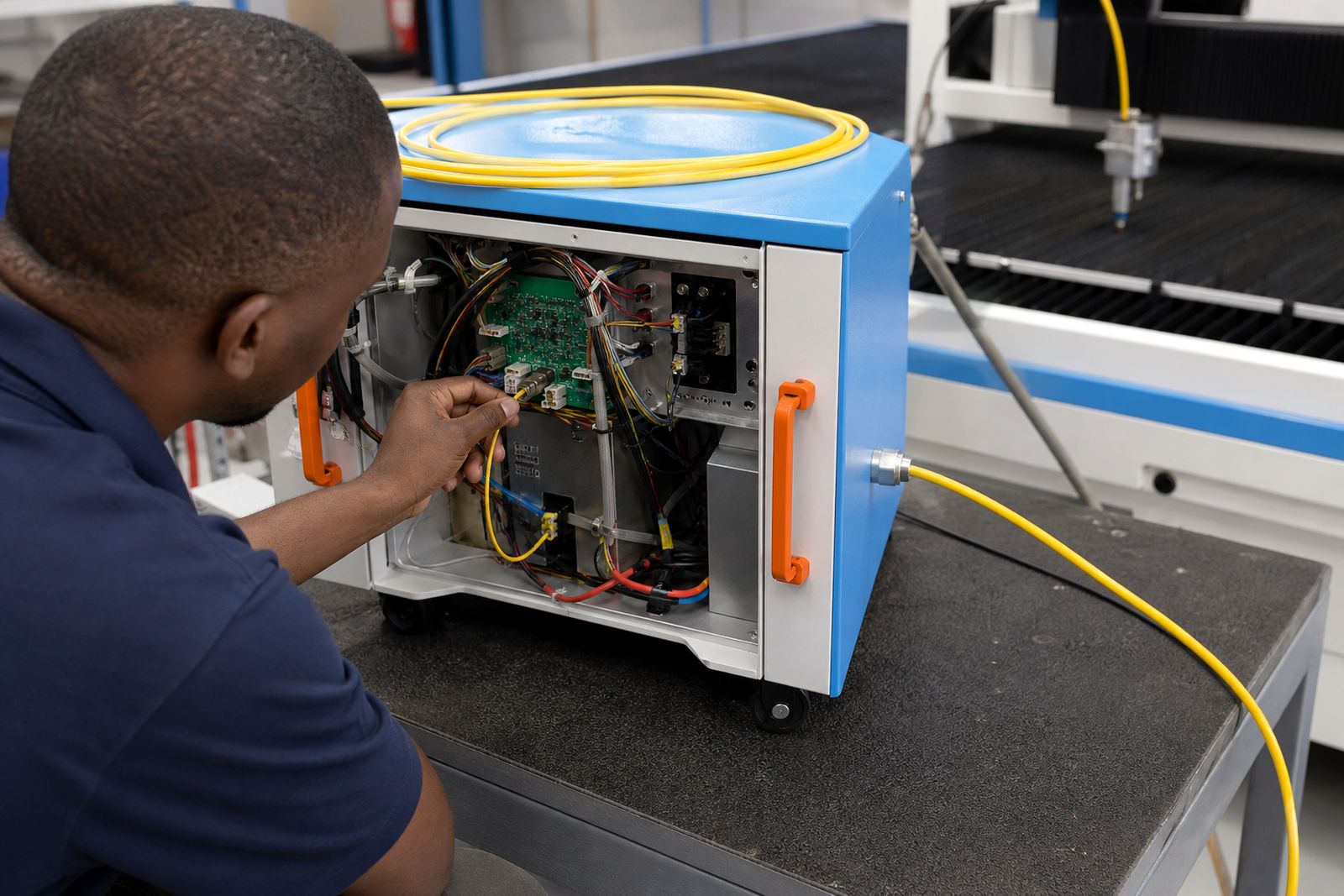
Diagnosis and repair for fibre laser source alarms, unstable output and module-related faults.
Read more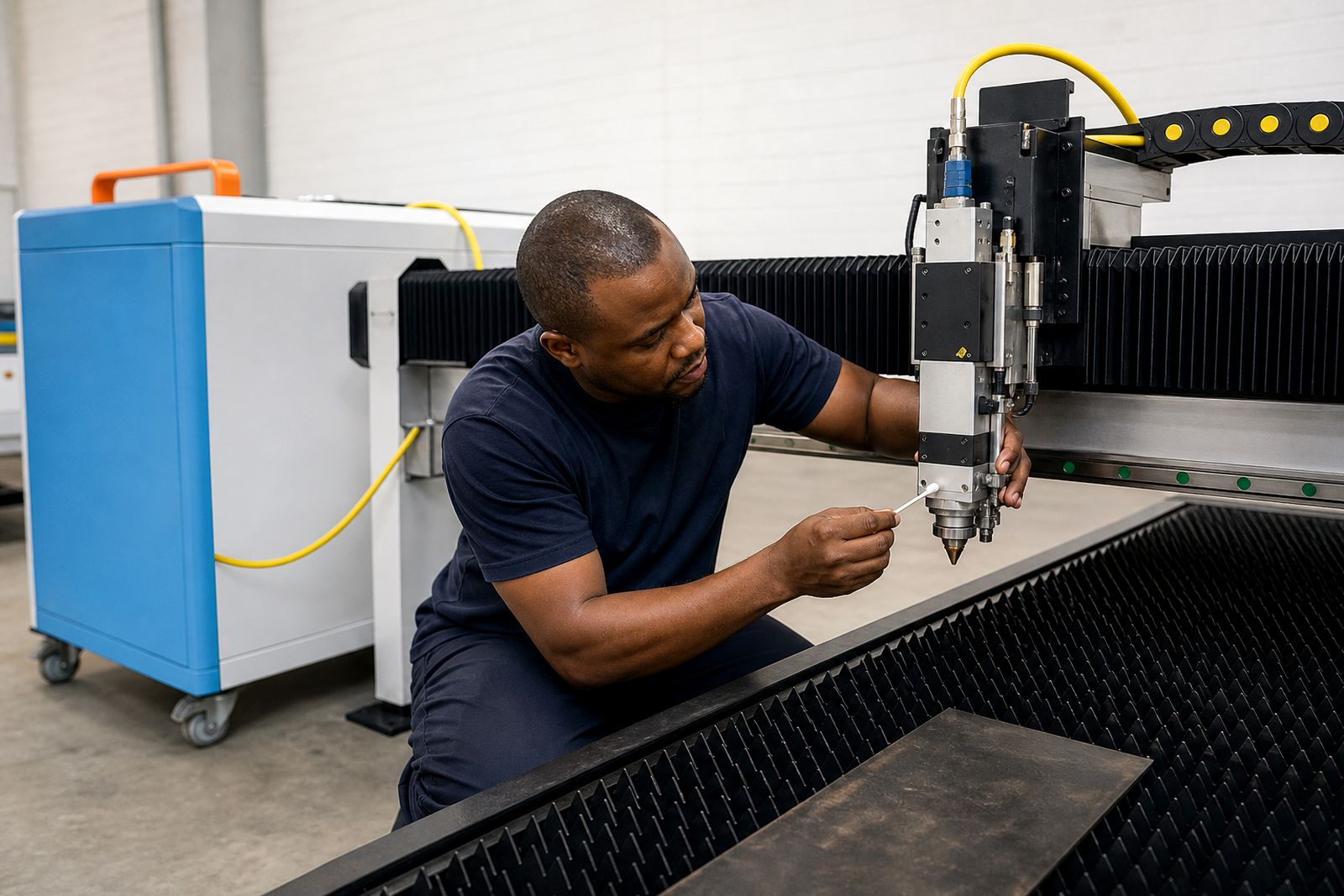
Cutting and welding machine maintenance
Planned maintenance for fibre laser cutting and welding machines, with practical checks on optics, gas flow and machine movement.
Read moreWhat our Fibre Laser customers say
Verified Google reviews
Questions we get asked
Do you repair complete laser cutting machines?
We service and repair fibre laser sources and the key machine systems around them, including cooling and laser-path related parts. We do not build complete cutting machines or offer contract cutting.
Can you help if the machine shows alarms but the cause is not clear?
Yes. We help customers read alarm patterns, separate source faults from machine-side faults and decide whether an on-site visit or workshop diagnosis is the better route.
Do you only work in Gauteng?
Our base is in Alrode near Alberton, and we support fabricators in Gauteng as well as customers elsewhere in South Africa, depending on the machine, fault type and whether workshop repair is more suitable.
Tell us about the job
Send sizes, materials and where you are through our contact form, and we will come back with the practical options.
Open the contact form