

Industries we support
Different fabrication sectors place very different demands on a fibre laser source, the cutting head and the machine around it. This section maps those working conditions so you can narrow the right source type, spares and service path for your shop.
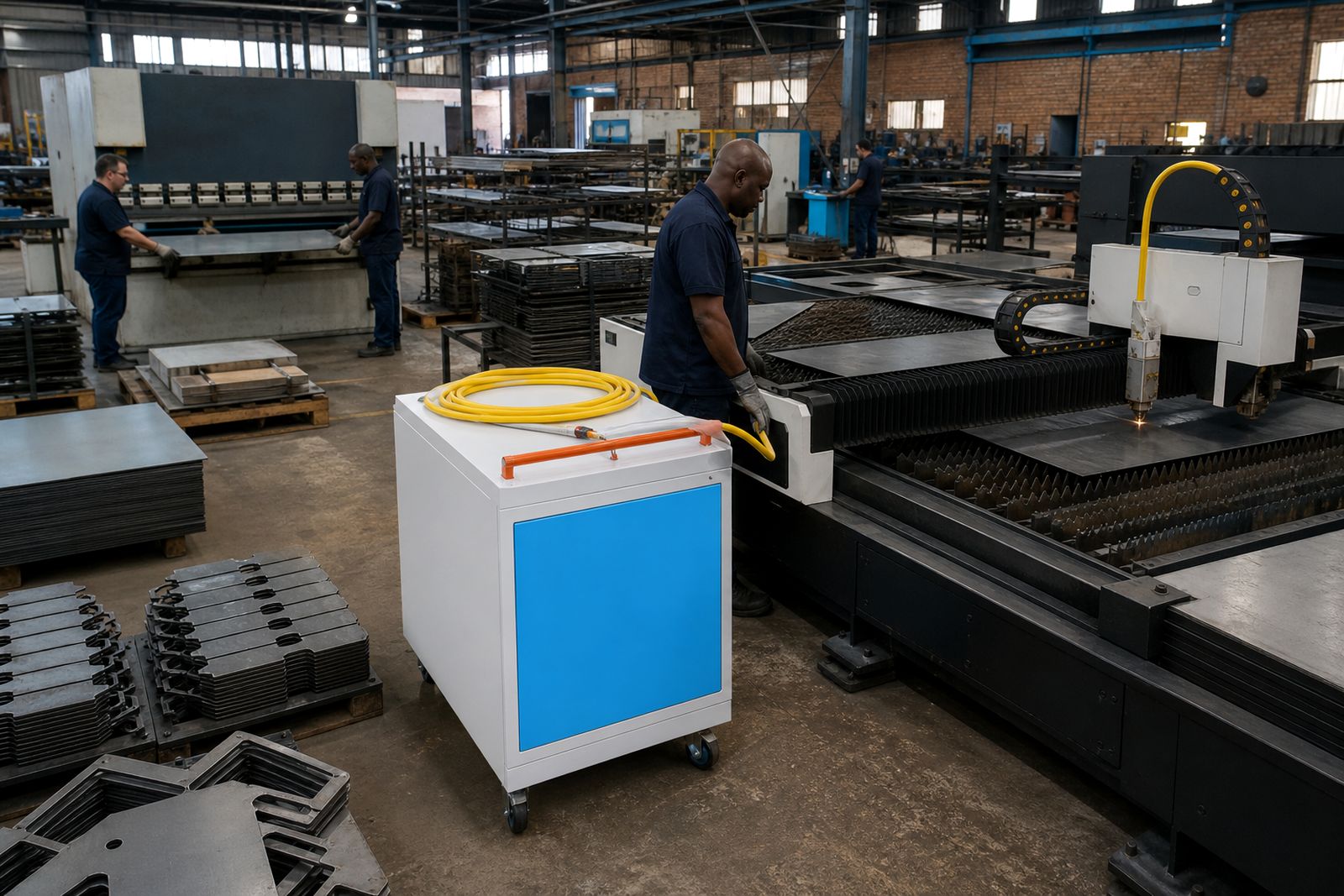
Where laser work changes from one trade to the next
A laser used for thin mild steel sign parts is not under the same strain as a machine cutting heavier plate all day, and neither one behaves like a pulsed setup marking small components. In Alrode we see this clearly when a source alarm, unstable cut edge or repeated consumable wear points back to the type of production rather than one failed part on its own.
This applications section is here to help you read those differences properly. It covers the industries we support, the common load on the source and optics, and the service issues that tend to show up in each environment. If your work includes more than one category, such as agricultural brackets in the morning and signage panels later in the week, the best starting point is usually the thickest material, longest duty cycle and the cleanest finish your jobs actually need.
Sheet metal shops need steady cutting over long runs
General sheet metal fabrication usually asks the most from a continuous-wave fibre source because the machine may spend long stretches cutting nested parts with few pauses. Heat build-up, protective window condition, nozzle alignment and cooling performance matter every day, not only when a fault stops production. Material mix also changes the load, with stainless, mild steel and aluminium each showing problems differently.
- Frequent gauge changes call for stable piercing and reliable edge quality.
- Nesting work needs a source and chiller that hold output consistently through a shift.
- Fine feature cutting puts extra attention on nozzles, ceramics and head condition.
- Thicker plate work tends to show gas flow, focus and contamination issues sooner.
For this kind of shop the right choice is usually based on duty cycle and material range before anything else. If the machine cuts for many hours a day, source matching and preventative service are just as important as replacing failed parts when the line stops, that's often where avoidable down time starts.
Signage work puts finish and detail ahead of brute force
Signage and light fabrication often involve thinner sheet, decorative cut-outs, folded components and visible faces that cannot hide poor edge condition. These shops may switch quickly between stainless, galvanised sheet and coated material, so contamination inside the cutting head and small optical losses become obvious quite fast. A source that is oversized for the work is not always the best answer if the real need is control, clean starts and consistent results on detail.
Where a workshop also uses laser cleaning or welding on display frames, handrails or trim parts, module choice becomes part of the planning. In that case it helps to separate cutting production from finishing tasks instead of expecting one setup to behave like two different machines.
Automotive fabrication usually exposes repeatability issues first
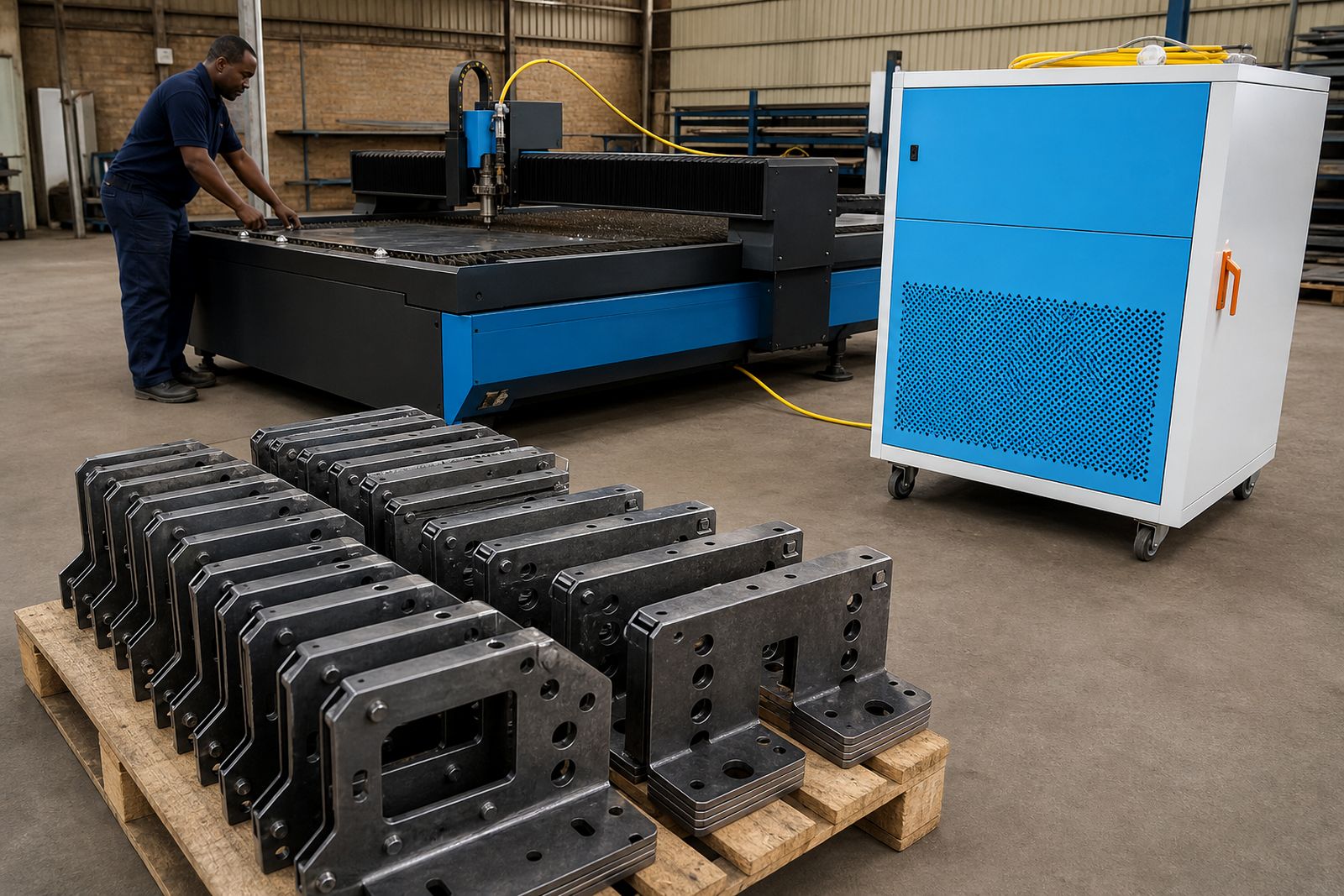
Automotive component work, whether for brackets, fixtures, exhaust parts or production aids, tends to highlight repeatability before outright failure. Parts often need to fit jigs, holes must stay where they belong and the same cut must look the same over a batch. When results drift, the cause might sit in source output stability, fibre condition, connector contamination, cooling, or wear inside the cutting or welding head.
- Batch work benefits from stable source behaviour over repeated cycles.
- Tight part fitment makes focus drift and nozzle damage easier to spot.
- Mixed cutting and welding cells need clear separation of spares and service checks.
- Unexpected alarms can interrupt a whole line even when only one optical part is dirty.
For automotive fabrication the safer route is usually to diagnose the full chain rather than swapping parts one by one. That means looking at alarms, process history, optics condition and machine maintenance together, not in isolation.
Agricultural work brings heavier sections and dirtier conditions
Agricultural fabrication can be hard on laser equipment because the work often includes thicker sections, replacement parts, brackets and repair items that arrive from dusty yards or field conditions. Dirt around sheet handling, inconsistent material condition and long gaps between servicing all make protective windows, nozzles and cooling systems work harder. The machine may also alternate between production cutting and urgent one-off repair jobs, which is a very different pattern from a controlled factory line.
In these shops the most useful support usually comes from practical fault finding and sensible parts selection. There is little value in fitting the wrong source class or chasing a single alarm code when the real issue is poor cooling water condition, a damaged connector face or neglected head maintenance.
A quick way to choose the right path
If you are deciding which page in this section fits your operation, start with the way the machine earns its keep rather than the label on the workshop door. The comparison below gives a direct route.
- Choose cutting-focused source guidance if most of your hours go into nested sheet or plate production.
- Choose welding and cleaning module guidance if handheld or cell-based joining and surface preparation are central to the job.
- Choose pulsed source guidance if the work is marking, fine engraving or short high-peak tasks rather than continuous cutting.
- Move to spares pages when faults point to windows, fibres, connectors, nozzles, ceramics or chillers.
- Move to service pages when alarms repeat, output drifts, or the machine needs source diagnostics and workshop repair.
This section links those choices to real production environments across Gauteng and further afield. If you need help narrowing the fit for your material range and machine symptoms, send the operating details through our contact form and our team can point you to the most relevant source, spare or service route.
What our Fibre Laser customers say
Verified Google reviews
Questions we get asked
Do you support industries outside sheet metal fabrication?
Yes. We work with sheet metal, signage, automotive and agricultural fabrication, and we also assist mixed workshops where cutting, welding and cleaning all happen under one roof.
Can you help if we are not sure whether the fault is in the source or the machine?
Yes. That is a common starting point. We look at alarms, process behaviour, optics, cooling and machine condition to narrow whether the issue sits in the source, the head, the fibre path or general machine maintenance.
Do you build complete laser cutting machines for these industries?
No. We focus on fibre laser sources, modules, spares, diagnostics, service and repair for cutting, welding and cleaning equipment.
Tell us about the job
Send sizes, materials and where you are through our contact form, and we will come back with the practical options.
Open the contact form