

Fibre laser guides
These guides are written for owners, maintenance teams and operators working with fibre laser equipment in South Africa. They cover source selection, alarm reading, common spares and service points so daily decisions are easier to make on the shop floor.
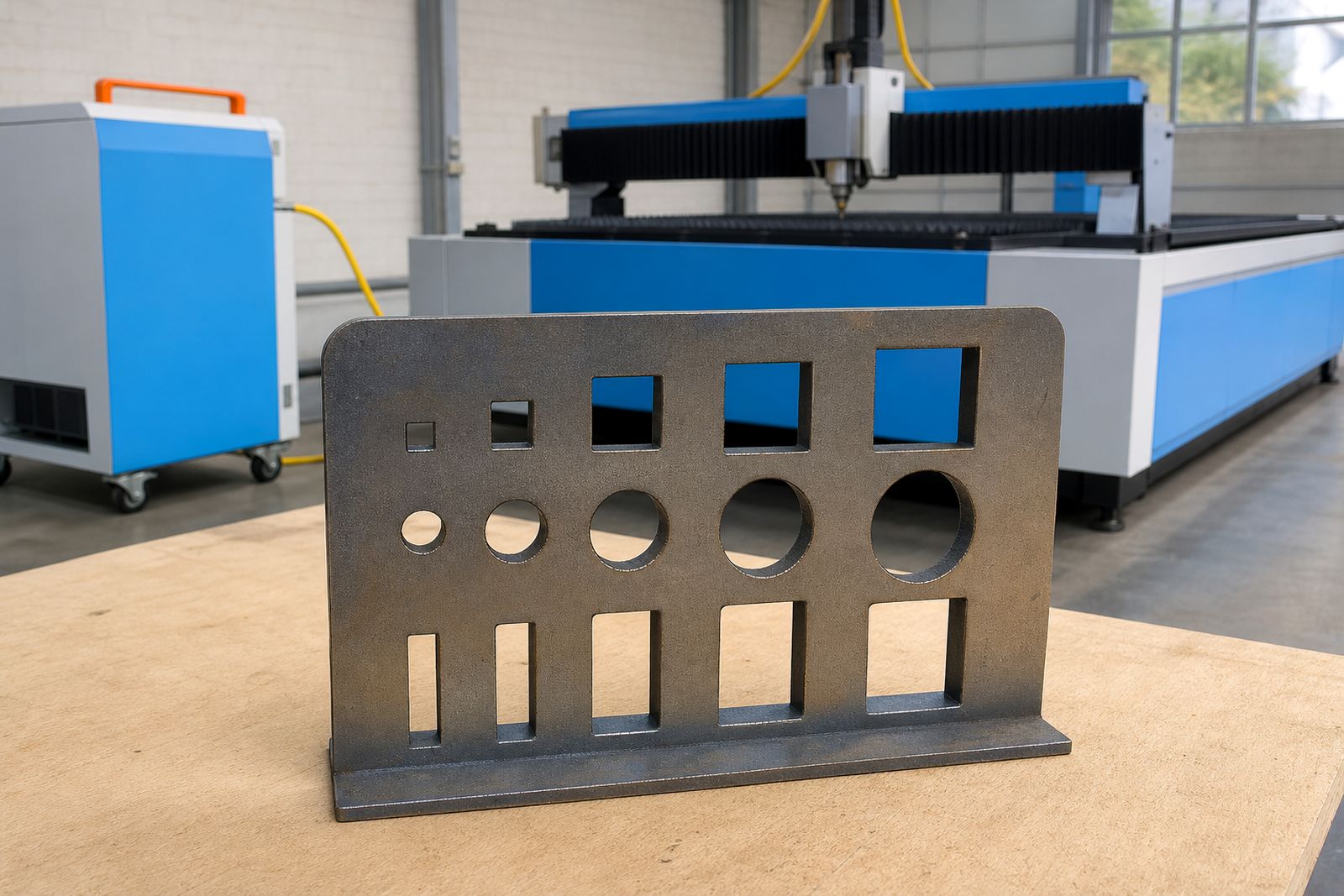
Guides built around real workshop decisions
This section brings together practical notes for businesses running fibre laser cutting, welding and cleaning equipment. The focus is not theory on its own, but the kind of checks people make when a machine is due for a source change, a warning appears on screen, or a consumable starts affecting cut quality.
From our Alrode base, we deal with workshops in Gauteng as well as customers further afield, so the guidance here reflects mixed conditions: long production runs, coastal humidity on stored spares, dusty factory floors and machines with different maintenance histories. Some jobs need a source matched carefully to thin sheet speed, others need attention on a connector, chiller condition or a protective window that has taken too much heat.
Start with the job before you look at the source
Choosing between source types is easier when you begin with the material, thickness range and process instead of starting with a module name. A cutting line doing mild steel all day has very different demands from a welding station handling short bursts on stainless assemblies. That sounds obvious, but it is often where costly mismatches start.
- Continuous-wave sources suit steady cutting duty where stable output matters over long production hours.
- QCW and related modules are often considered where controlled energy delivery matters more than all-day sheet cutting.
- Pulsed sources fit marking and certain precision tasks where pulse behaviour is part of the process result.
- Cleaning and welding setups need the source, head parts and cooling arrangement looked at as one working system.
Our guide pages explain these differences in workshop terms, including where extra source power helps and where it does not. In quite a few cases, poor nozzle condition, dirty optics or cooling issues are blamed on the source first.
A quick comparison that helps narrow the options
If you are deciding what to read first in this section, use the list below as a practical sorting point rather than a rule book.
- Read the power selection guide if you are planning a new source, replacing an older unit or moving into thicker material.
- Read the alarm guide if the machine is stopping, derating or showing source-related warnings during production.
- Look at spares topics when cut edge quality changes gradually, piercing becomes erratic or welding performance drifts over time.
- Look at service topics when faults repeat after resets, connectors heat up, or cooling stability is not right.
This section is meant to help you tell the difference between a source-sizing question, a consumable issue and a fault that needs proper diagnostics. That distinction saves time and avoids swapping parts blindly.
Alarm reading needs context, not guesswork
Operators often see the same warning text but the cause can differ from one machine to the next. A source alarm may link back to cooling, fibre handling, head protection, connector contamination or unstable operating conditions around the machine. Reading the code is only the first step.
Our notes on alarms are there to help maintenance teams gather the right details before a unit is removed or a service visit is arranged. Screen messages, recent service work, material being processed and the sequence before the stop all matter. A machine that trips during piercing tells a different story from one that faults after a long warm shift in a closed shop.
Where there is uncertainty, the next sensible step is structured diagnosis rather than repeated resets. That prevents more heat damage on optics and connectors, and it often shows whether the issue sits in the source, head, chiller or control chain.
Spares affect performance more than many shops expect
Laser machines rarely drift in one dramatic move. More often the signs build slowly: slightly poorer edge finish, inconsistent starts, extra spatter on a welding job or heat marks where there were none before. Those changes are often tied to ordinary service parts.
- Protective windows need inspection for contamination, pitting and heat stress.
- Nozzles and ceramics influence gas flow, centring and process stability.
- Delivery fibres and QBH connectors need careful handling, clean mating surfaces and checks for heat damage.
- Chillers and related cooling parts matter because unstable temperature can trigger wider machine problems.
Our guides point out where these items fit into fault finding, not just replacement. A fresh part fitted into a dirty or misaligned assembly will not fix the root problem, and that catches many workshops out.
Using these guides with service planning
The articles in this section work best when they are used alongside a sensible maintenance record for each machine. Keep notes on source behaviour, alarm frequency, consumable changes, connector condition and cooling performance. Even a short record from the operator and maintenance fitter can make a fault trail much clearer.
When a workshop needs hands-on help, we service laser sources and cutting or welding machines on site and in our workshop. We also help customers match source power to the work and diagnose alarms when the problem is not yet obvious. If you need us to look at a specific source issue, machine symptom or spare part question, send the details through our contact form with the machine type, the fault pattern and any photos of affected parts.
Explore the range
What our Fibre Laser customers say
Verified Google reviews
Questions we get asked
What can I learn from the fibre laser guides section?
The section covers source selection, common alarm reading, spare part roles and service-related checks for fibre laser cutting, welding, cleaning and marking equipment.
Are these guides meant only for large factories?
No. They are useful for smaller fabrication shops, owner-run workshops and larger production plants where operators and maintenance teams need practical reference notes.
Do the guides replace a proper repair assessment?
No. They help narrow down likely causes and improve fault reporting, but repeated stoppages, heat damage and persistent source alarms still need proper diagnosis.
Tell us about the job
Send sizes, materials and where you are through our contact form, and we will come back with the practical options.
Open the contact form