

Fibre laser sources
Fibre laser sources are not all built for the same duty, material or machine setup. This section explains where continuous-wave, QCW and pulsed units fit, and what to look at before choosing one for your line.
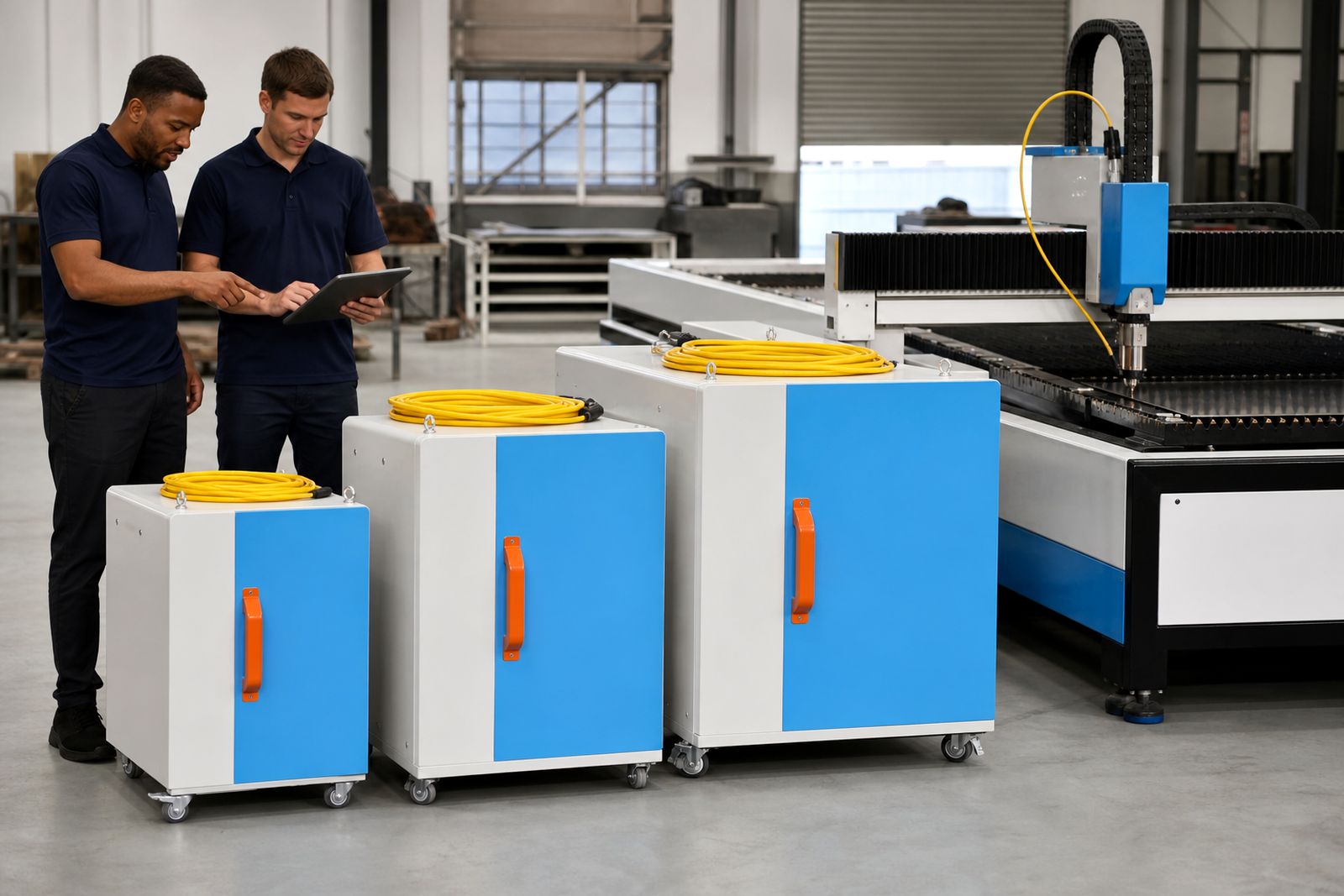
Three source types, three very different jobs
In this range, the main split is between continuous-wave sources, QCW modules and pulsed marking sources. They all use fibre delivery, but the way energy is produced and applied is different enough that a good result on one job can be the wrong result on another.
Continuous-wave units suit production cutting and many welding duties where steady output matters across long runs. QCW modules are often chosen where short, controlled bursts help manage heat input on finer work. Pulsed sources are used for marking, engraving and related tasks where the beam behaviour needs to be controlled in a different way.
- Continuous-wave for plate cutting, tube work and general welding integration.
- QCW for welding and cleaning duties where heat control is a bigger part of the brief.
- Pulsed sources for marking metals and selected plastics with clean, readable results.
How continuous-wave sources fit cutting lines
For many fabrication shops, continuous-wave is the starting point because it matches the demands of sheet processing and repetitive welding. The source runs with steady output for longer periods, which helps when the machine is working through mixed nests, thicker sections or long seam lengths.
That does not mean the biggest source is always the best choice. Material thickness, assist gas arrangement, cutting head condition, fibre condition and chiller stability all affect the result. In Gauteng workshops we often see power blamed first, when the real issue is a worn protective window, dirty nozzle seating or a cooling fault that is pushing the source into alarms.
If the machine is used mainly for carbon steel, stainless or aluminium cutting, a continuous-wave source is usually the direction to examine first. If the work changes over often, source selection should still match the heaviest regular job rather than the once-off sample that lands on the floor.
Where QCW and pulsed options make more sense
QCW and pulsed sources are chosen for different reasons, and mixing them up can waste time and money. QCW sits closer to welding and cleaning applications where controlled energy delivery can help on parts that do not like excess heat. Pulsed marking sources are intended for surface marking tasks, not for replacing a cutting source on production metalwork.
When operators need neat welding on smaller parts, low distortion matters more than raw cutting speed. On marking stations, the concern is legibility, contrast and repeatability across batches. The source has to suit that job, not just fit the cabinet.
- Choose QCW when the process needs short energy delivery and careful thermal control.
- Choose pulsed marking when the job is coding, serialising, engraving or traceability marking.
- Do not use a marking source as a substitute for a cutting source, even if the footprint looks convenient.
A practical way to compare the options
The quickest comparison is to look at the part, the duty cycle and the finish expected at the end of the process. That gives a more useful answer than looking at source size alone.
- If the machine spends most of the day cutting sheet or tube, continuous-wave is usually the correct family.
- If the process is precision welding or cleaning with tighter heat limits, QCW is often the better fit.
- If the task is logos, data plates, serial numbers or coded parts, pulsed marking is the normal route.
- If alarms appear under load, check cooling, optics and fibre condition before assuming the source has failed.
- If edge quality varies through the shift, review consumables and beam delivery components together with source behaviour.
This comparison matters because many faults present in similar ways on the machine screen. A source mismatch, a deteriorating delivery fibre, a contaminated connector or unstable cooling can all show up as poor cut quality or intermittent stoppages, so the machine needs to be read as a system.
Matching the source to your machine and workload
Choosing a source is easier when the machine details are clear from the start. Control platform, cutting or welding head type, fibre length, connector format, cooling arrangement and the actual materials processed all influence compatibility. In our Alrode workshop and on site, we also look at how the machine is used through a normal week because workshop reality often differs from the original specification.
A fabricator processing mild steel all day has different needs from a shop that welds mixed stainless assemblies and only cuts occasionally. The first case may favour a continuous production setup, while the second may need more attention on weld behaviour, heat input and head setup. A machine that works near the coast can also show different maintenance issues from one running inland, especially around optics care and coolant condition.
Support around alarms, spares and repairs
Source selection does not end with the initial fitment. Laser systems depend on clean beam delivery, stable cooling and sound consumable condition. When alarms appear, it helps to work through the source, chiller, fibre path and head components together rather than replacing parts blindly.
We supply fibre laser sources, modules and related spares, and we service laser cutting and welding machines on site and in our workshop. That includes help with source matching, alarm diagnosis, delivery fibres, QBH connectors, protective windows, head spares and chillers. If you need us to look at a machine or source, send the machine details and fault symptoms through our contact form.
Explore the range
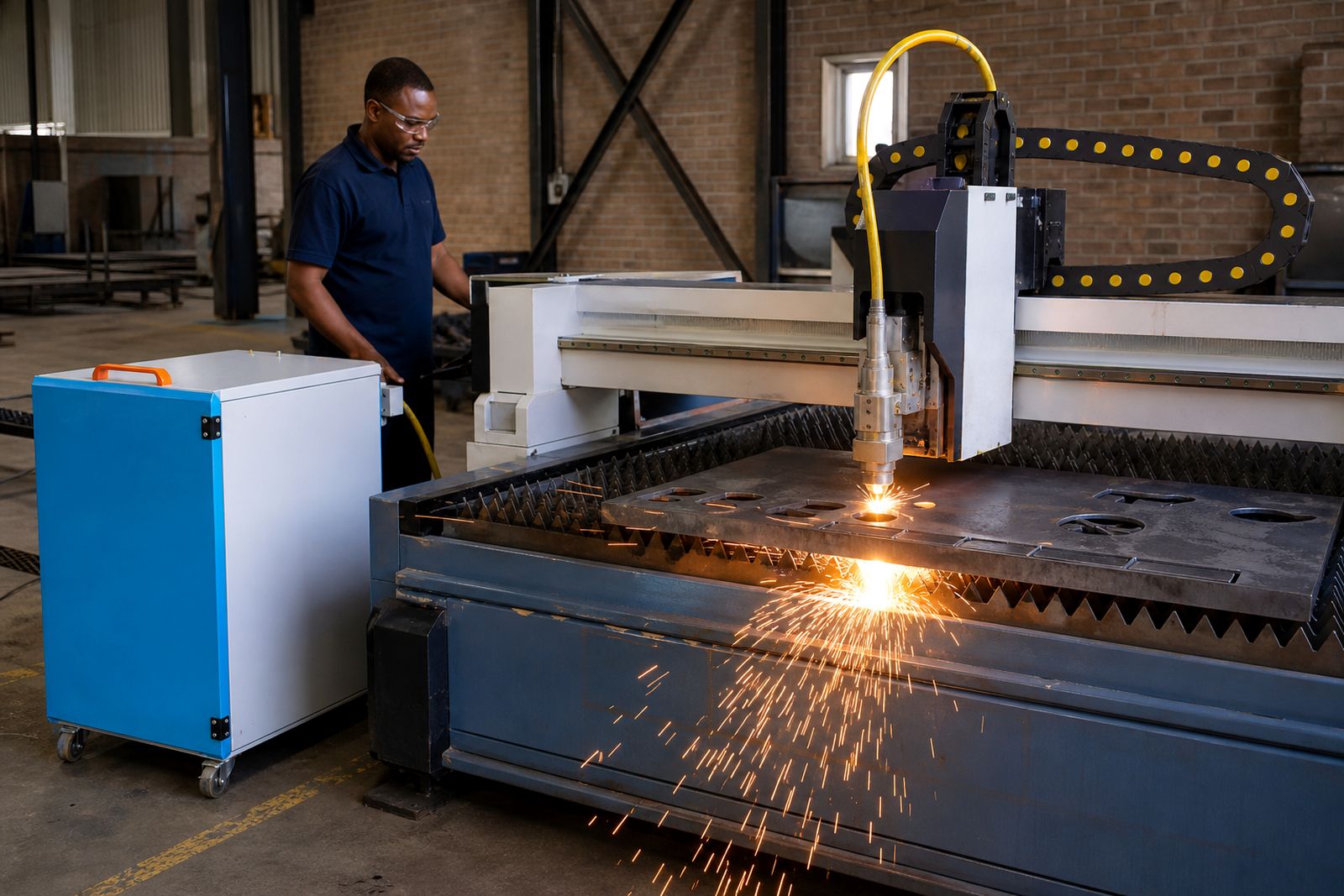
Continuous-wave sources for cutting
CW fibre laser sources for cutting lines, matched to sheet thickness, duty pattern and service conditions.
Read more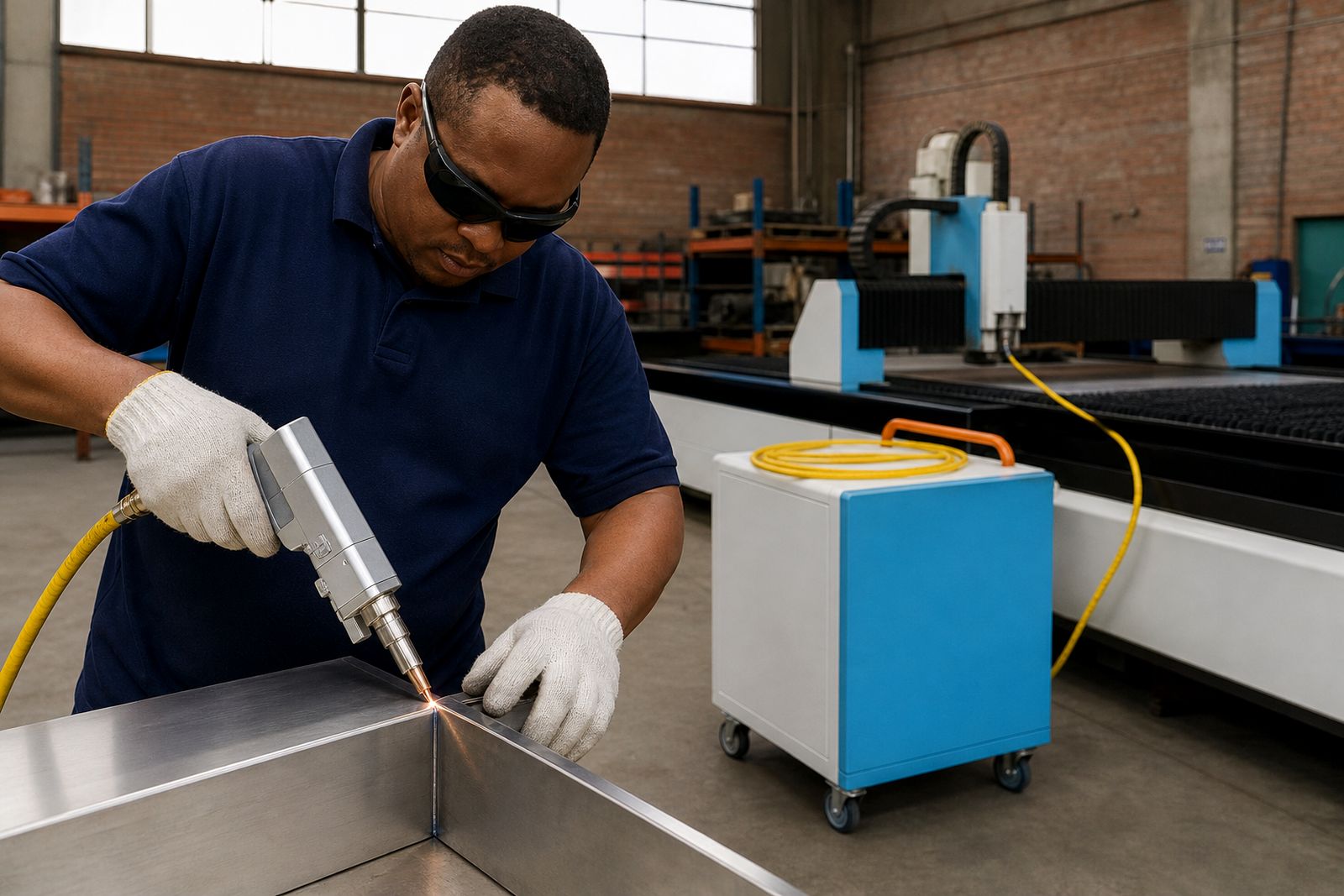
Welding and cleaning modules
Compact fibre laser modules for handheld welding and cleaning systems, backed by practical setup and service support.
Read more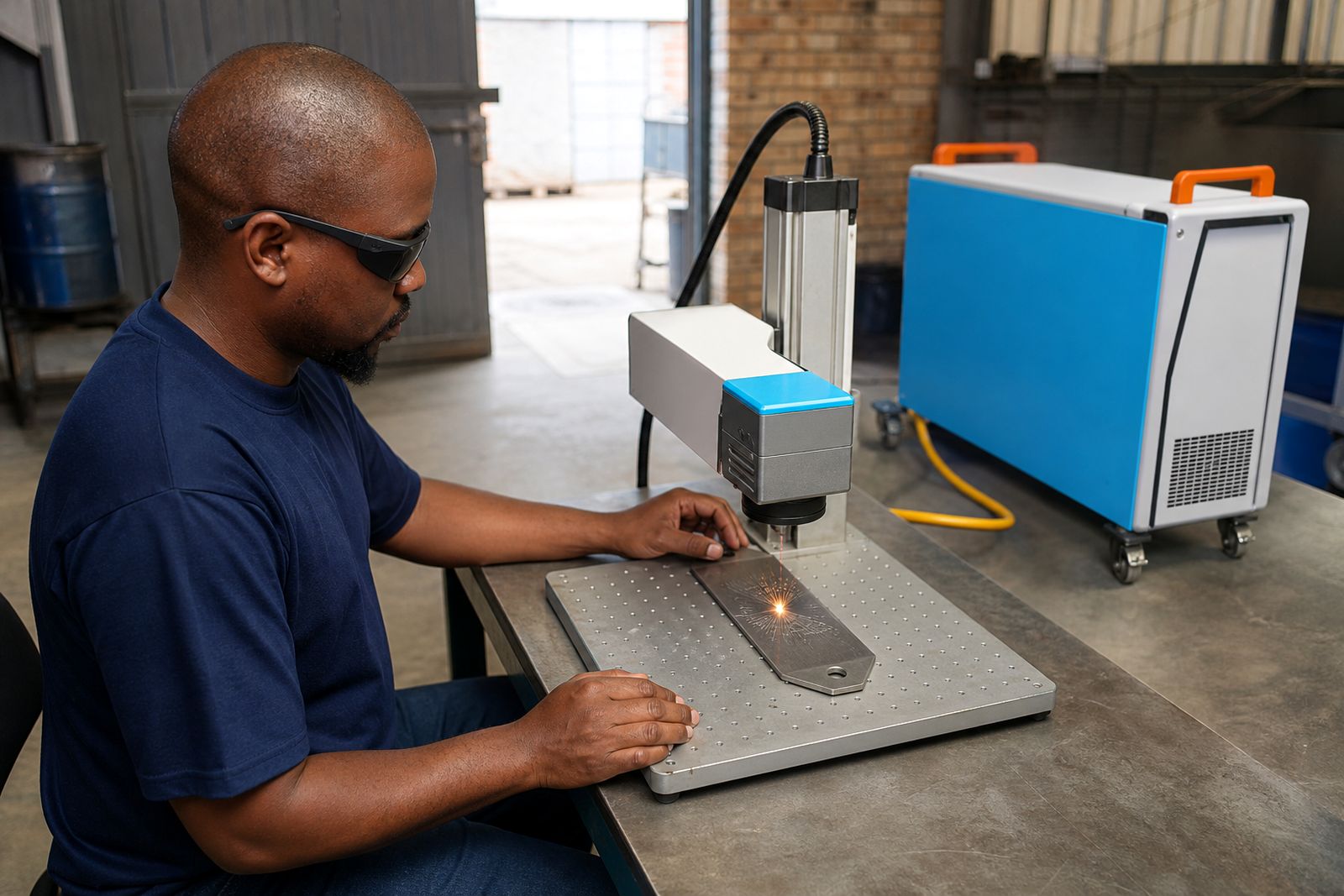
Pulsed sources for marking
Compact pulsed sources for serial marking, engraving and traceability work on production floors and repair benches.
Read moreWhat our Fibre Laser customers say
Verified Google reviews
Questions we get asked
What is the main difference between continuous-wave and pulsed fibre laser sources?
A continuous-wave source delivers steady output for duties such as cutting and many welding applications. A pulsed source is used where energy is released in controlled pulses, which suits marking and selected specialised processes.
Can a pulsed marking source be used for metal cutting?
Pulsed marking sources are intended for marking and engraving work rather than production cutting. For cutting machines, a continuous-wave source is normally the correct type to assess.
What details help when choosing a replacement laser source?
The useful starting points are the machine type, application, material range, cutting or welding head details, cooling setup, connector type and the alarms or quality issues already showing on the machine.
Tell us about the job
Send sizes, materials and where you are through our contact form, and we will come back with the practical options.
Open the contact form