

Laser spares
Laser spares cover more than a single worn part. In a fibre system, optics, fibres, connectors, cooling parts and head consumables all affect cut quality, weld stability and machine downtime.
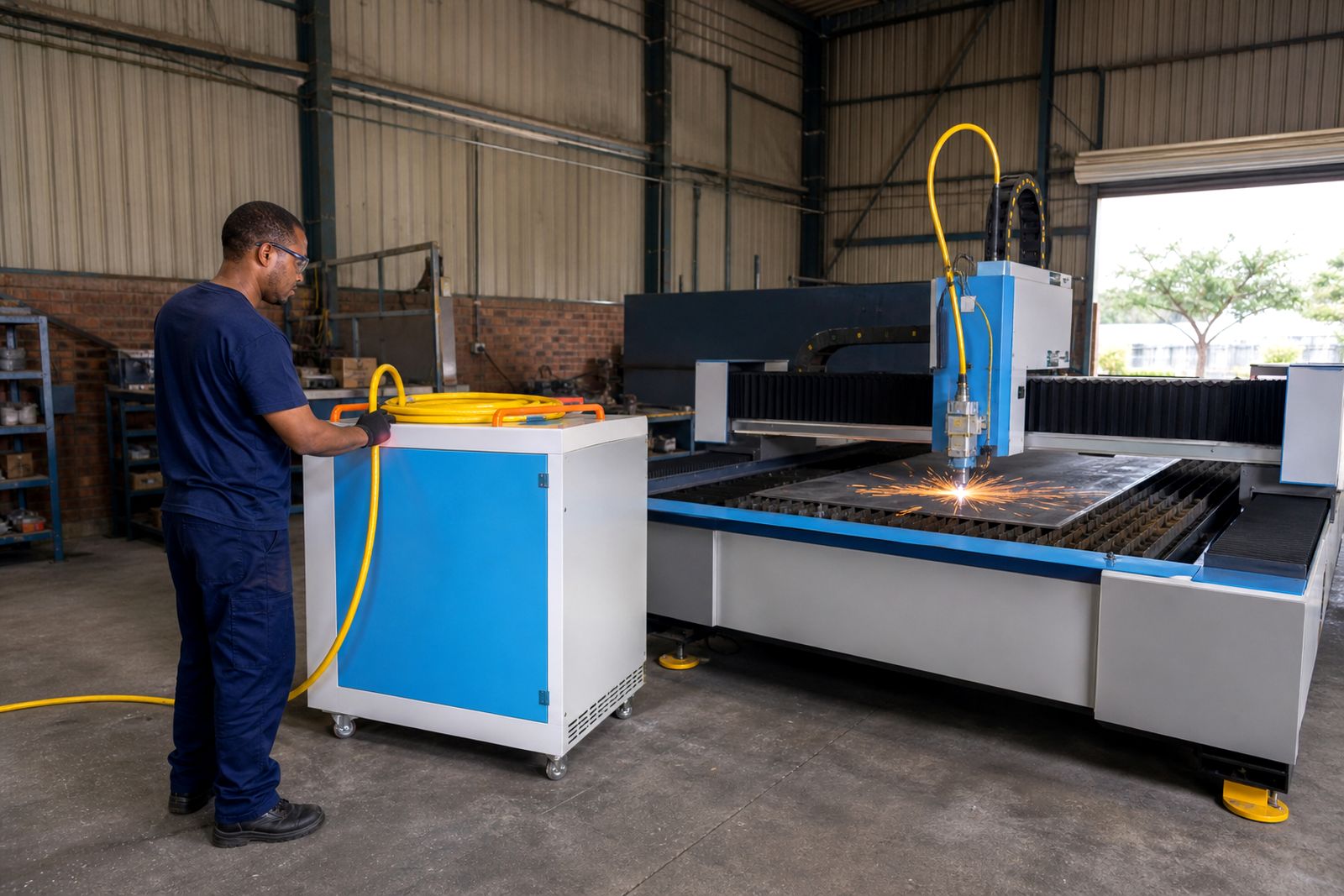
Parts that matter in the laser path
Our spares range covers the parts that carry, focus, cool and protect the beam inside cutting, welding and cleaning equipment. That includes protective windows, nozzles, ceramic holders, delivery fibres, QBH connector parts, cooling equipment and selected head spares used on fibre laser systems in metalworking shops.
These items do different jobs, so choosing the right one starts with where the fault shows up. A dirty or cracked window can reduce cutting consistency. A damaged delivery fibre can cause unstable output or source alarms. Worn nozzle and ceramic parts can affect gas flow and height sensing, which then shows up at the cut edge rather than inside the source.
- Optics and windows for beam protection
- Delivery fibres and connector parts for beam transfer
- Nozzles, ceramics and head consumables for process stability
- Chillers and related cooling parts for thermal control
How to choose between optics, fibres and head consumables
When a machine starts losing performance, it helps to separate source issues from process-part wear. Protective windows and nozzles are normal service items. Delivery fibres and connector assemblies need closer checking because fitment, cleanliness and handling all matter. A part that looks nearly right can still create misalignment, heat build-up or intermittent alarms.
Start with the machine model, head type, connector style and the job being run when the problem appears. Cutting mild steel all week places different wear on a head than short stainless jobs or welding cells with frequent starts and stops. If the machine has had a recent lens break or collision, mention that as well because it often points to a chain of damage rather than one failed item.
- Choose windows by the exact size and fit used in the head
- Choose nozzles by process type, diameter and head compatibility
- Choose fibres by connector type, length and source pairing
- Choose cooling parts by the machine circuit and fault condition
A practical comparison for common replacement parts
Not every spare sits in the same replacement cycle. Some parts are consumables that should be checked often, while others are changed after a fault, contamination event or handling damage. This quick comparison helps narrow the likely item.
- Protective windows: first check when cut quality drops, piercing becomes erratic or visible contamination appears.
- Nozzles and ceramics: check when gas flow looks uneven, height control becomes unstable or the cut edge shows more dross than usual.
- Delivery fibres and QBH connector parts: inspect when alarms point to optical path faults, power transfer becomes inconsistent or overheating marks appear near the connection.
- Chillers and cooling parts: inspect when temperature alarms rise, the source derates under load or the machine trips during longer runs.
- Head spares: consider these after collisions, repeated consumable failures or persistent alignment-related process problems.
In practice, more than one part may need attention. We often see a contaminated window together with a worn nozzle, or a connector issue that follows poor cooling. That is why the machine symptoms matter just as much as the part number.
Cooling and connector condition are often linked
Laser systems do not only fail at the cutting head. Heat management and connector condition have a direct effect on source stability, welding consistency and the working life of optical parts. A cooling problem can show up as erratic behaviour under load, while a connector problem may only appear after the machine has been running for a while.
For that reason we include laser chillers and related parts in this section, not as a separate afterthought. On many service jobs around Gauteng, the visible symptom starts at the head but the root cause sits in cooling water quality, blocked flow, connector contamination or heat stress inside the beam path. It catches people out quite often.
Useful details to send with a spares enquiry
The right spare is easier to identify when the fault description is specific. A message that says the machine is "not cutting well" gives less to work with than one that explains the material, thickness, recent alarms and which parts were already changed. Photos of the old part, the connector face or the alarm screen can save wasted stripping and refitting.
- Machine type and whether it cuts, welds or cleans
- Source type and the connector style in use
- Part dimensions or markings where visible
- Material being processed and the symptom on the job
- Any alarm text, overheating signs or recent crashes
If you are unsure whether the fault is a spare part issue or a source issue, send the operating symptoms through our contact form and we can point you toward the most likely section to check first.
Workshop support and on-site fault finding
Some spares can be matched from dimensions, connector type and machine application. Others need inspection in the workshop or on-site diagnosis, especially where alarms, overheating or repeated optic failure are involved. We work from Alrode near Alberton and support fabricators across Gauteng as well as customers elsewhere in South Africa.
Our team handles spare-part identification together with service work on fibre laser sources and machines. That means a customer does not need to guess whether the problem sits in the source, the beam delivery path or the cutting or welding head. Where needed, we can assess the failed part and the surrounding conditions so the same fault does not just repeat a week later.
Explore the range
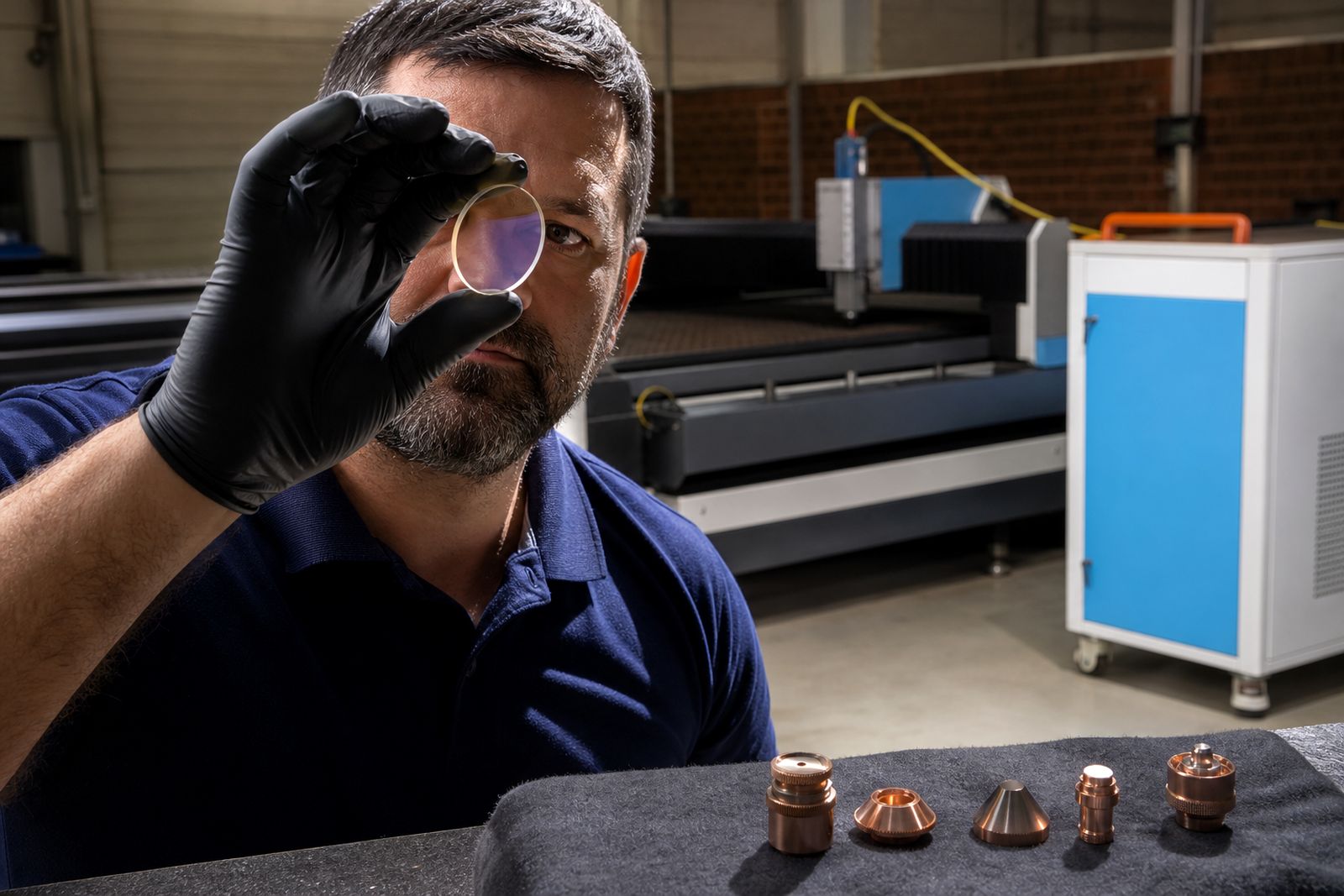
Protective windows, nozzles and ceramics
Laser head consumables for cleaner cuts, steadier gas flow and fewer stoppages on fibre laser machines.
Read more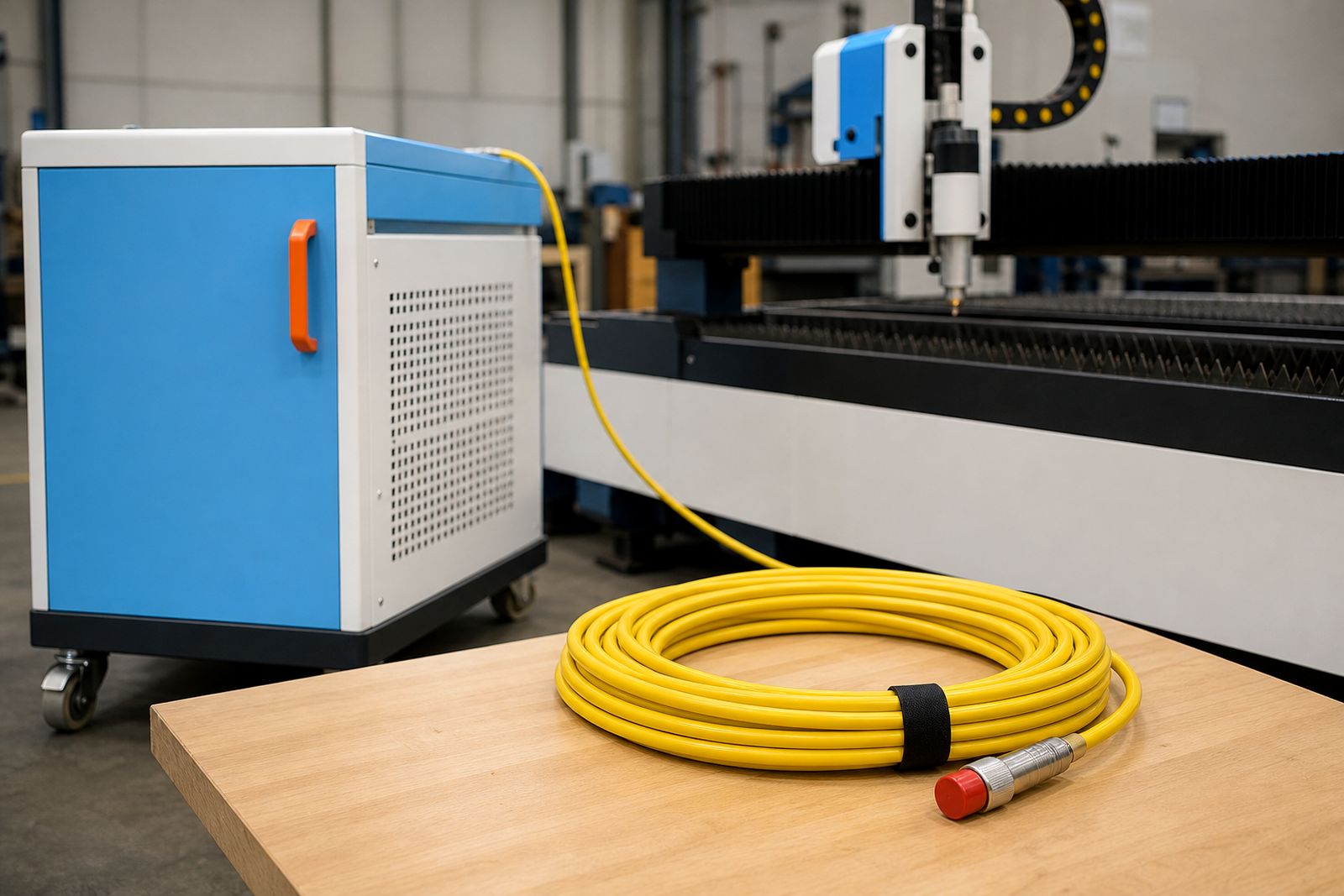
Delivery fibres and QBH connectors
Replacement delivery fibres and QBH connector parts for fibre laser sources, cutting heads and welding setups.
Read more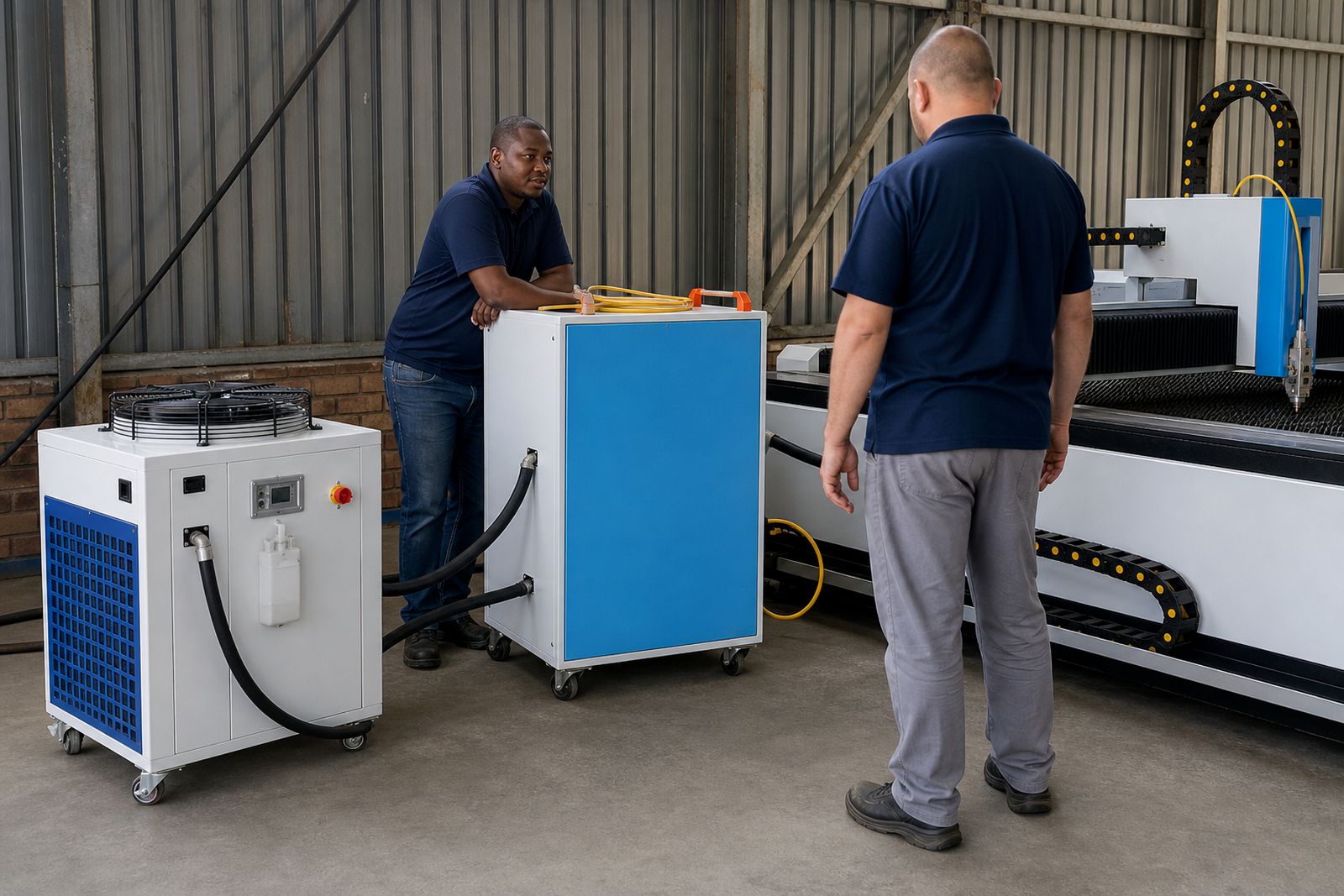
Laser chillers
Recirculating laser chillers matched to fibre sources, machine duty and South African workshop conditions.
Read moreWhat our Fibre Laser customers say
Verified Google reviews
Questions we get asked
How do I know if I need a protective window or a nozzle?
A protective window is usually the first item to inspect when contamination or heat marks show in the optical path. A nozzle is more often linked to gas flow, stand-off and cut edge problems. If both have wear, change and inspect them together.
Can you help if I do not know the exact part number?
Yes. Machine details, source type, connector style, dimensions, photos and alarm information are often enough to identify the likely spare or narrow it down before a service visit.
Do you only provide parts, or do you also repair the machine?
We handle both spares and service work. That includes source diagnostics, workshop repairs and on-site work for cutting and welding machines where the fault needs more than a straight part replacement.
Tell us about the job
Send sizes, materials and where you are through our contact form, and we will come back with the practical options.
Open the contact form