Fibre laser sources, spares and service
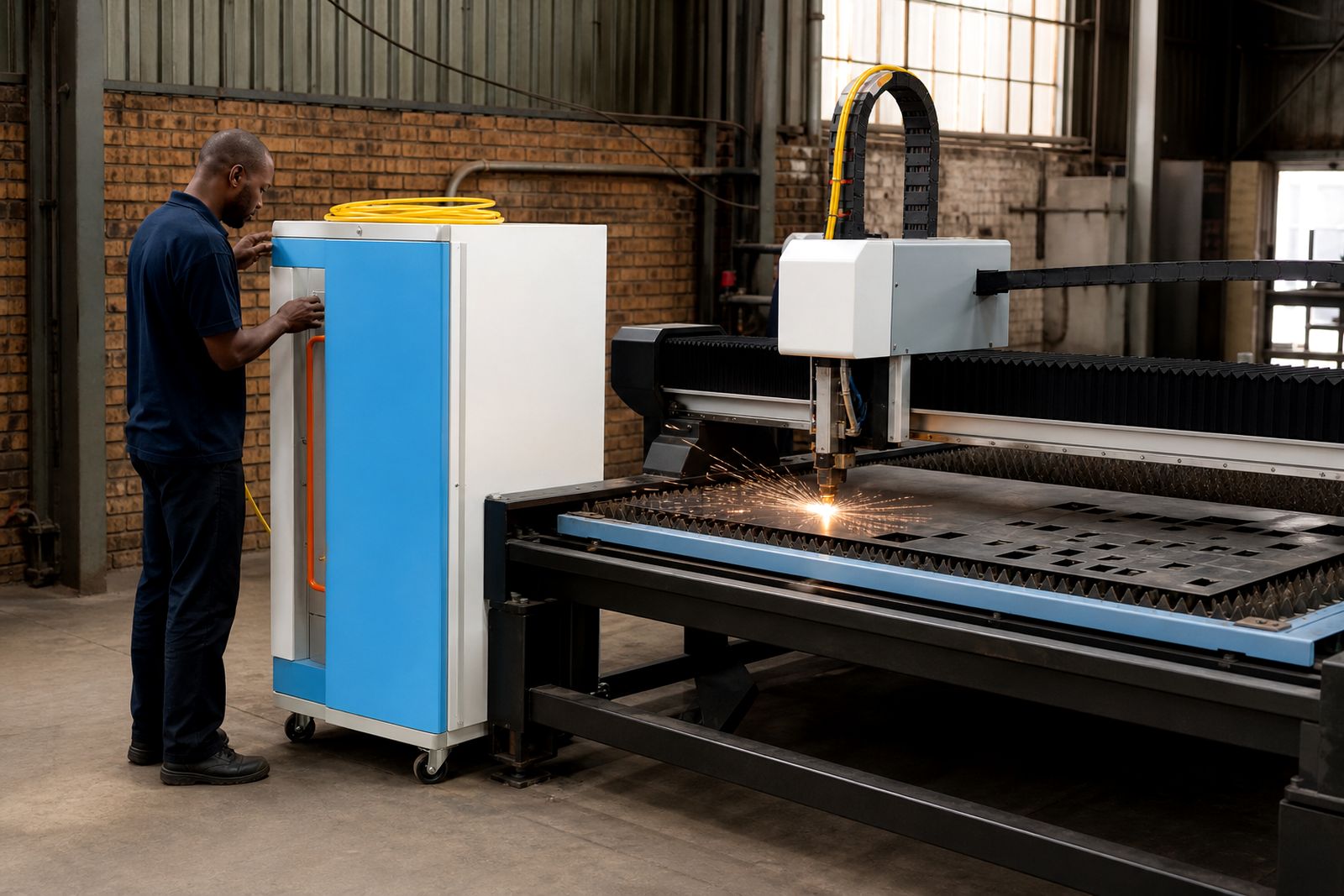
Raycus Laser supplies fibre laser sources, modules and machine spares for metalworking businesses that run cutting, welding and cleaning equipment. From Alrode we support fault-finding, repairs and planned service work for workshops in Gauteng and across South Africa.
Laser hardware that keeps fabrication moving
Our work centres on the parts that matter most when a fibre laser machine must cut cleanly, weld consistently and start each shift without alarm faults. We supply continuous-wave fibre laser sources for cutting work, QCW and pulsed modules for welding, cleaning and marking setups, plus the spares around them that wear, crack, contaminate or fail under daily production use.
Customers usually reach us when they need a replacement source, a matching spare for a head assembly, or a technician who can trace a fault properly instead of changing parts at random. That can mean a damaged delivery fibre, a contaminated protective window, a QBH connection issue, cooling trouble, head consumables that have reached the end of their life, or a source alarm that points to a deeper electrical or optical problem.
- Continuous-wave fibre laser sources for cutting machines
- QCW and pulsed modules for welding, cleaning and marking duties
- Delivery fibres and QBH connectors
- Protective windows, nozzles, ceramics and head spares
- Chillers and related cooling parts
- Workshop and on-site repair support for sources and machines
We do not build complete cutting machines and we do not offer contract cutting. The focus here is narrower and more useful for many factories: the source, the beam path, the cooling side and the machine components that make laser processing stable on the floor.
Where to start
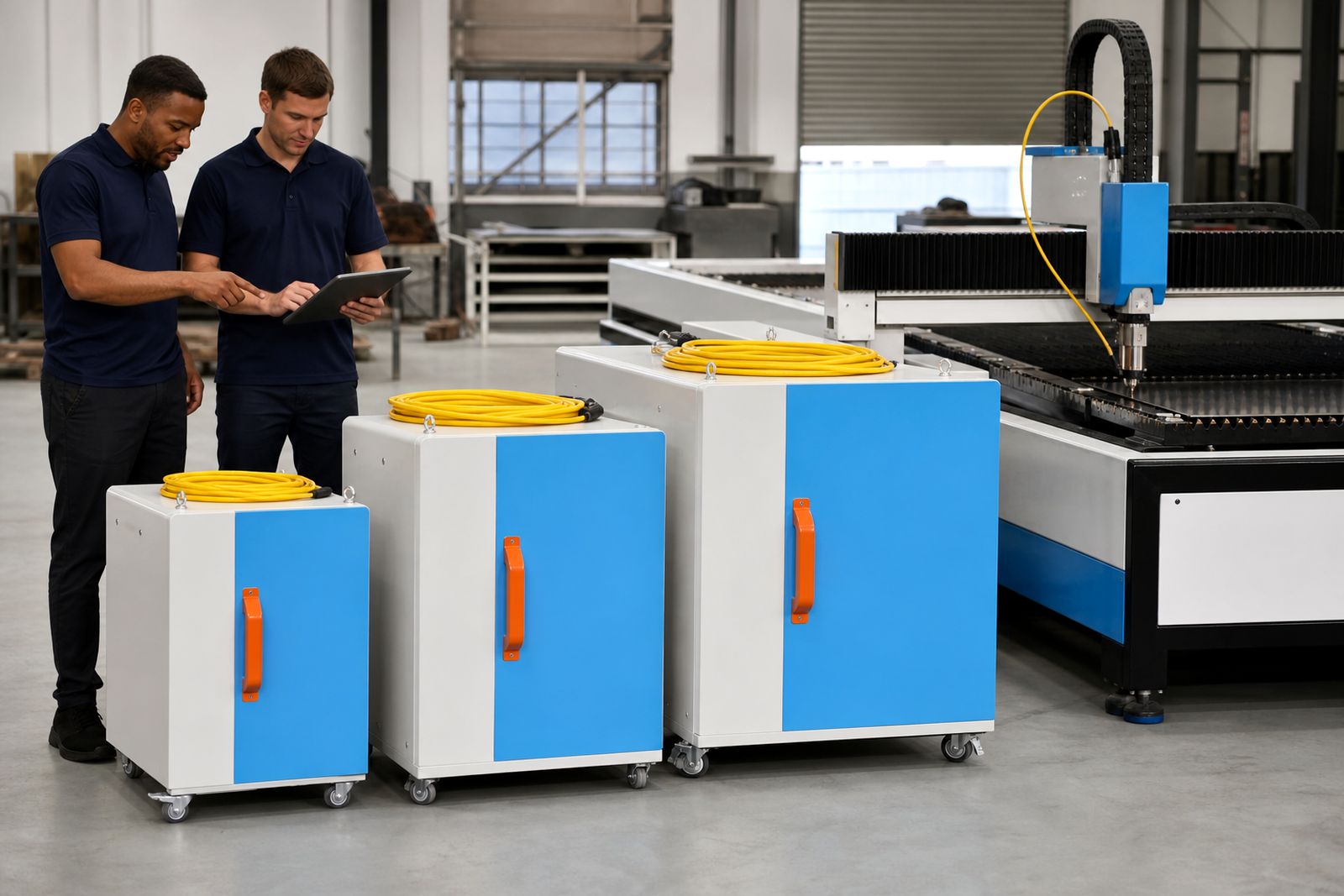
Fibre laser sources
A practical guide to continuous-wave, QCW and pulsed fibre laser sources for local cutting, welding, cleaning and marking work.
Read more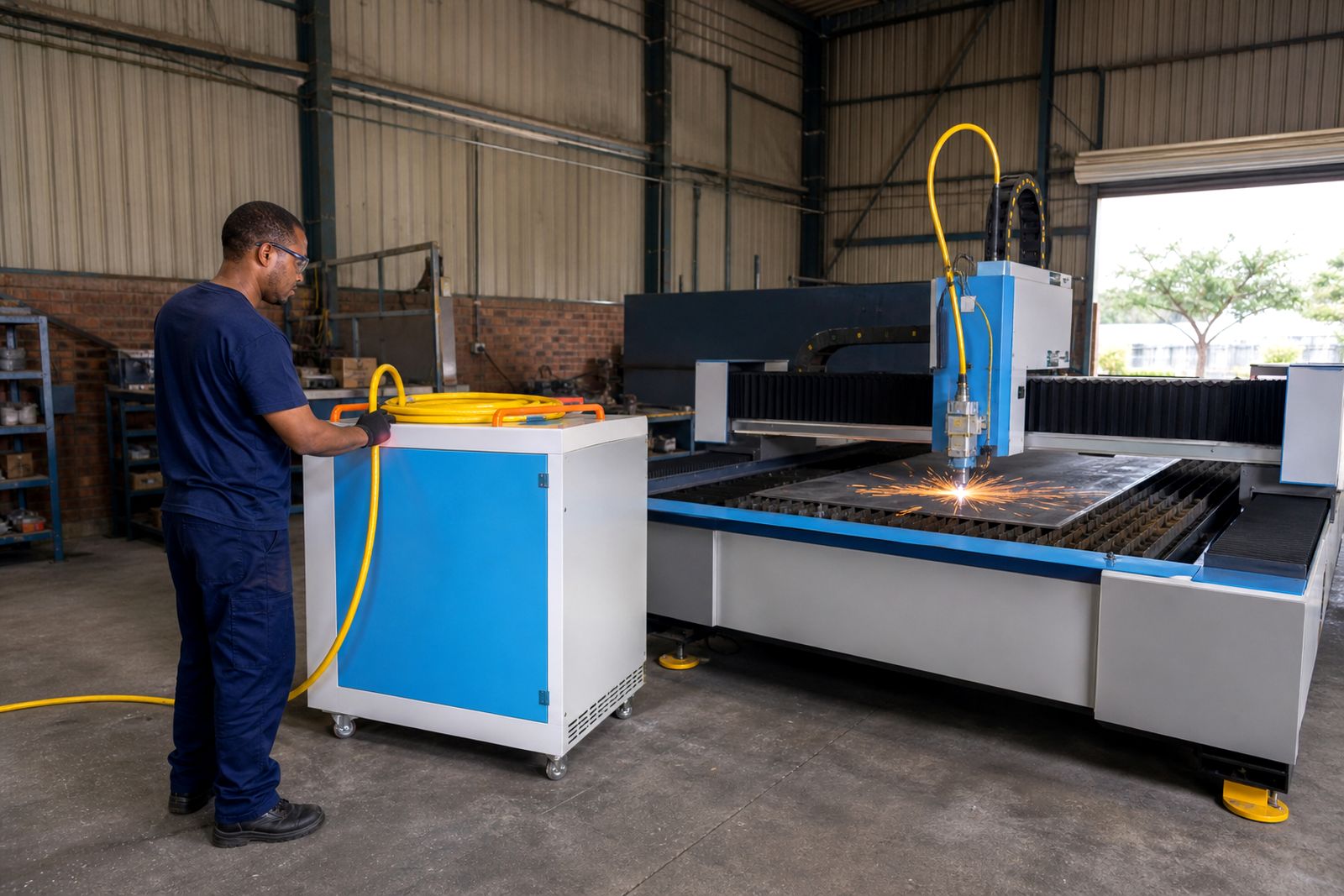
Laser spares
Optics, fibres, connectors and cooling parts for fibre laser cutting, welding and cleaning systems.
Read more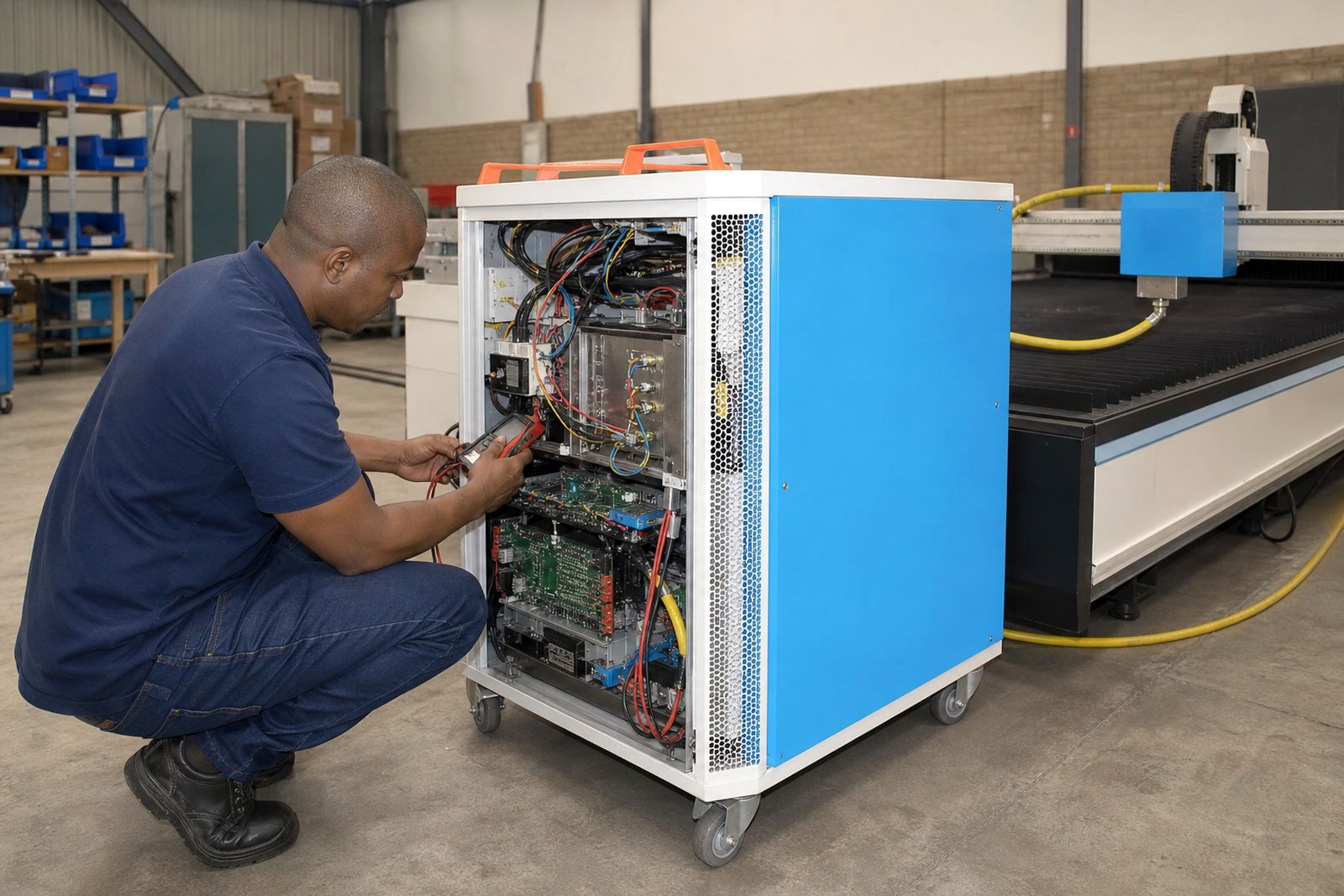
Laser service and repair
On-site service, workshop repairs and preventive checks for fibre laser sources, cutting heads, chillers and production machines.
Read more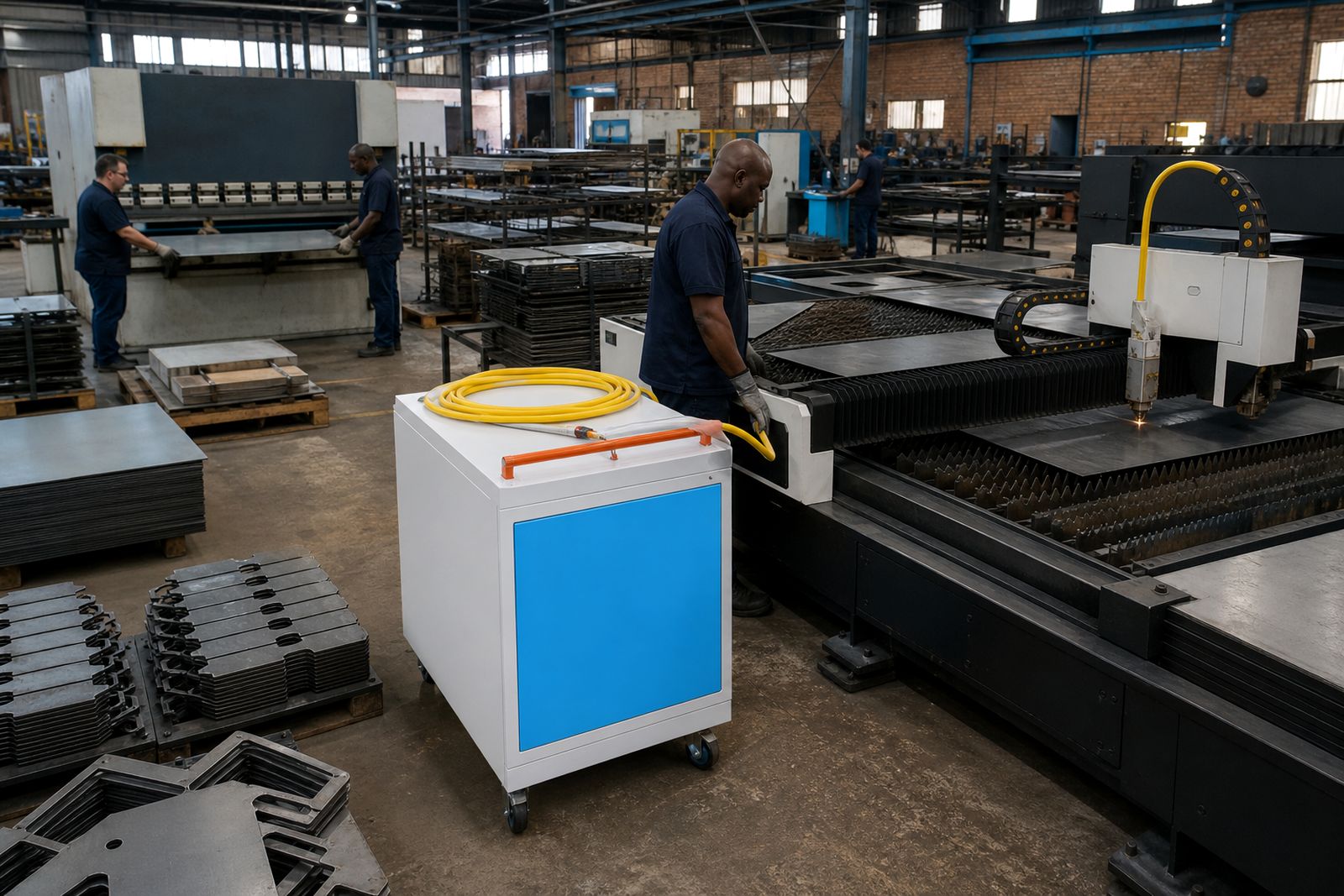
Industries we support
A practical guide to matching laser sources, spares and service to real fabrication work across South Africa.
Read more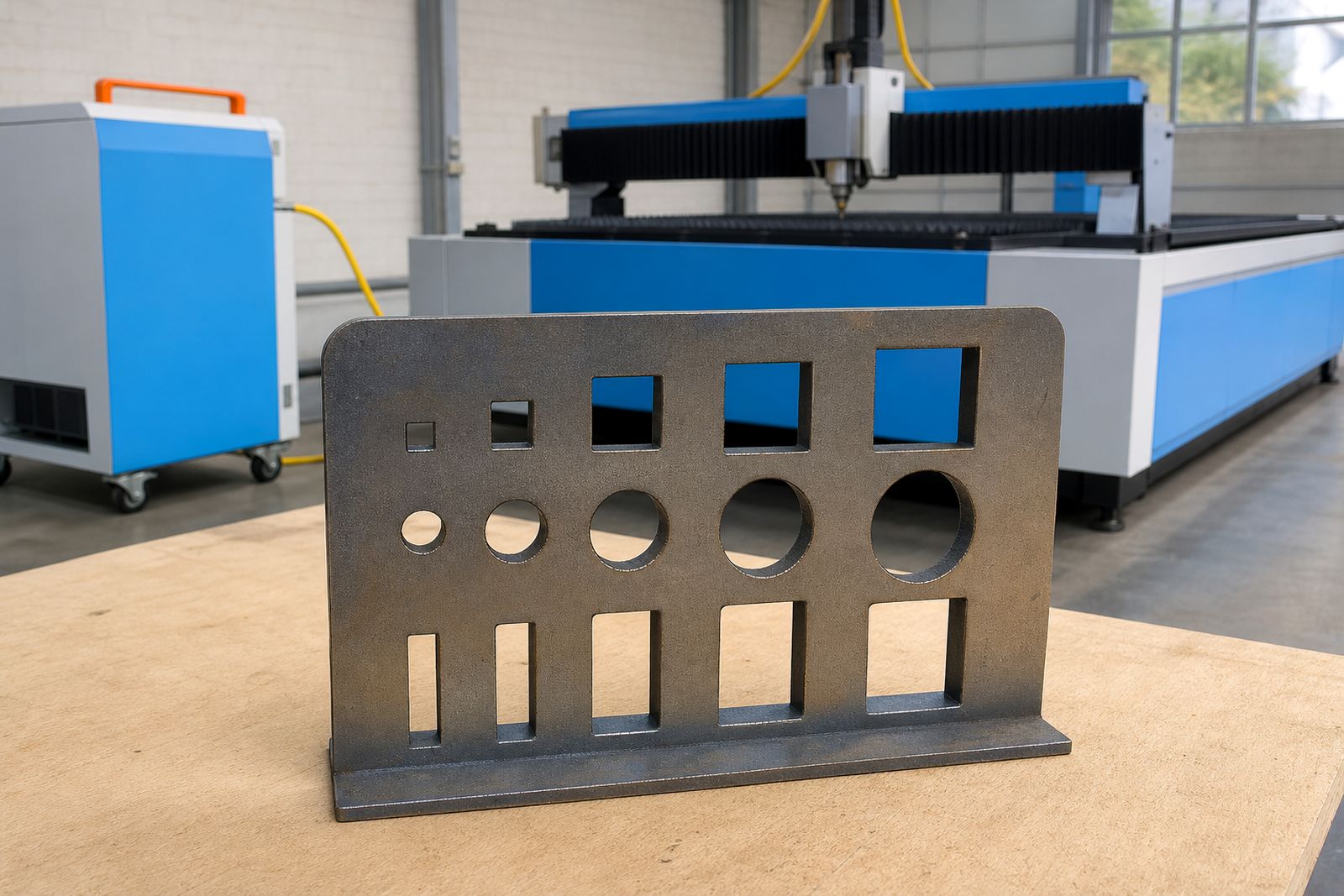
Fibre laser guides
Plain-language guides for choosing laser sources, reading alarms and planning sensible service work.
Read more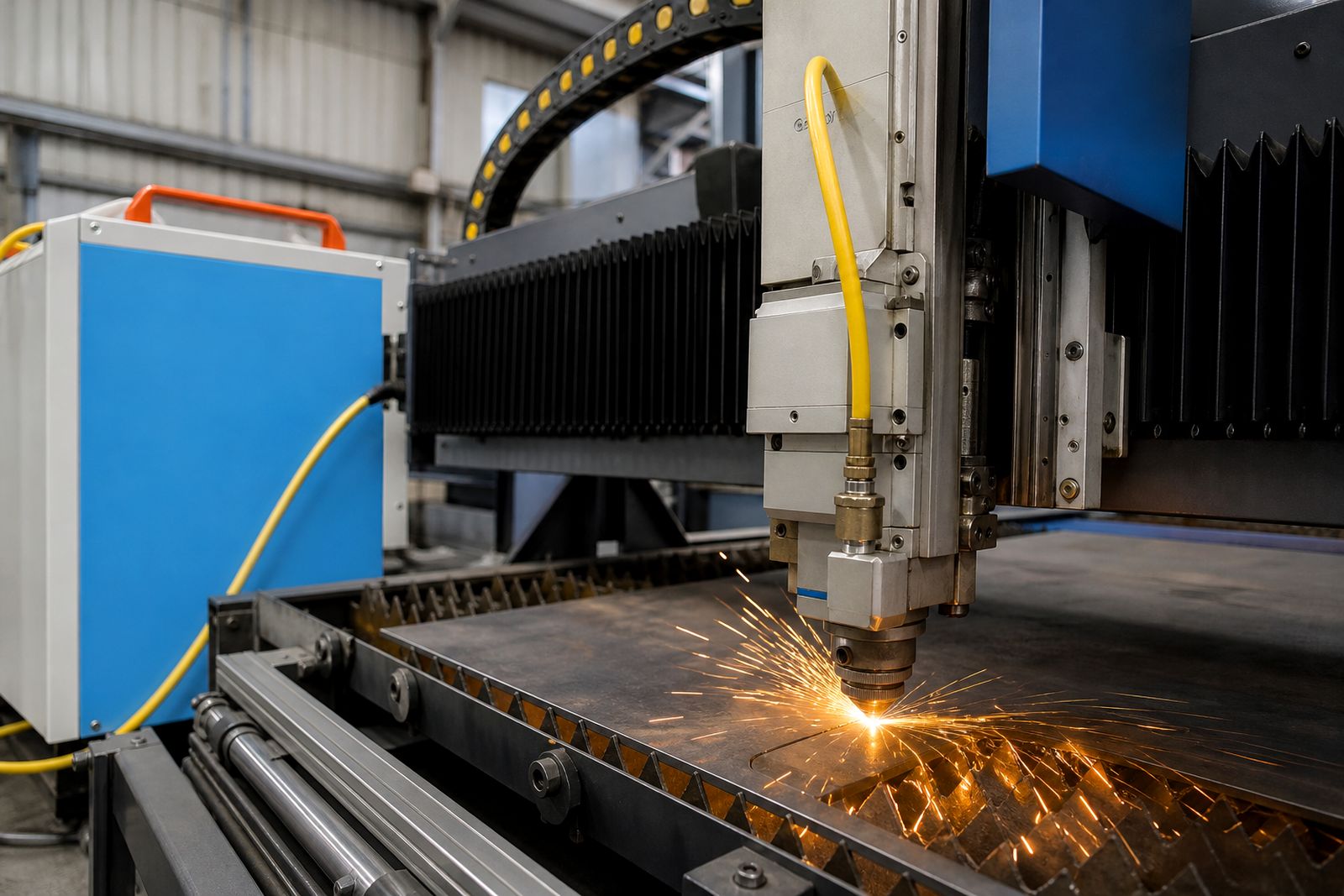
Set up for shops that already know the pressure of production
The businesses we help are usually fabricators, general metalworking shops, maintenance teams and manufacturing plants where downtime affects delivery dates straight away. Some run one machine and need a straightforward replacement source or a clean diagnosis. Others have several cutting or welding stations and need a service team that can work through recurring faults methodically.
Because the site is based in Alrode near Alberton, much of the regular field work happens in the wider Gauteng industrial belt. That includes workshops in Alrode, Wadeville, Germiston, Boksburg, Jet Park, Benoni, Kempton Park, Johannesburg, Midrand, Centurion, Pretoria and surrounding areas. We also supply parts and support customers nationwide where the fault can be handled by workshop repair, shipped components or a planned site visit.
- Small fabrication shops running one laser machine
- Medium production plants with cutting and welding equipment
- Maintenance departments that need a clear fault path
- Integrators and service teams looking for source and head spares
- Customers outside Gauteng who need parts matched correctly
That spread matters because local conditions are not the same everywhere. Dust load, heat, coastal humidity and variable utility conditions all affect optics, cooling and cable life, and those details change how a source or spare should be specified.
How a typical laser repair job actually runs
A normal job starts with the machine symptom rather than the part number. The source may not enable, the cut quality may have dropped, the welding head may be unstable, or the machine could be throwing intermittent alarms under load. We work from those operating symptoms and the machine layout to narrow the problem down before a replacement is recommended.
In many cases the first step is to identify whether the fault belongs to the laser source, the delivery path, the head assembly, the chiller, control wiring or the machine settings around them. A source alarm on its own does not always mean the source has failed. Dirty optics, poor cooling, damaged connectors and installation issues can trigger a pattern that looks bigger than it is, so a careful check saves time and wasted spend.
- Confirm the machine type and the process involved
- Review the alarm behaviour and when it appears
- Check source, chiller, fibre path and head condition
- Advise on repair, replacement or further bench diagnosis
- Carry out workshop or on-site service as needed
Some work is best done in our workshop in Alrode where the source or module can be examined under controlled conditions. Other faults need the machine to be inspected on site because the issue sits in the integration, coolant circuit or head setup. Either way, the goal is practical: get the actual fault identified and get the machine into a usable state without guesswork.
A closer look at alarms, optics and cooling
One of the most common problems in this trade is a chain reaction between contaminated optics and unstable cooling. A machine starts showing weaker cutting performance, piercing becomes inconsistent, and the operator sees alarms that seem unrelated. By the time the source is blamed, the real cause may include a dirty or damaged protective window, heat build-up in the head, poor chiller condition or contamination around the connector interface.
That is why we place a lot of importance on the smaller parts many teams leave too long. Protective windows and nozzle-related head items are not minor purchases when they affect beam quality. Delivery fibres and QBH connector condition also matter far more than many people expect, especially after rough handling, repeated fitment, or contamination introduced during maintenance.
Cooling deserves the same attention. Chiller performance, water condition and stable temperature control affect source life and process consistency. In inland workshops dust and heat create one set of issues. In coastal areas, humidity can add another layer, particularly where optics and connectors are opened carelessly. A machine can still power up while those conditions are building toward a bigger failure, so proper inspection counts more than hopeful resetting.
From Alrode to the rest of South Africa
Our base in Alrode places us close to a high concentration of fabrication and manufacturing activity, which makes it practical to support customers throughout Alberton and the wider Gauteng network. That includes industrial areas where cutting and welding equipment runs hard through long shifts and where a failed source or damaged head spare can stop work quickly.
For Gauteng customers, support may involve parts supply, workshop assessment or a site visit where the machine and source have to be checked together. Outside Gauteng, many customers send a clear fault summary and machine details through our contact form so the right source category, module type or spare can be matched before anything moves. For workshop repairs and source diagnostics, units can be assessed in our Alrode workshop where bench testing is possible.
We work with customers in inland and coastal regions, and that matters because environment changes the service picture. Shops near the coast often need closer attention to connector care and storage conditions while inland workshops more often battle airborne dust and heat, both of which can shorten optic life if maintenance slips even a little.
Matching source power to the work without overspecifying
A bigger source is not automatically the better answer. The correct choice depends on material type, thickness range, desired cut speed, duty pattern, the machine mechanics and the condition of the cutting head and chiller around it. Welding and cleaning modules have their own duty profile as well, so matching output to the job means looking at the process as a whole rather than treating the source as a standalone box.
We help customers weigh up whether the current source category still suits the work or whether the machine has outgrown it. In some cases a source swap makes sense. In others, replacing worn optical parts, restoring cooling performance or correcting the delivery path brings the machine back to a useful standard. That distinction saves money and avoids fitting the wrong hardware to a machine that has another weakness still unresolved.
If you need a source, spare or service assessment, send the machine details and fault notes through our contact form. The more precise the description, the easier it is to line up the right path whether that means a replacement source, head consumables, connector parts, chiller items or a proper diagnostic inspection.
From our notes
Questions we get asked
Do you supply complete laser cutting machines?
No. We focus on fibre laser sources, modules, spares and repair support for existing cutting, welding and cleaning equipment.
Can you help if the machine shows source alarms but the fault is unclear?
Yes. We help trace alarms through the source, cooling system, delivery fibre, connectors and head components so the fault is narrowed down properly.
Do you work only in Gauteng?
Our base is in Alrode near Alberton and we support many Gauteng workshops, but we also supply parts and handle service work for customers elsewhere in South Africa.
Tell us about the job
Send sizes, materials and where you are through our contact form, and we will come back with the practical options.
Open the contact form