

Sheet metal fabrication
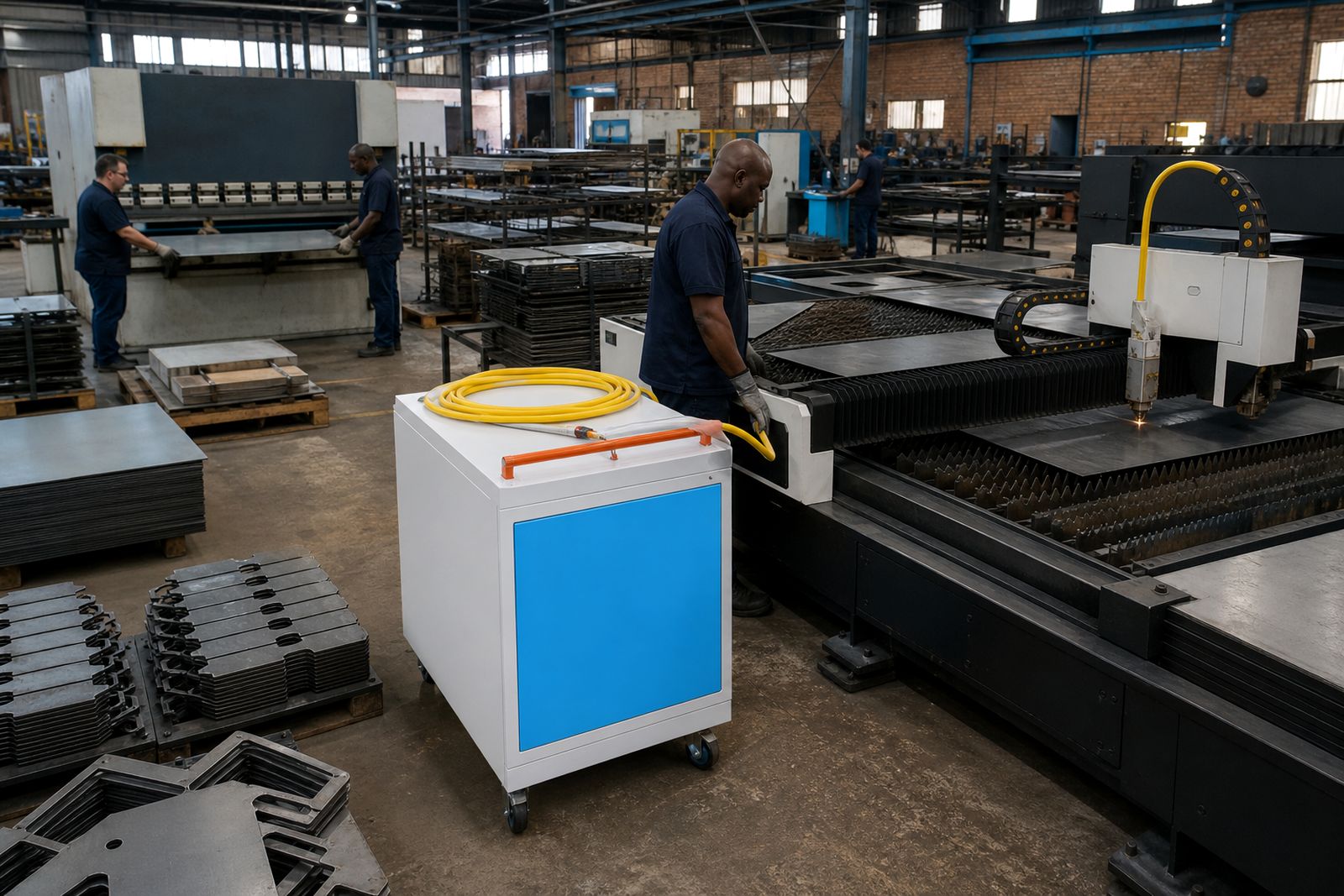
In sheet metal fabrication, lost cutting time spreads quickly from one nest to the next. The shops that stay productive usually pay close attention to source condition, consumables, cooling and alarm patterns before a small fault turns into a stopped line.
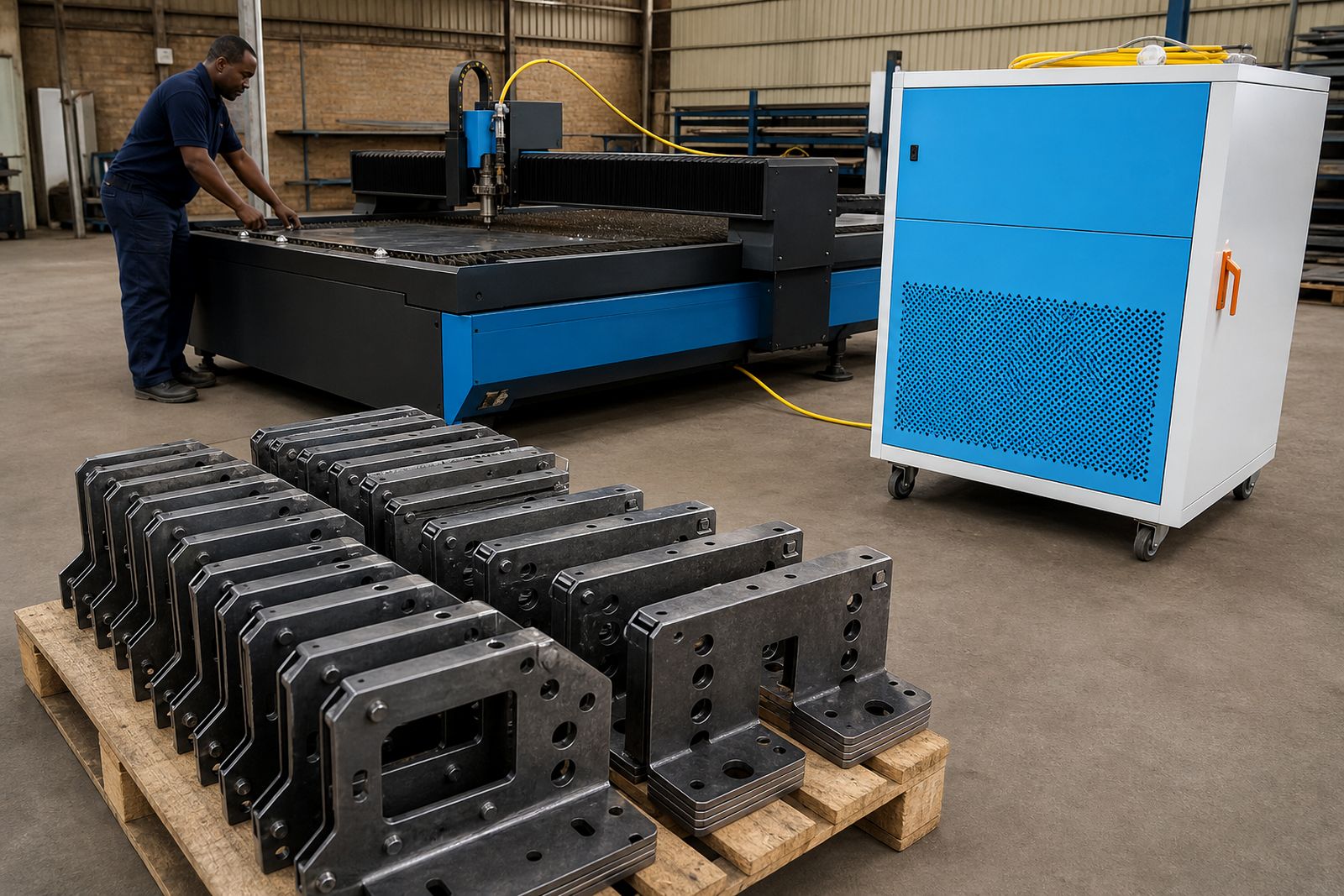
Where output usually slips first
Fabrication teams often notice production trouble in small ways before a machine stops outright. Piercing takes longer on material that was straightforward last week, edge quality starts drifting on thicker plate, or settings that were stable begin needing constant operator correction. When this happens, the laser source is only one part of the picture. Protective windows, nozzles, ceramics, gas flow, chiller condition and delivery fibre health all affect the cut.
In a busy Gauteng shop the pressure is usually on the next batch, not on tracing the root cause. That is understandable, but repeated parameter chasing can hide the actual fault. If the source is healthy and the beam path is clean, the problem may sit in the cutting head consumables or in coolant quality. If alarms are appearing, even intermittently, they need to be read in context with the machine behaviour and the material mix running that day.
- Watch for slower piercing on the same sheet thickness.
- Compare edge finish across similar nests, not only one part.
- Check whether alarms appear under load or only at start-up.
- Record changes after window, nozzle or ceramic replacement.
Source power must match the actual work on the floor
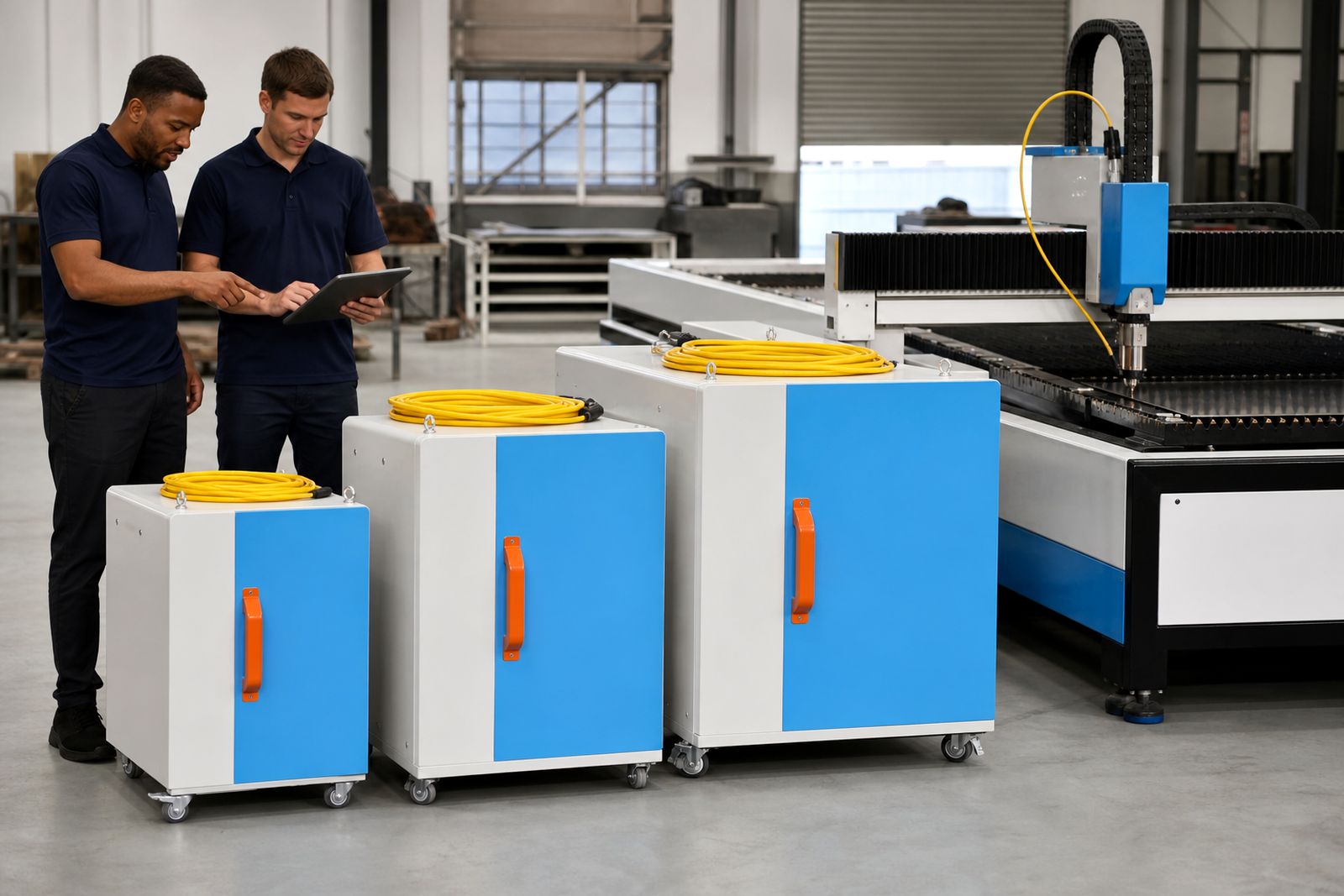
It is easy to think more source power always fixes a fabrication bottleneck. In practice, matching source output to the material range, duty cycle and expected cut quality matters more than chasing the biggest unit. A shop cutting thin galvanised sheet all day has a different requirement from one alternating between mild steel plate, stainless covers and occasional aluminium work. Welding and cleaning tasks also place different demands on the source and supporting components.
For fabrication businesses running varied work, the useful question is not only maximum output. It is how the source behaves across the jobs that pay the bills every week. Stable performance on the common thicknesses can be more valuable than theoretical top-end capacity that the floor rarely uses. This is where practical guidance helps, because an over-specified setup can raise costs in parts and cooling, while an under-sized setup causes lost time and untidy scheduling.
- Look at the sheet sizes and thicknesses that dominate your order book.
- Consider shift length and whether the machine runs in long continuous stretches.
- Match cooling capacity and head consumables to the source configuration.
- Review future work honestly, not only the heaviest sample part.
A workshop example from a local cutting line
One fabrication workshop near Alberton was processing mixed sheet for brackets, covers and small chassis parts. The machine would complete a morning run without drama, then begin showing inconsistent piercing after lunch, mostly on repeat nests that should have been routine. Operators first adjusted cutting parameters, then changed nozzles, but the issue kept returning and scrap started creeping up.
When the line was checked properly, the fault was not one dramatic failure. The protective window had taken light contamination, coolant condition was poor, and the source history showed alarm events that had been dismissed because the machine restarted. None of those items alone explained the whole problem, but together they were enough to upset consistency. After the beam path was inspected, wear parts replaced, cooling corrected and source behaviour reviewed, the machine settled down and output normalised. It was not a glamorous repair, just proper diagnosis and aligment of several linked issues.
That pattern is common in sheet metal fabrication. A source can be blamed for cut instability when the real problem sits across consumables, cooling and maintenance practice. Equally, a genuine source fault can be missed because the team assumes every cut issue starts at the head. The value is in reading the line as a system.
Spares that affect cut quality more than people expect
Some of the least expensive parts on a cutting machine can have an outsized effect on output. Fabricators usually notice this when edge finish changes or piercing becomes erratic across a full sheet. Protective windows, nozzles, ceramics and delivery fibre connections all sit close to daily production pressure, and all of them can degrade gradually rather than fail in one obvious moment.
Keeping suitable spares on hand is less about filling shelves and more about avoiding the stop-start cycle that burns a shift. In coastal areas, storage conditions also matter. Humidity can affect packaging and contamination control, so parts should stay sealed and clean until they are needed. On inland sites dust is often the bigger issue, especially where grinding and fabrication share the same building.
- Protective windows should be checked for contamination before quality drops badly.
- Nozzles need the right condition and concentricity for reliable gas flow.
- Ceramics should be inspected after head knocks or recurring height faults.
- QBH connectors and delivery fibres need careful handling during inspection and replacement.
- Chiller condition should be reviewed whenever source temperature behaviour looks abnormal.
Alarm reading is part of production planning
Many fabrication shops treat alarms as a maintenance issue only after the machine has stopped. A better approach is to read recurring alarms as production information. If a source shows repeated temperature, interlock, communication or output-related warnings, those events can help explain why a line is losing stability before a hard stop happens. The right response is not to guess from the code alone, but to link it to material, shift conditions and recent part changes.
This matters in South Africa where workshop conditions vary sharply. Summer heat in Gauteng can load a cooling system hard, and power quality on industrial sites can expose weak points in electrical protection and restart habits. If a machine has been through power interruptions or has had frequent restarts during load-shedding periods, the service record should note that. Not every alarm traces back to mains issues, but ignoring site conditions can waste hours.
Useful diagnosis usually starts with a few grounded questions. Did the alarm appear under sustained cutting or at idle. Was a spare part recently changed. Did cut quality shift before the code appeared, or only after. Those details narrow the fault much faster than replacing parts at random.
Service support that makes sense for fabricators
Fabrication businesses need practical support, not theory. That can mean checking whether a source fault belongs in the workshop or on site, helping the team decide if a delivery fibre or connector is likely involved, or sorting out whether repeated defects point to the head, the chiller or the source itself. For some faults, bench diagnosis in a controlled workshop environment is the sensible route. For others, especially when a machine is installed and producing, on-site service is the better fit.
At Raycus Laser, the focus for sheet metal fabrication is straightforward: supply fibre laser sources, modules and spares that suit the machine and the work, and service the equipment with a clear reading of how fabrication lines actually run. That includes support with continuous-wave sources for cutting, spares for cutting and welding heads, chillers, delivery fibres and source diagnostics when alarms start shaping the day more than the production plan does.
If your fabrication line is showing inconsistent cutting, recurring alarms or source-related faults, send the machine details and symptoms through our contact form so the team can assess the likely path before parts are changed unneccessarily.
What our Fibre Laser customers say
Verified Google reviews
Questions we get asked
Can you help if our cutting machine is losing consistency but still runs?
Yes. Intermittent faults are common in fabrication shops, and they often involve more than one item. We can help assess whether the issue points to the source, cooling, delivery fibre, protective windows or cutting head spares.
Do you supply complete sheet metal cutting machines?
No. We supply fibre laser sources, modules, spares and related parts, and we service and repair laser cutting and welding equipment on site and in our workshop.
Is a higher-power source always the right move for a fabrication shop?
Not always. The better option depends on the material range, sheet thicknesses, duty cycle and the way the machine is used across the week. Matching the source to the actual work is usually more useful than oversizing on paper.
Also worth a look
Tell us about the job
Send sizes, materials and where you are through our contact form, and we will come back with the practical options.
Open the contact form