

Choosing laser source power
Power choice affects cut edge, piercing stability, welding speed and how hard the rest of the machine has to work. This guide sets out a practical way to match the source to the metal, the thickness and the kind of shift your shop runs.
Start with the metal and the real thickness range
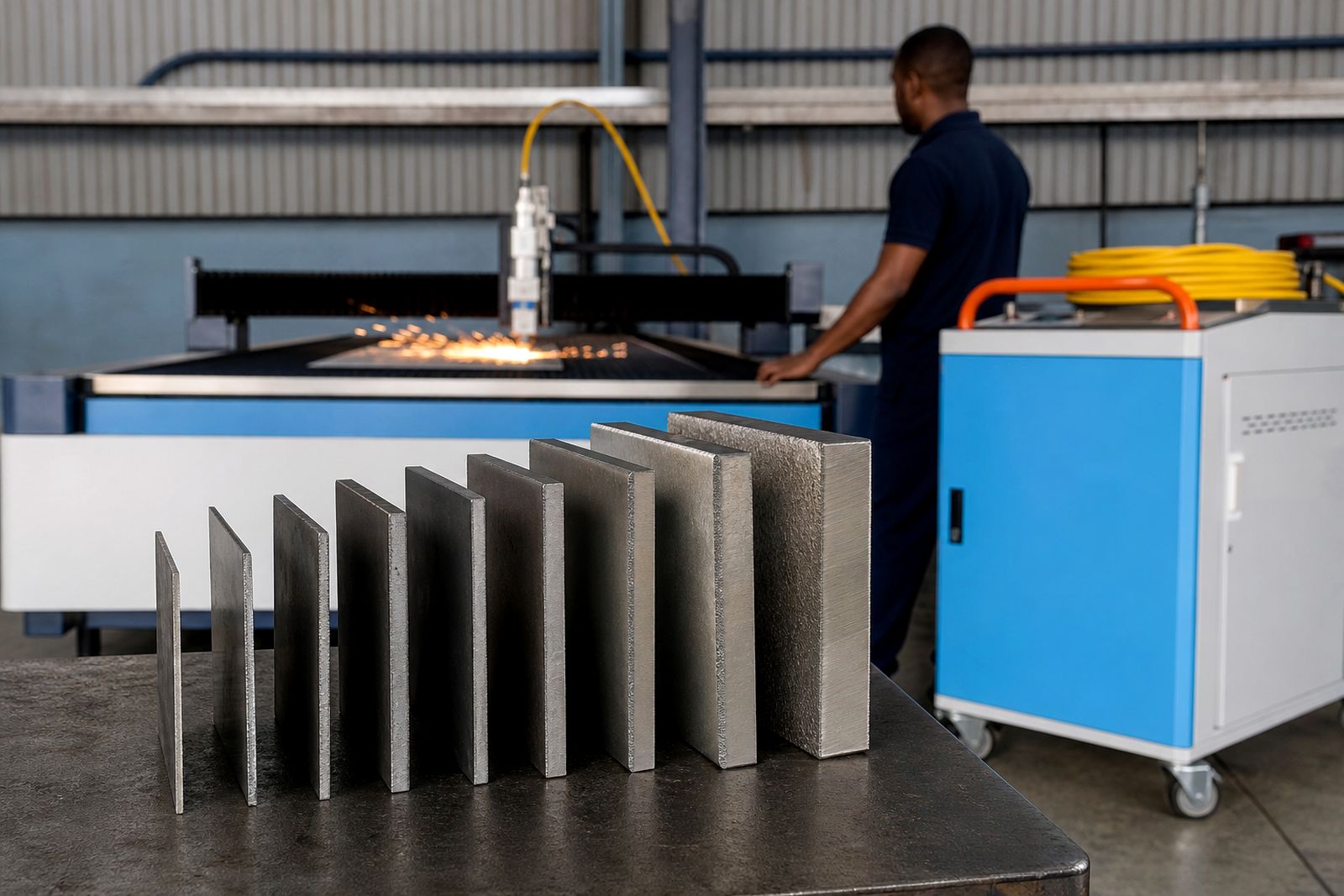
The first decision is not the source model. It is the metal you process most often, the thickness you do every week and the thickest plate that matters to your sales mix. A shop that mainly runs mild steel brackets and enclosure parts needs a different power band from one that cuts thicker stainless covers or reflective non ferrous sheet. If most of your work sits in a narrow range, size for that range first and treat occasional heavy jobs as exceptions.
It helps to list your work by percentage, not by hope. Many machines are bought for a maximum thickness that turns up once in a while, then spend most of the month cutting much thinner sheet. That usually leaves money tied up in source power while gas use, optics condition and feed settings still decide whether the edge is clean. In Gauteng workshops where shifts are busy and floor space is tight, the right match is often the one that keeps production steady rather than the one with the biggest number on paper.
- Main metals processed: mild steel, stainless steel, aluminium, galvanised sheet, brass or copper.
- Normal thickness range for each material, in millimetres.
- Thickest routine job, separate from rare once-off work.
- Whether edge quality, speed or low running cost matters most.
- How often you pierce many small profiles rather than long straight cuts.
Separate cutting, welding and cleaning duties
Not every source works in the same way, and power matching changes with the job. Continuous-wave sources are commonly selected for sheet and plate cutting where stable output over long runs matters. Welding and cleaning setups often use different module types and settings because heat input, bead control and duty pattern are not the same as cutting. A power level that sounds sensible for one process can be awkward in another.
For welding, think about joint fit-up, travel speed and the sections you join most often. Thin stainless boxes, mild steel frames and thicker fabricated parts place very different demands on the laser and wire process. Cleaning work adds another layer because coating type, rust level and surface condition affect the result more than a simple watts-only comparison would suggest. If you run more than one process in the same business, note the split clearly before you compare source options, otherwise the brief gets muddy and the wrong compromises creep in.
- Cutting usually favours stable output over long production cycles.
- Welding needs power suited to joint type, travel speed and heat control.
- Cleaning depends heavily on surface condition and treatment width.
- Mixed-use workshops should rank the main duty first, then the secondary tasks.
Look beyond the source and check the full machine package
A larger source cannot fix weak gas supply, worn optics, poor beam delivery or a chiller that cannot hold temperature properly. We often see power blamed when the real issue sits elsewhere. Delivery fibre condition, connector cleanliness, protective windows, nozzle alignment, focus position and head health all shape the result. On cutting machines, pierce consistency and edge finish depend on the package working together.
Cooling matters more than some buyers expect, especially in summer heat around Alrode where ambient conditions in a factory can climb fast by midday. If the chiller is undersized or neglected, the source may derate, alarm or drift from stable cutting conditions. The same applies to contaminated water circuits and blocked filters. Before stepping up in power, check whether the present machine is using the available output properly. A tidy service inspection can save a costly wrong turn.
- Chiller capacity and water quality.
- Condition of delivery fibres and QBH connections.
- Protective windows, ceramics and nozzle wear.
- Assist gas purity, pressure and line condition.
- Cutting head alignment, focus calibration and height control.
- Electrical supply quality where machine alarms point that way.
Choose for duty cycle, not only top speed
Many buying decisions get pulled toward headline speed, but production reality is broader than a fastest possible straight line cut. Duty cycle matters. If your shop runs long batches, repeated piercing and frequent material changes, the source should be chosen for consistency over the whole shift. Stable output and manageable thermal load usually count for more than a small speed gain on sample coupons.
Also consider the effect on consumables and settings discipline. Running far more power than the work calls for can narrow the process window and make small setup errors more expensive. Operators may find that a machine becomes fussier about nozzle condition, focus and gas setup. On the other side, too little power can force slow feed rates, incomplete penetration and ugly rework. The sensible choice sits where the machine has enough headroom for the routine mix without becoming temperamental on normal daily jobs. That balance is often less glamorous, but it keeps parts moving.
If your workload changes by season, note that too. A fabricator doing mostly light gauge HVAC panels one month and heavier agricultural repair work the next may need advice based on the actual production split rather than a single sample part.
A floor checklist before you change source power
Before replacing or upgrading a source, gather a short record from the machine and the operator. This saves guesswork and helps separate a genuine power limitation from a service fault. A few photos of edges and pierce points are useful, but operating notes are just as important. When shops skip this step they often spend on capacity where maintenance would have solved the complaint.
- List the materials and thicknesses that currently give trouble.
- Note whether the problem is piercing, edge roughness, dross, heat tint or unstable welding.
- Record any alarms appearing during the fault pattern.
- Check consumable condition before judging the source.
- Compare current production speed with the rate your jobs actually need.
- Confirm whether gas quality or cooling faults were ruled out.
- State if the machine runs one shift, extended shifts or intermittent work.
With that information, we can help you decide whether a higher power source makes sense, whether a different module type suits the process better or whether repair and setup work on the present system is the more practical route. On some machines the answer is a source change. On others it is a fibre, connector, chiller or head issue hiding in plain sight.
When to ask for diagnostics before making the jump
If the machine used to perform well on the same material and thickness, a sudden drop in cut quality is not a normal sign that you now need more power. It points first to deterioration or drift. Source alarms, unstable output, back reflection events, temperature faults and repeated protective window failure should be checked properly before any buying decision. The same goes for welding systems that lose penetration after a period of acceptable work.
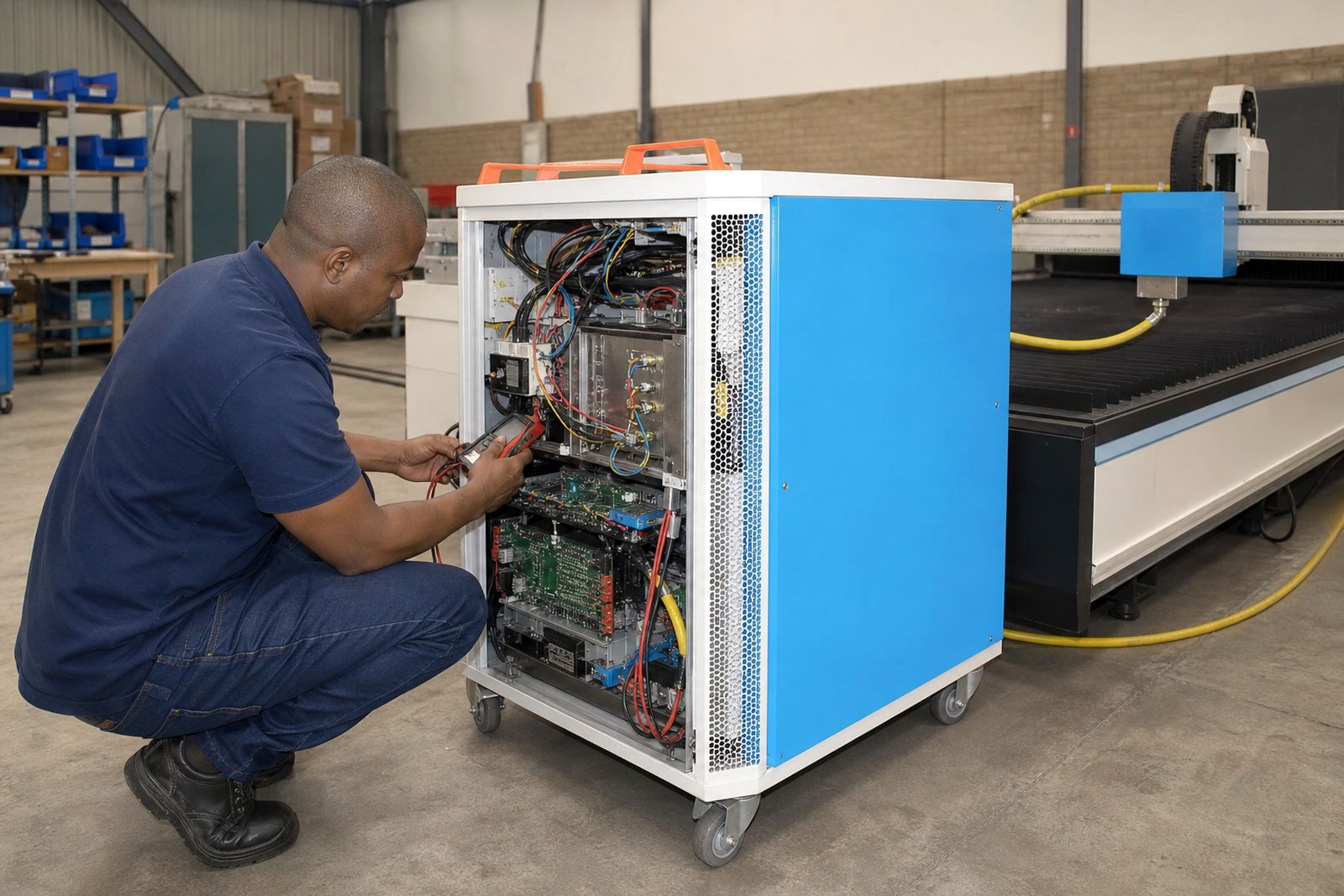
Our team in Alrode works with source diagnostics, machine service and spares for fibre laser cutting and welding equipment, so we look at the whole chain rather than only the power label. That can mean testing the source, checking beam delivery parts, reviewing alarm history and inspecting the cooling loop before a recommendation is made. If you want us to look at your present setup, send the machine details, the process, the material range and the fault pattern through our contact form. A brief note with the head type, chiller model and recent alarm text helps a lot even if the machine is still running.
What our Fibre Laser customers say
Verified Google reviews
Questions we get asked
Can I choose source power only from the maximum thickness in the brochure?
It is better to size the source around your routine material mix, the edge quality you need and the way the machine works through a normal shift. Maximum thickness on paper does not show how stable piercing, gas use and consumable life will be on everyday jobs.
Will a higher power source always improve cutting quality?
Not always. Poor gas condition, worn windows, fibre or connector issues, weak cooling and head misalignment can all spoil the result even when the source has enough output. More power can also make setup errors show up faster on thin material.
Should I upgrade the source or repair the machine first?
If the machine previously handled the same work and then performance fell away, diagnostics usually come first. A source upgrade makes sense when the present setup is genuinely undersized for your regular workload, not when a service fault is being mistaken for a power limit.
Also worth a look
Tell us about the job
Send sizes, materials and where you are through our contact form, and we will come back with the practical options.
Open the contact form