
Cutting and welding machine maintenance
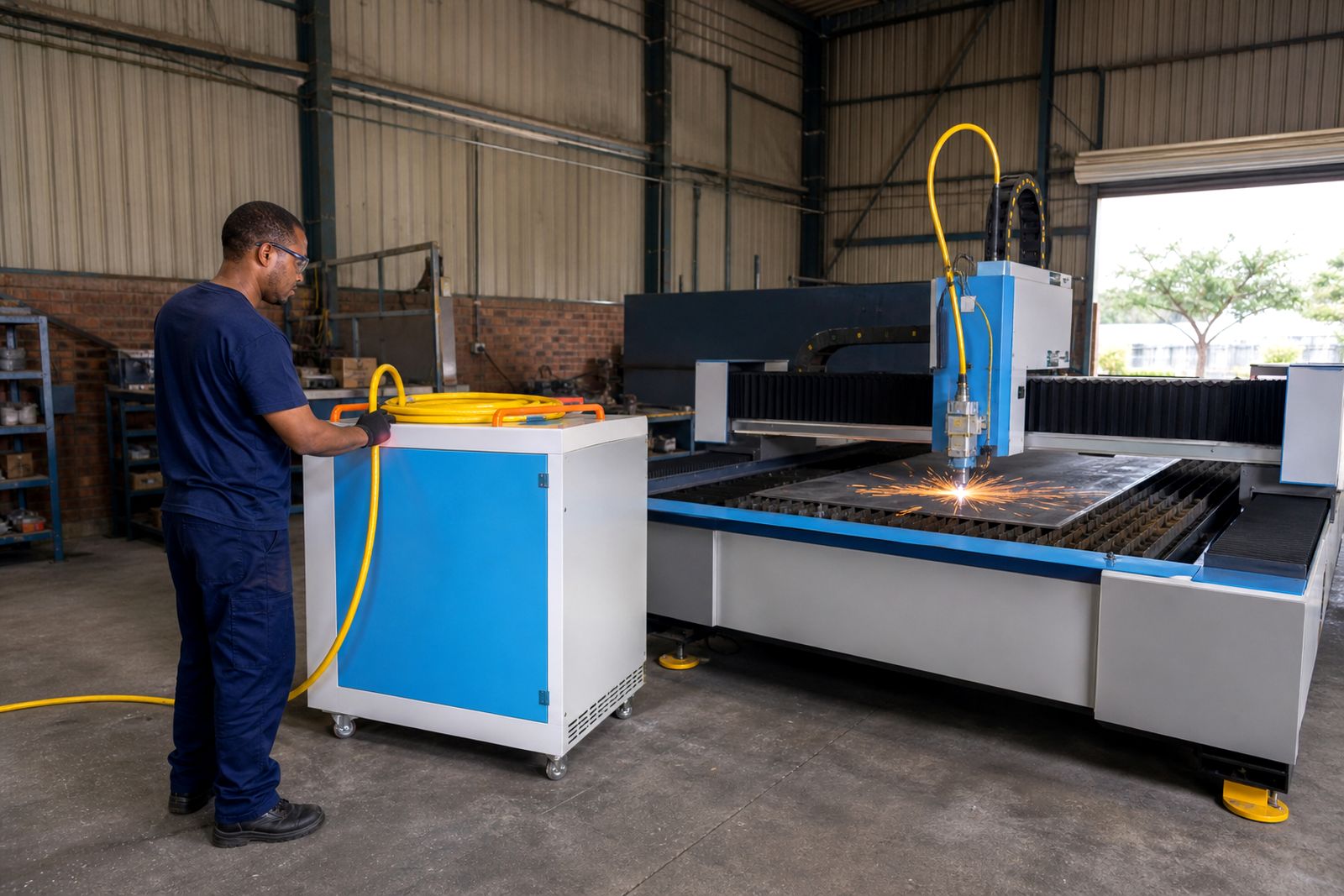
Laser cutting and welding machines need regular mechanical and optical attention if you want stable output and fewer stoppages. Our team in Alrode services fibre laser equipment on site and in the workshop, with checks that focus on the head, gas path, cooling and motion system.
What this maintenance service covers
This service is for fibre laser cutting and welding machines that need scheduled upkeep, fault finding during normal wear, or a detailed condition check before a production problem grows into a bigger repair. We work with machines used by fabrication shops, panel beaters, metal furniture plants and general engineering teams across Gauteng and further afield. The focus is the machine itself and the parts around the laser source that affect cut quality, weld consistency and daily reliability.
Maintenance work is shaped around the way the machine is used. A unit cutting thin mild steel all day does not wear in quite the same way as a welding cell working shorter runs on stainless parts. We inspect the wear pattern then deal with the practical items first, not a generic tick-box list.
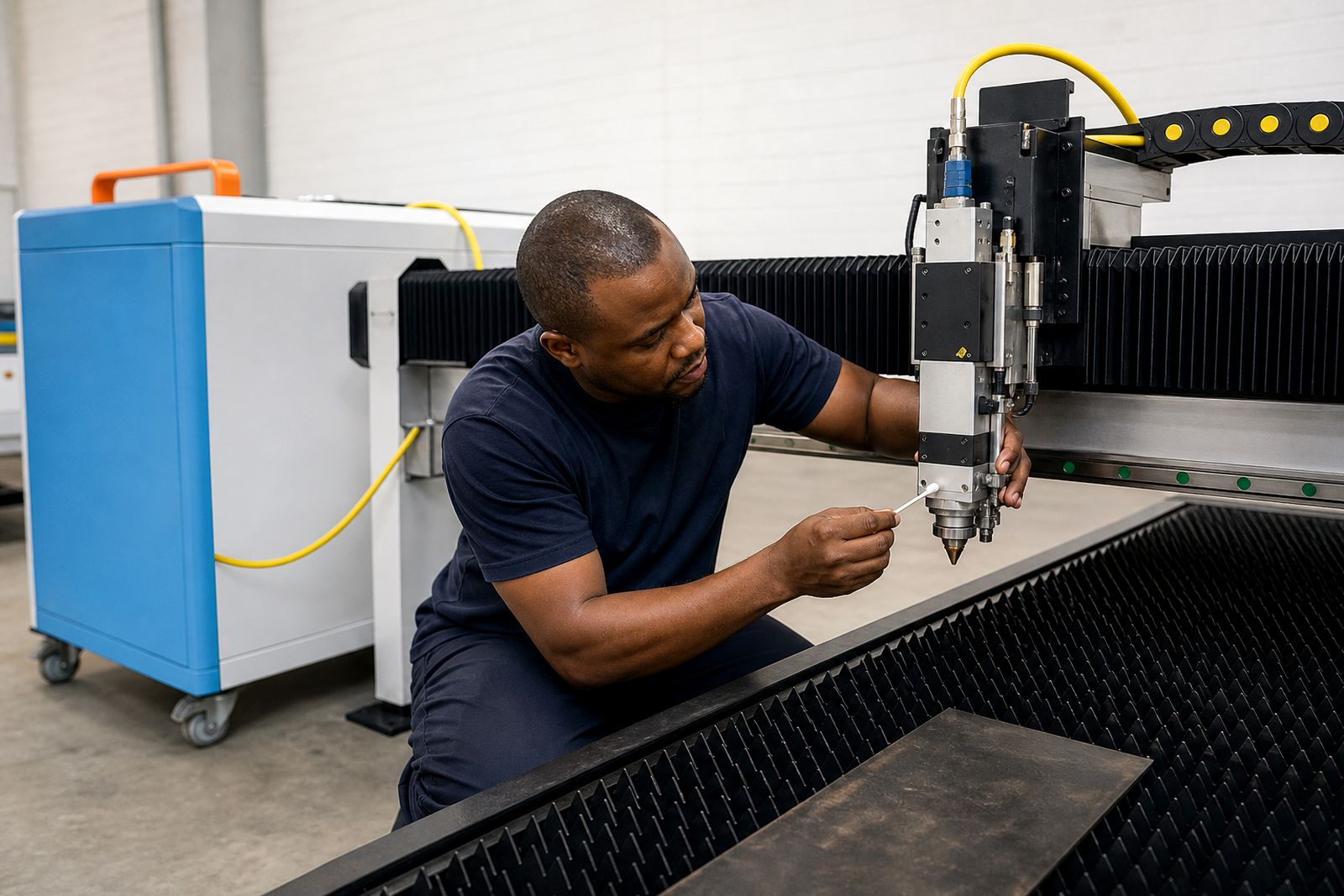
- Cutting head inspection, alignment checks and consumable condition review.
- Welding head checks for lens contamination, spatter build-up and cable strain.
- Protective window, nozzle, ceramic and connector inspection.
- Assist gas line checks for leaks, pressure stability and contamination.
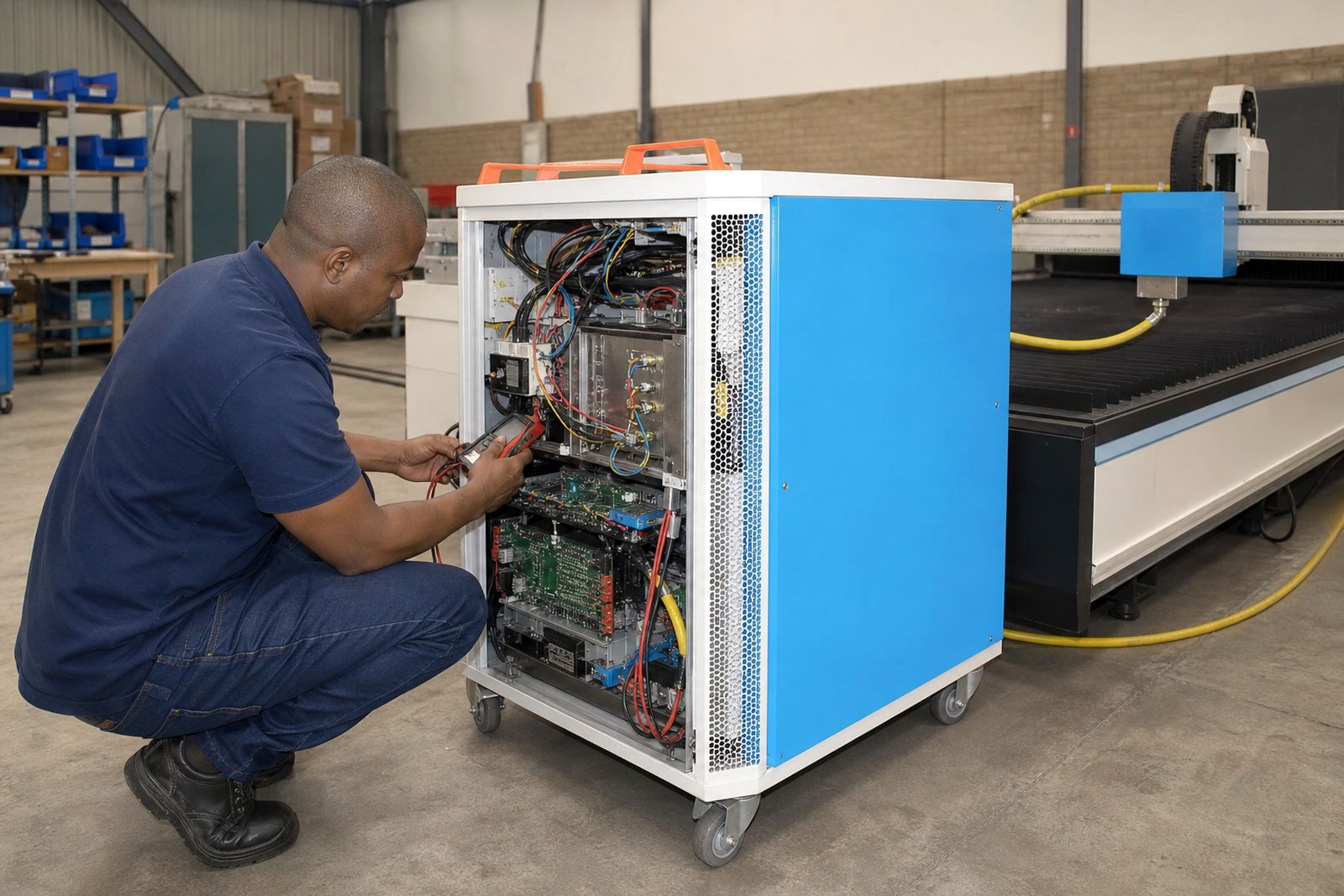
- Chiller condition review, coolant flow checks and alarm review.
- Motion checks on rails, bellows, cable tracks, drives and limit functions.
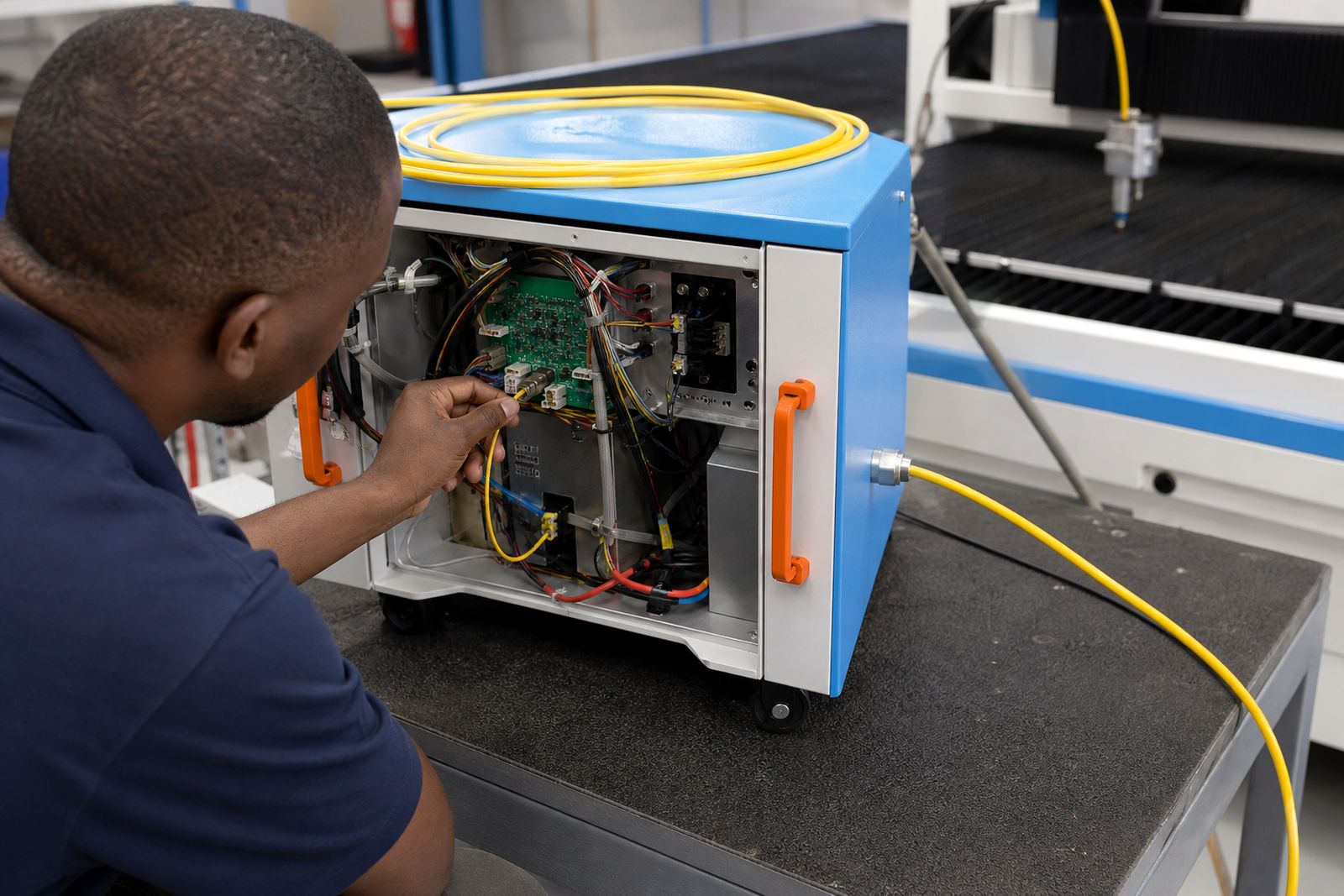
- Basic electrical condition check around control cabinets and machine interlocks.
Head, optics, gas and motion checks
Most cutting and welding faults show up first in four places: the head assembly, the optical path, the gas system and machine movement. That is why our maintenance visit starts there. Dirty optics, a damaged protective window, poor gas delivery or mechanical play can all look like a laser power problem when they are not. Sorting that out early saves time and parts.
On cutting machines we look at nozzle condition, centring, stand-off behaviour and any sign that spatter or heat has travelled back into the head. On welding units we check the head body, connector condition and visible signs of heat stress around the cable set. We also review the beam delivery route where accessible, including fibre handling and QBH seating where relevant. If a machine has started producing rough edges, hard starts, excessive dross or unstable welds, these checks usually show the direction fairly quickly.
- Optics examined for contamination, damage and heat marks.
- Gas fittings and hoses checked for leaks and loose couplings.
- Axis travel observed for vibration, backlash or uneven sound.
- Lubrication points checked where the machine design allows it.
- Sensors, covers and interlocks reviewed for proper operation.
How a maintenance visit runs
We begin with a short discussion on the machine behaviour, the material being processed and any alarms or cut or weld defects already noted by the operator. After that the machine is isolated and opened where needed for cleaning, inspection and measurement. If the machine can be tested safely under operating conditions, we run basic trials to compare the fault symptoms with the condition of the optics, gas and movement systems.
Where parts are still serviceable we clean and refit correctly. Where a part is clearly worn or damaged we note it for replacement. If the issue points beyond normal maintenance, such as a source fault or a chiller problem, we record that separately so the next step is clear. Some jobs are completed fully on site, while others need workshop attention if the repair is deeper or if the machine owner wants a more involved strip and rebuild.
At the end of the visit we summarise the work done, the condition found and the parts that should be watched or replaced on the next service cycle. That gives the production team something usable, not just a vague note that the machine was looked at.
What to prepare before we attend
A maintenance call goes more smoothly when the machine area is safe, accessible and clean enough for covers to be removed without dust falling straight into the head or cabinet. We do not need the whole shop to stop, but we do need enough room to work around the machine and reach the chiller, gas train and electrical access points.
Please have a sample of the problem on hand if quality has dropped. A few recent cut parts or welded joints can help link the symptom to the machine condition. Alarm photos, controller notes and a short list of materials being processed are also useful.
- Clear access around the machine, chiller and gas connection points.
- The operator or supervisor available to describe the fault history.
- Recent alarms, photos or machine messages if they were recorded.
- Sample parts showing the actual cut or weld problem.
- Any spare consumables already on site for comparison or fitting.
How maintenance pricing is worked out
Maintenance charges depend on the machine type, the fault history, travel from Alrode, and whether the work is planned servicing or a call-out linked to an active production issue. A compact welding setup is not costed in the same way as a full sheet cutting machine with larger motion systems, gas equipment and guarding to inspect. If workshop repair is needed, that is treated separately from the site visit.
Parts are costed according to what the machine actually needs. Typical wear items include protective windows, nozzles, ceramics, connectors, hoses and certain cooling or gas components. If a service visit shows that the laser source or a control item needs deeper testing, we set that out as a separate repair path so the scope stays clear. For site work outside Gauteng, travel and time on the road are included in the general costing.
You can send machine details, photos and the fault notes through our contact form and we will arrange the service scope from there.
Aftercare and service notes
Good maintenance does not end when the covers go back on. We leave practical notes on the machine condition, the parts replaced or cleaned, and any operating habits that are affecting head life or optical cleanliness. In many shops the biggest gains come from small corrections: cleaner gas practice, better consumable handling, or dealing with coolant quality before alarms start stacking up.
If a machine needs a follow-up repair, we separate that from routine maintenance so the production manager can see what is normal wear and what is an actual failure. We also help customers judge whether the machine symptoms point to the source, the head, the chiller or the motion side. That makes later downtime easier to plan and avoids buying the wrong parts in a rush.
For machines running in dusty fabrication spaces or near the coast, service intervals often need tightening a bit because optics and connectors foul faster, and cabinet corrosion starts earlier than many teams expect.
What our Fibre Laser customers say
Verified Google reviews
Questions we get asked
Do you service machines on site or only in the workshop?
We do both. Many maintenance tasks are handled on site, but deeper strip-down work or certain repairs may be moved to the workshop if that is the better route.
Can you help if the machine shows alarms but the source seems fine?
Yes. Alarm diagnosis often involves the head, chiller, gas side, interlocks or machine movement rather than the source alone. We check those systems as part of maintenance and fault finding.
Do you supply spare parts during maintenance?
We can supply relevant laser machine spares such as protective windows, nozzles, ceramics, delivery fibre items, connectors, chiller parts and related components where needed for the service scope.
Also worth a look
Tell us about the job
Send sizes, materials and where you are through our contact form, and we will come back with the practical options.
Open the contact form