

Source diagnostics and repair
When a fibre laser source starts throwing alarms, loses output or drops out under load, the fault needs proper diagnosis before parts are changed. Our Alrode team checks the source, linked components and operating history so the repair matches the actual cause.
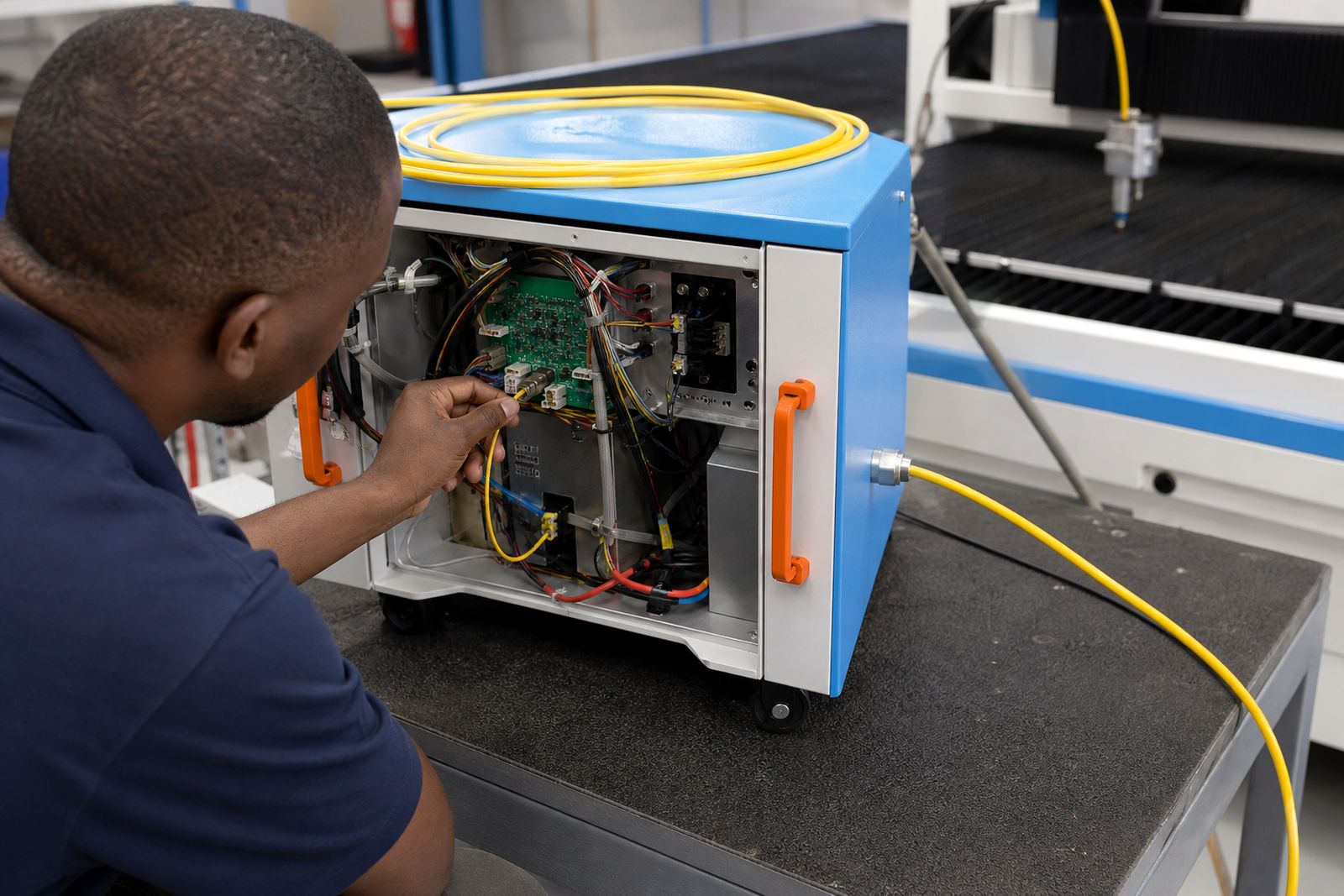
Faults we deal with on fibre laser sources
Not every cutting or welding problem starts at the laser source, so we begin by separating source faults from issues in the head, chiller, fibre path or machine settings. We work on continuous-wave sources used for cutting, and on modules used for welding, cleaning and pulsed applications where the symptoms point back to the source.
Common callouts include intermittent alarms, low penetration after a long stable period, output that drifts during the shift, startup failures after mains events, and module faults that stop production. In some cases the source itself is healthy and the real cause sits with cooling water quality, dirty optics, a damaged delivery fibre or a connector problem, so those checks are part of the job too.
- Alarm code tracing and event review
- Power loss, unstable output and shutdown faults
- Module checks on welding, cleaning and pulsed units
- Cooling, interlock and communication fault diagnosis
- Connector, fibre path and related source-side inspections
What is included in the diagnostic work
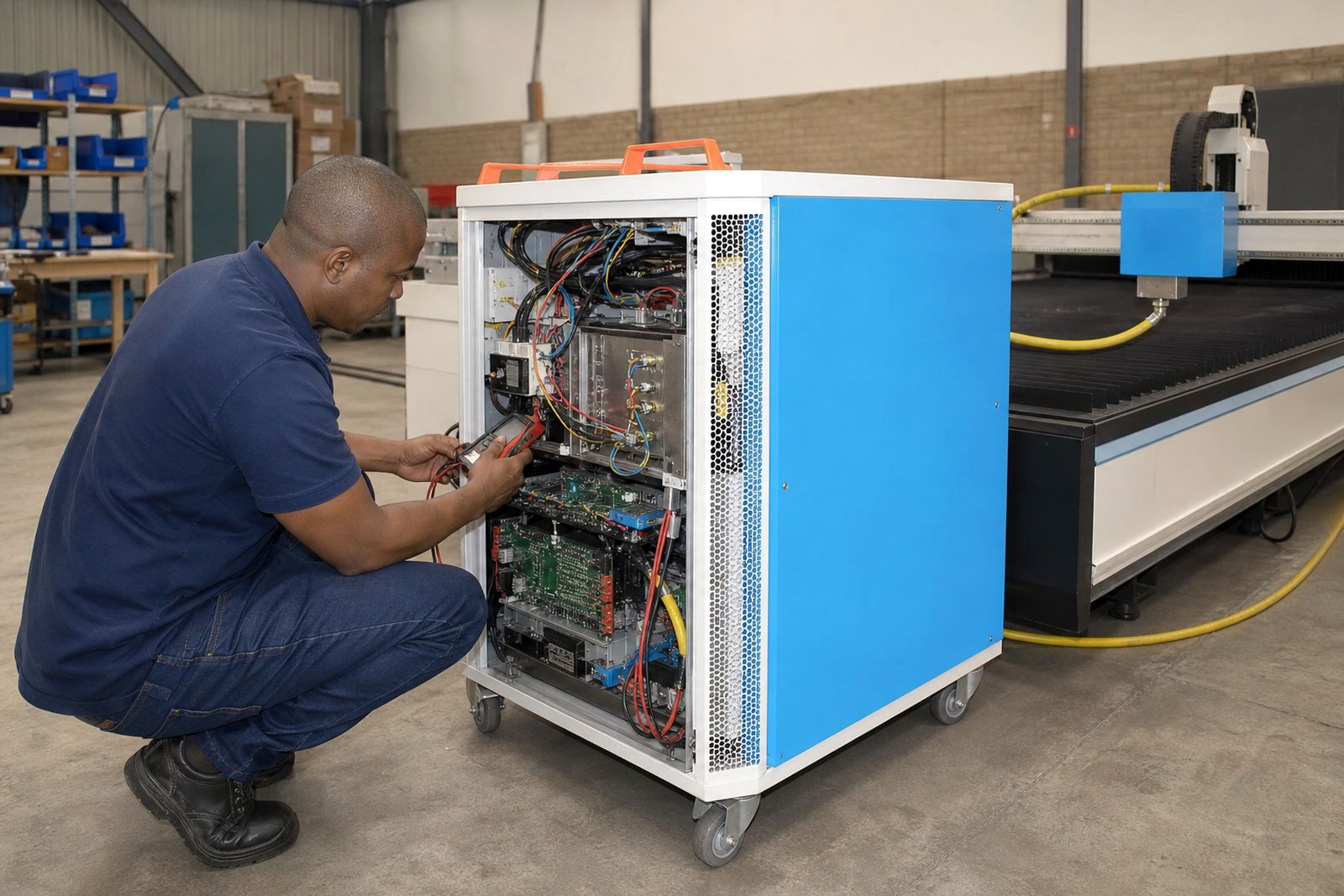
The service covers structured testing rather than guesswork. We inspect the source condition, verify the reported fault, compare machine behaviour with source readings and check whether the symptoms repeat under controlled conditions. Where practical, we test on site first because installation conditions often tell us as much as the fault record does.
If workshop repair is the better route, we log the unit in, inspect external condition, test interfaces and carry out bench diagnosis. Fault finding can include alarm history review, output checks, connector inspection, cooling circuit checks and examination of damaged or heat-marked components. If a repair is approved, we fit suitable replacement parts, retest and confirm stable operation before the source is released.
- On-site fault assessment or workshop intake
- Visual inspection and connector condition checks
- Alarm review and operating history assessment
- Bench testing where workshop equipment is needed
- Repair of source-related faults with retesting after work
How the process runs from first report to handover
The first step is a clear fault report through our contact form. A useful report includes the machine type, source type, the alarm shown, whether the issue is constant or intermittent, and what changed before the fault appeared. Photos of the screen, source labels, connectors and the cutting or welding result help cut out a lot of back and forth.
After that we decide whether the job should start on site in Alrode, Alberton and the wider Gauteng area, or whether the source should come into the workshop. On site, we check installation conditions, cooling and linked machine behaviour before isolating the source. In the workshop, we carry out controlled tests, identify failed parts where possible and advise whether repair is sensible compared with replacement.
Once the work is complete, the source is tested with the repaired circuit or replaced component in place. We record the fault found, the work carried out and any handling or maintenance points the operator should watch on return to production.
What to prepare before our technician starts
A laser source fault call goes more smoothly when the machine area is ready and the machine history is available. If the source is still fitted to the machine, please leave the setup as close as possible to the fault condition rather than resetting everything. Repeated resets can wipe out clues and make an intermittent problem harder to pin down.
- Machine model and source details from the rating labels
- A note of the exact alarm text or code
- Photos of the control screen, source front panel and connections
- Recent changes to nozzles, optics, gas settings, chiller settings or electrical supply
- Access to the machine, source area and chiller for inspection
- If sent to workshop, safe packing of the source and loose fibre assemblies where applicable
For workshop jobs, include any linked parts that may be involved in the fault, such as the delivery fibre or suspect connector, if we ask for them. That often saves time because a source can test differently once it is separated from the part that triggered the alarm on the machine.
How repair pricing is worked out
Repair pricing depends on the path the fault takes, not just the alarm name. A straightforward diagnosis with an obvious external cause is very different from a source that needs bench time, strip-down and replacement of internal components. Travel, workshop testing, parts used and any extra checks on linked items all form part of the costing.
Where a source is beyond economical repair, we say so plainly. In those cases we can help match a suitable replacement source or module to the machine duty and the work being cut, welded or cleaned, without overspecifying the job. If the unit can be repaired, the costing is based on the fault found and the parts needed rather than a flat assumption.
We do not build complete cutting machines and we do not offer contract cutting, so the focus stays on the source, related laser spares and the machine service needed to return your equipment to proper operating condition.
Aftercare and fault prevention on return to production
Once the repaired source is back in service, the next priority is keeping the same fault from returning. We note the probable cause where it can be identified and flag related checks for the operator or maintenance team. That may include cooling water condition, connector handling, cleanliness around the source, head consumables or the way alarms are being cleared on the machine.
For fabrication shops running long shifts, small habits matter. A dirty protective window can be mistaken for source power loss, and poor cooling can trigger alarms that look electrical at first glance. We help separate those issues so your team knows what to monitor on the floor and when to stop the machine before a minor problem turns into a larger repair.
If you need the source checked after a repeated alarm, send the fault details through our contact form together with photos and the machine application.
What our Fibre Laser customers say
Verified Google reviews
Questions we get asked
Can you tell from the alarm code alone which part has failed?
Not always. An alarm code gives a starting point, but the root cause can sit in cooling, connectors, the delivery fibre, communication lines or the source itself. We test the fault path before recommending parts.
Do you repair complete cutting machines?
We service and diagnose laser-related faults on cutting and welding machines, with this page focused on the source and source-side issues. We do not build complete cutting machines or offer contract cutting.
Should we send only the source, or the fibre and connector too?
That depends on the symptoms. If the fault may involve the delivery path or connector, we may ask for those parts as well so the source can be tested in a condition closer to the machine setup.
Also worth a look
Tell us about the job
Send sizes, materials and where you are through our contact form, and we will come back with the practical options.
Open the contact form