

Laser chillers
Stable cooling matters as much as the laser source itself. Our chiller range covers compact and floor standing recirculating units for fibre laser cutting, welding and cleaning systems, matched to the heat load and the way the machine is used.
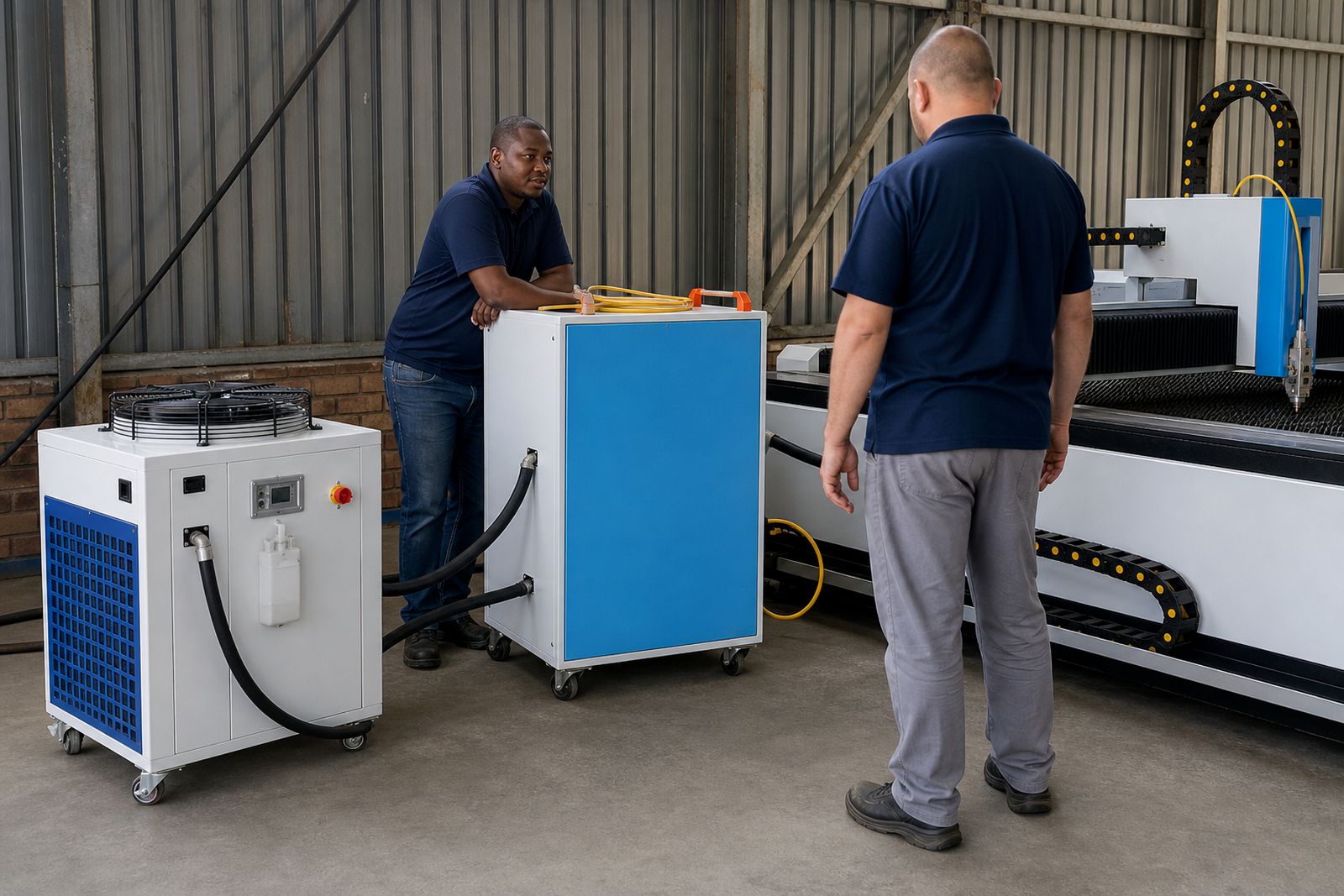
Cooling matched to the source, not guessed from the cabinet size
A laser chiller keeps the source and related optics within a controlled operating temperature so output stays consistent and alarm conditions are reduced. On fibre systems the cooling loop often supports the source first, and on some machines it also serves the cutting head, welding head or cleaning head through separate circuits. The right unit is chosen from the actual heat load, the source type, the duty cycle and the site conditions in the shop.
We supply recirculating chillers for continuous-wave sources, QCW modules and some pulsed installations where thermal stability is part of reliable running. In Alrode and across Gauteng we often see machines in warm workshops with fine dust, long production stretches and irregular mains conditions, so a chiller needs proper reserve capacity rather than a neat looking label. A unit that is too small can drift, trip or run flat out most of the day which shortens service life.
- Closed-loop water cooling for laser source circuits
- Single-circuit and dual-circuit configurations, depending on machine layout
- Compact units for lighter systems and larger floor-standing units for higher heat rejection
- Alarm outputs and basic status indication on many models
- Service support for diagnosis, hose routing checks and cooling performance faults
Chiller sizes and the limits that matter on a real shop floor
Chiller selection is usually grouped by cooling capacity class rather than by cabinet dimensions alone. Smaller units suit lower source loads, lighter welding cells and intermittent use. Mid-size units are common on daily production equipment. Larger industrial units are used where the source load is higher, the duty cycle is heavy, or more than one cooling circuit must be kept stable through a shift.
The practical limits are not only about cooling capacity. Ambient temperature, airflow around the condenser, water quality, hose length, vertical lift, electrical supply and the cleanliness of filters all change how well a unit will cope. In coastal conditions corrosion and high humidity can complicate the picture, while inland workshops often deal with higher dust levels and hotter daytime temperatures. Both matter more than people expect.
- Compact range for lighter source loads and shorter duty cycles
- Mid-range units for regular cutting or welding production
- Higher capacity units for larger sources, longer runs and dual-loop requirements
- Air-cooled configurations are most common for standard factory use
- Water quality and pipe condition affect performance as much as nominal cooling class
Where the workshop regularly gets very hot or the machine is boxed into a tight corner, a larger reserve margin is usually safer. Where the source spends long periods idling and then spikes under production, controller stability and flow control become just as important as nameplate capacity.
Where a dedicated laser chiller fits well, and where it does not
A proper laser chiller suits cutting systems, welding stations and cleaning equipment that need repeatable thermal control and alarm integration. It is also useful where the machine runs several shifts, where nozzle or head stability matters, or where the source has already shown over-temperature alarms under load. For workshops that process varying thicknesses through the week, correct cooling can help keep the system predictable.
It is less suited to makeshift installations with poor ventilation, dirty process water from open tanks, badly routed hoses or electrical supply problems that cause frequent hard shutdowns. A cooling unit also cannot compensate for an internal source fault, blocked internal channels, failing pumps elsewhere in the machine, or a damaged delivery fibre. We check the whole cooling path because a healthy chiller can still sit next to a machine with a problem upstream or downstream.
If your machine was built around a dual-temperature arrangement, replacing it with a simple single-loop unit is usually not a good shortcut. Likewise, where the workshop cannot keep condenser faces clean, air-cooled units may lose performance gradually and operators only notice once production starts tripping in the afternoon.
Site needs before installation and first start-up
Most laser chillers need a level position, clear airflow and a stable electrical supply suited to the model. They should not be jammed against a wall or boxed into a cabinet with no extraction path for warm air. Hose runs need to be sensible, free of kinks and labelled properly so supply and return are not crossed. A surprising number of cooling faults start with plumbing errors after machine moves.
For workshops affected by load-shedding or generator changeover, startup behaviour matters. Repeated abrupt outages can produce nuisance alarms, controller resets or pump protection trips, and it is wise to check how the machine and chiller sequence together when power returns. If the machine is on a mezzanine or in a hot enclosed bay, note that in your enquiry because it changes the cooling requirement a fair bit.
- Level floor space with service access around the unit
- Clean mains supply suited to the chiller configuration
- Enough air movement for condenser cooling
- Correct hose size, routing and return path
- Suitable water quality and a clean filled circuit before start-up
Routine care that prevents nuisance alarms
Good maintenance is mostly regular, basic work done before trouble starts. Condenser fins need cleaning, filters must be inspected, coolant level should be checked and the system should be watched for slow leaks around fittings, pump seals and head connections. Where water quality is poor, scale and contamination can build up quietly and then show up as rising temperature spread or reduced flow.
We also advise checking whether alarms occur only under certain jobs. If a cutting machine runs well on thin sheet and overheats on heavier work, the issue may be cooling reserve, flow restriction or a source problem that only appears at higher load. Chillers are often blamed first, but the fault chain is not always that simple, and that is where proper diagnosis helps.
In workshops with metallic dust, do not leave the condenser to become grey and packed. Airflow loss creeps in slowly then one hot day the machine stops and nobody is sure why.
Details that help us match the right unit
When you contact us, send the machine type, the laser source type, whether the application is cutting, welding or cleaning, and whether the cooling circuit is single or dual loop if known. Photos of the current data plate, controller screen, hose connections and any alarm message help us narrow down compatibility and likely faults without wasting a site visit.
It also helps to mention the town, the workshop ambient conditions and whether the issue is poor cooling from the start or a new fault on an existing machine. If the unit has already been repaired before, say what was changed. That saves time and avoids repeating the same dead end. You can send the details through our contact form on the contact page.
- Machine application and source type
- Any chiller model information visible on the unit
- Single-loop or dual-loop cooling arrangement
- Alarm codes, warning lights or controller messages
- Photos of hose ports, filters and the installation area
- Your location and whether you need workshop or on-site assessment
What our Fibre Laser customers say
Verified Google reviews
Questions we get asked
Can I use a general industrial water chiller on a fibre laser machine?
Sometimes, but only if the cooling capacity, control stability, flow arrangement and alarm integration suit the source and the machine. Many laser systems need a more specific setup than a general process chiller provides.
Does a bigger chiller always solve overheating alarms?
No. Oversizing without checking flow, plumbing, ambient heat, controller settings and source condition can leave the actual fault untouched. We look at the full cooling path before recommending a replacement.
Do you service chillers already fitted to cutting or welding machines?
Yes. We assist with diagnosis, cooling performance faults, plumbing checks and related machine issues in our workshop and on site where practical.
Also worth a look
Tell us about the job
Send sizes, materials and where you are through our contact form, and we will come back with the practical options.
Open the contact form