

Protective windows, nozzles and ceramics
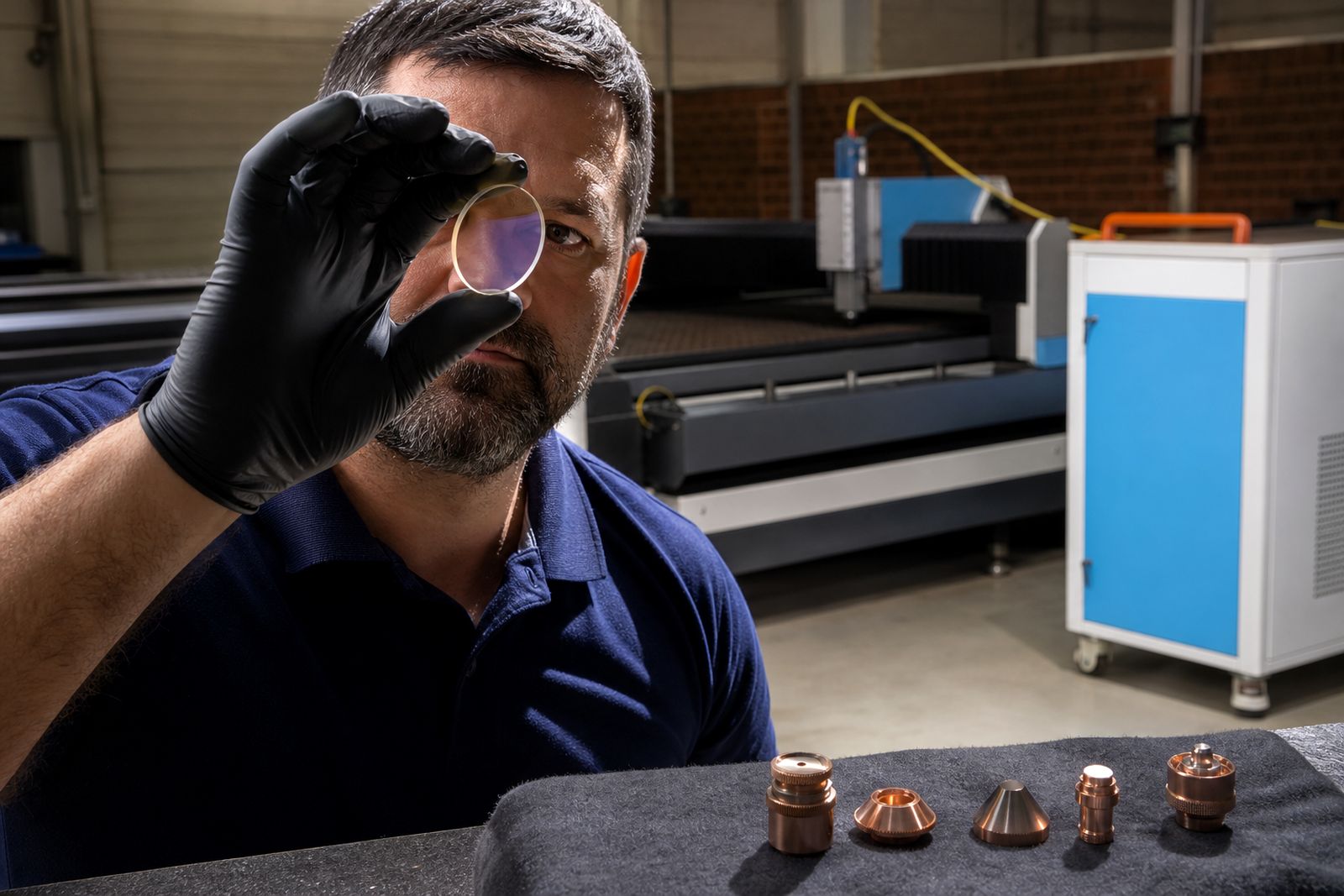
Protective windows, nozzles and ceramic parts take the daily heat, spatter and dust that would otherwise reach more expensive head components. We supply common laser cutting consumables, help with fitment details and check fault symptoms when a head starts cutting badly.
What these parts do inside the cutting head
In a fibre laser cutting head, the protective window sits in the optical path as a sacrificial barrier between the process zone and the internal lens set. The nozzle shapes the assist gas stream and centres it around the beam path, while the ceramic holder carries the nozzle and helps isolate the height sensing circuit. When any one of these parts is worn, dirty or cracked, cut quality usually drops before the operator sees a full alarm.
These are consumables, not once-off fittings. On thin sheet the signs may start as extra dross or more piercing marks, while on thicker plate you often see unstable kerf width, poor corners or random cut loss. A damaged ceramic can also upset capacitive height control, which makes the head hunt up and down over the sheet and can lead to a nozzle strike.
- Protective windows shield internal optics from smoke, fine dust and back spatter.
- Nozzles control gas direction, pressure behaviour and the stand-off at the cut point.
- Ceramic holders support the nozzle thread and the sensing path used for height control.
Common sizes, options and practical limits
We supply the usual protective window diameters and thicknesses used on fibre laser heads, including compact windows for lighter duty heads and larger windows for higher heat loads. Nozzles are available in single-layer and double-layer patterns, with different orifice sizes to suit fine nitrogen cutting, oxygen work and general mild steel production. Ceramic parts vary by thread type, outer shape and electrical contact arrangement, so a photo and measurements help if the old part has lost its markings.
Working limits depend on the whole setup, not the consumable on its own. A small nozzle opening may give a cleaner line on thin sheet, but it is less forgiving when centring is out or the sheet is not flat. Double-layer nozzles often help with oxygen cutting stability, while single-layer nozzles are common for nitrogen work where gas flow shape matters more than ignition behaviour. Protective windows with the wrong coating orientation or thickness can heat up fast and haze earlier than expected, even when the source and head are healthy.
- Protective windows: common round formats in several diameters and thicknesses.
- Nozzles: single and double layer, with a range of orifice sizes.
- Ceramics: different threads, body heights and contact styles for head compatibility.
Jobs where they suit, and where they do not
These parts suit fibre laser cutting heads used on sheet metal machines handling mild steel, stainless steel, aluminium and similar production materials. They are a routine requirement for shops doing daily nesting, frequent pierces and mixed thickness work, especially where operators change between oxygen and nitrogen jobs through the week. Fabricators in Gauteng often keep spare windows and nozzles close to the machine because dust, heat and long shifts can turn a small consumable issue into a wasted sheet very quickly.
They do not solve every cut fault on their own. If the machine has beam centring drift, chiller trouble, gas contamination, poor earthing or a worn linear system, fitting new consumables may only mask the real problem for a short while. These parts are also not a substitute for a full head rebuild where the internal optics, collimation path or sensor wiring have already been damaged.
Fitment details we need before we match parts
A nozzle that looks close on a phone photo can still be wrong on thread, overall height or seat profile. The same applies to ceramics and protective windows, where a few millimetres matter and coating type can affect life in service. If you are not sure what the machine takes, we can work from markings on the head, old part dimensions and a clear description of the cutting problem.
- Machine model and cutting head model, if known.
- Material type and approximate thickness range normally cut.
- Assist gas used most often, such as oxygen or nitrogen.
- Dimensions from the old window, nozzle or ceramic.
- Clear photos of the old part, the head front end and any alarm screen.
- Whether the issue is poor cut quality, nozzle crashes, haze on windows or sensing faults.
Where a machine is already down, our workshop and field service team in Alrode can inspect the head, check centring and look at related faults rather than sending out parts blind. That usually saves a lot of trial fitting and sheet scrap.
Installation points that affect service life
Protective windows should be fitted in a clean area with lint-free handling and the correct orientation if the window has a coated side specified for the holder. A single fingerprint, metal dust on the seat or an O-ring that has gone hard can create local heating and shorten life badly. Nozzles need clean threads, proper seating and beam centring verification after fitment, especially if there has been a nozzle strike.
Ceramics should be checked for hairline cracks around the threaded section and contact ring area before installation. If the head has repeated height sensing errors after a ceramic change, the issue may sit with wiring, contamination on contact faces or the sensor calibration rather than the ceramic itself. Machines near coastal air or very damp process areas can need more frequent cleaning because fine oxidation and residue build up faster, and it does catch people out.
Care, storage and when to replace
Keep spare windows in sealed packs until use and store nozzles where threads and openings will not get knocked or contaminated. Operators should inspect windows for haze, burn marks and spatter at routine stops, then compare nozzle condition with the machine's recent cut edge quality. Waiting until the head throws a major alarm often means the consumable has already affected production for some time.
- Replace protective windows when haze, pitting or burn marks enter the beam area.
- Replace nozzles when the orifice is out of round, struck or heavily spattered.
- Replace ceramics after cracks, thread damage or unstable sensing behaviour.
- Check gas quality and beam centring if new consumables fail unusually fast.
If you need help matching a part or tracing repeated failures, send the head details and photos through our contact form and we will assess whether you need consumables only or a proper service visit.
What our Fibre Laser customers say
Verified Google reviews
Questions we get asked
How do I know whether the fault is the nozzle or the protective window?
A damaged nozzle often shows up as poor gas flow, messy edges, unstable piercing or a centred cut that drifts after a nozzle strike. A failing protective window more often causes gradual power loss at the head, haze in the optical path, extra heat marks and worsening results across more than one job.
Can I change these parts myself?
Many workshops change nozzles and protective windows in-house, provided the area is clean and the operator knows the head procedure. If there has been a crash, repeated alarm, sensing problem or fast window failure, it is better to have the head checked properly.
What should I send when I enquire about fitment?
Send the machine and head model if available, photos of the old part and the head front end, the dimensions you can measure, the material normally cut and a short note on the fault. That gives us enough detail to narrow the correct consumable and spot where a service issue may sit behind it.
Tell us about the job
Send sizes, materials and where you are through our contact form, and we will come back with the practical options.
Open the contact form