

Delivery fibres and QBH connectors
Delivery fibres carry the beam from the laser source to the process head, and the connector at each end has to match the source, head and power range. We supply replacement fibre assemblies and QBH connector parts for cutting, welding and cleaning machines, with practical guidance on fitment and handling.
What these parts do in a laser system
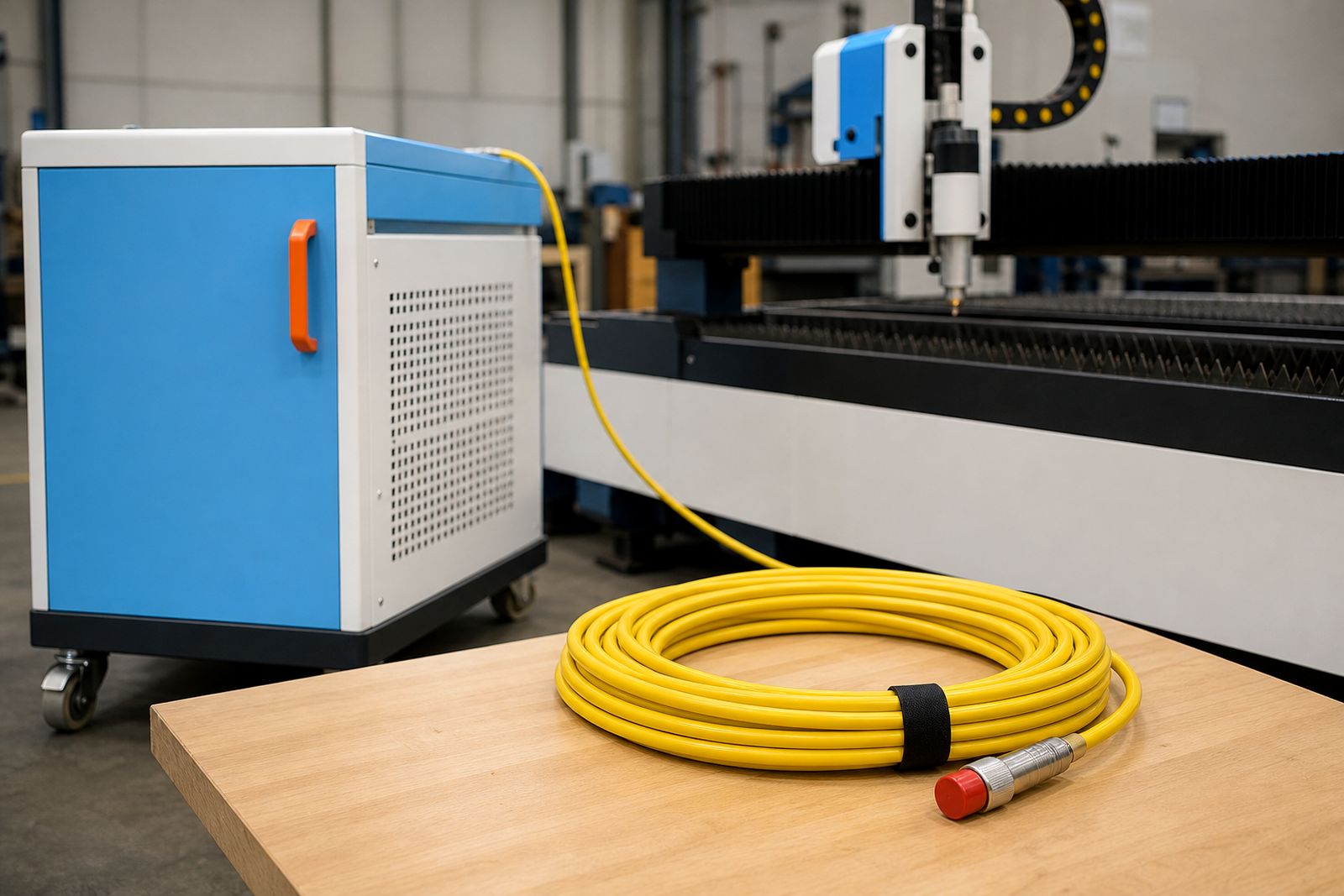
A delivery fibre is the beam path between the source and the cutting, welding or cleaning head. It includes the fibre itself, end terminations, protective outer layers and connector hardware, usually with a QBH style connection at the source side or process head side depending on the machine layout.
When a fibre assembly is the wrong length, core size or connector type, the machine may show source alarms, unstable output or poor cut and weld results. Damaged end faces, contamination and overheating at the connector are common faults on busy shop floors, especially where machines run long shifts and fine dust gets into service areas.
- Replacement delivery fibre assemblies for cutting, welding and cleaning machines.
- QBH connector components and related hardware.
- Matching of fibre type to source, head and application.
- Workshop inspection for damaged ends, burn-back and heat marks.
Core sizes, lengths and practical limits
Fibre assemblies are not one-size parts. The core diameter, overall length, connector build and protective sleeve all affect how the system runs. Smaller cores are often used where beam quality matters, while larger cores may suit certain welding or cleaning arrangements. Longer runs can be necessary on larger machine beds, but extra length needs careful routing and support.
Power handling depends on the source, duty cycle, beam quality, cooling condition and connector cleanliness, not only the fibre spec on paper. For that reason we match parts to the machine details you give us rather than guessing from a photo.
- Common assembly lengths for compact welding units and larger gantry cutting machines.
- Different core options to suit cutting, handheld welding and cleaning setups.
- QBH style terminations with parts selected to match the source and process head.
- Protective sheathing options for harsher workshop routes and cable tracks.
If a machine has repeated connector heating, the issue may be contamination, poor seating, bend stress or a mismatch between the source output and fibre assembly. A longer cable will not fix that on its own.
Where they suit, and where they do not
These parts suit fibre laser cutting machines, welding systems and cleaning units that already use removable delivery fibres and QBH style connections. They are useful when a cable has been crushed in a drag chain, scorched at the head, kinked during transport or contaminated during servicing.
They are not a substitute for a failed source, a damaged cutting head collimation group or a cooling fault elsewhere in the machine. If the source is tripping on reflected power, over-temperature or internal communication faults, replacing the delivery fibre without diagnosis can waste time and money. We often find more than one fault present, particulary on older production machines.
- Suitable for replacement on existing fibre laser machines.
- Suitable for planned spares holding where identical fitment is required.
- Not suitable as a universal part across all machine models.
- Not suitable where the machine uses a different connector platform or fixed internal beam path.
Fitment, routing and site conditions
Before fitment, the source and machine need to be isolated properly and the connector areas kept clean. The fibre route must allow a smooth bend radius with no flattening under covers, no pinch points in cable chains and no twist at the connector body. On cutting machines in Gauteng fabrication shops, we also watch for metal dust around the source cabinet and head service area because that contamination can migrate onto connector faces.
Cooling and general machine condition matter as well. If a connector has discoloured from heat, we check the chiller condition, alarm history and head alignment before fitting a replacement assembly. On site, enough working space is needed to lay the fibre out safely without forcing it around machine corners.
- Clear machine make and model details.
- Photos of both fibre ends and the full cable route.
- Any alarm messages shown before failure.
- Whether the machine is used for cutting, welding or cleaning.
Connector care and handling on the shop floor
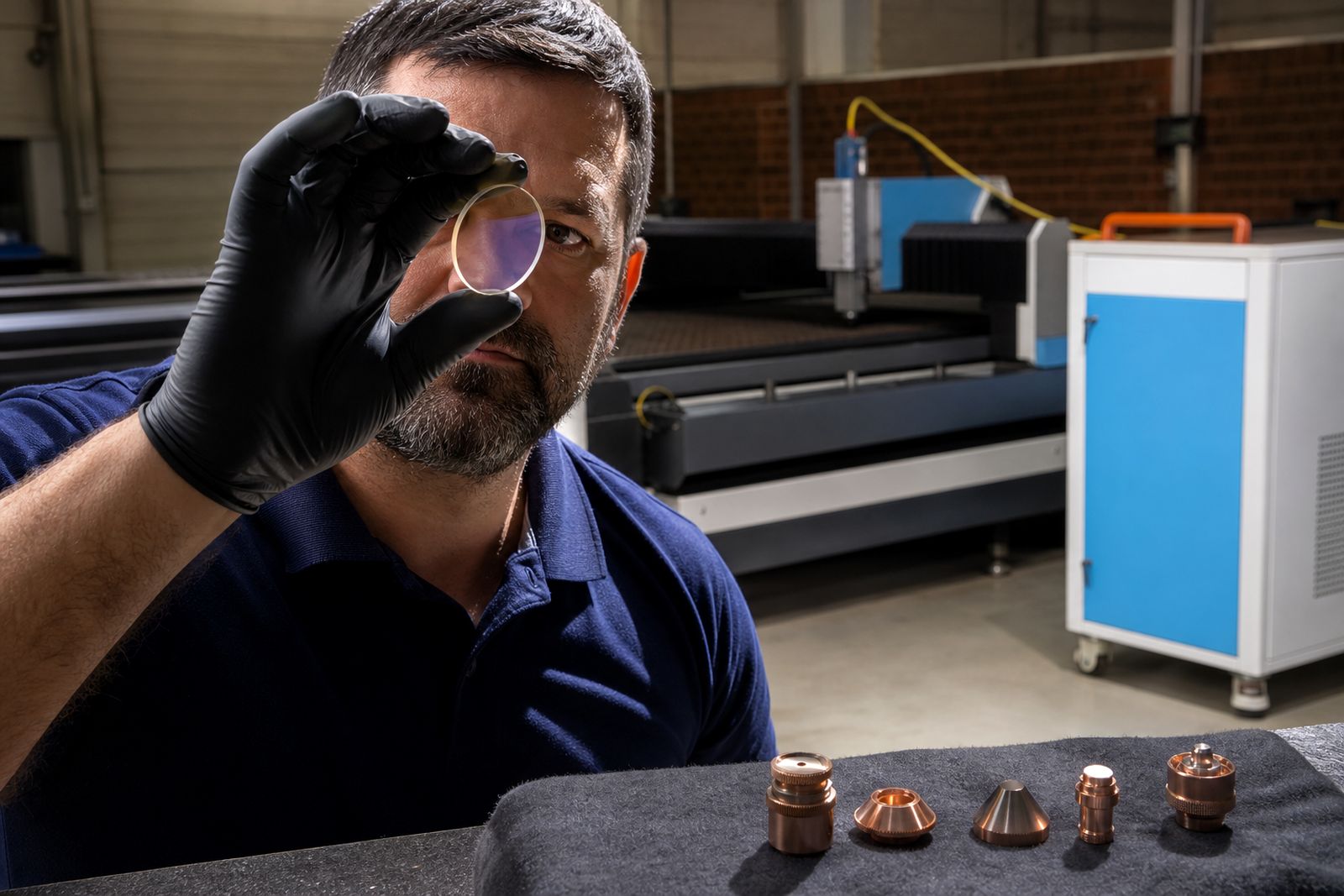
Most premature fibre failures start with handling. Connector caps left off, wiping with the wrong material, or setting an end down on a dirty shelf can mark the optics and start a heat problem that only shows after a few shifts. Staff who move a welding unit between bays should treat the cable as a precision part, not as a lifting handle or tie point.
Good care includes capped storage, clean inspection before connection and careful routing after any service work. If the fibre has taken a hard knock, has a burnt smell near the connector or shows outer jacket damage, stop using it and have it checked. Continuing to run can damage the mating connector and the head as well.
- Keep protective caps fitted until the moment of installation.
- Never exceed the cable bend limit during storage or operation.
- Do not pull the assembly by the connector housing.
- Inspect for heat marks, dust ingress and jacket damage during routine maintenance.
What to send when you ask us to match a fibre
The quickest way to avoid a wrong part is to send machine details and clear photos through our contact form. We need the source type, application, connector style, estimated cable length and any labels on the existing assembly. A picture of the damaged area often helps, but photos of both ends are more useful than one close-up only.
If the machine has alarms, include the message shown and whether the fault appeared after a crash, head change, transport or cleaning work. For workshop checks, tell us if the source, head or chiller has already been looked at by your maintenance team so we can plan the inspection properly.
- Machine model and application.
- Source type and approximate output range in use.
- Existing fibre length, core size if known and connector photos.
- Alarm wording, symptoms and any visible burn or crush damage.
What our Fibre Laser customers say
Verified Google reviews
Questions we get asked
Can I replace a damaged delivery fibre with any similar-looking cable?
No. The connector build, core size, length and power suitability need to match the source and process head. A cable that looks close can still cause poor performance or connector heating.
What usually damages a QBH connector or fibre end?
Contamination, poor seating, overheating, excessive bend stress and rough handling are common causes. We also see damage after machine crashes or when cables are forced through tight routing points.
Do you only supply the part, or can you help diagnose the fault as well?
We do both. If the machine has alarms or repeated connector damage, we can assess whether the issue is limited to the fibre assembly or linked to the source, head, cooling or machine condition.
Tell us about the job
Send sizes, materials and where you are through our contact form, and we will come back with the practical options.
Open the contact form